April Dividends, Potential Foreign Capital Outflow
Strong Dollar Expected to Persist for a While
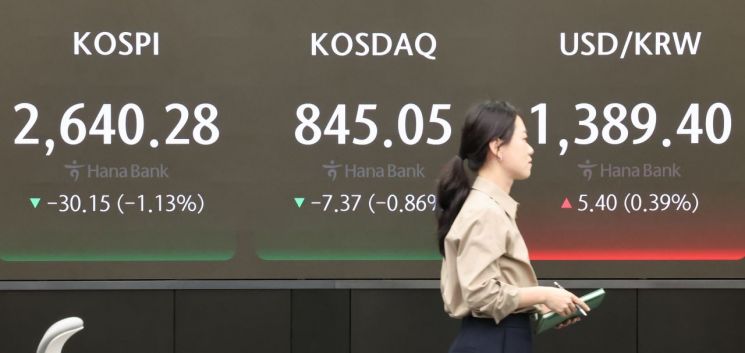
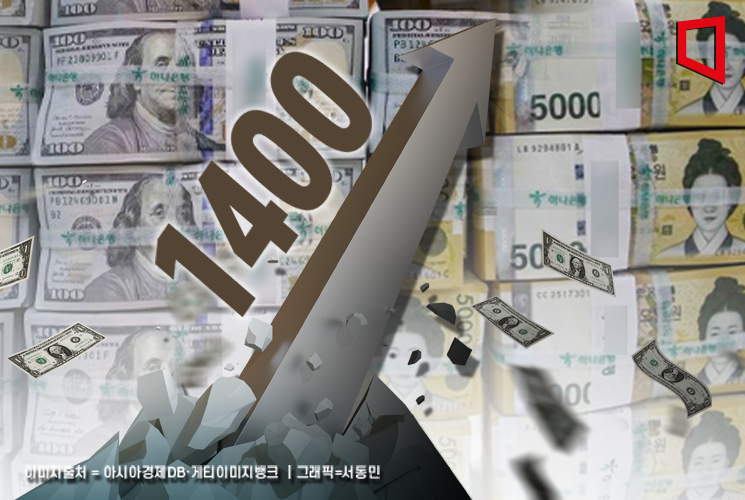
The won-dollar exchange rate is approaching the 1,400 won level due to oil price uncertainty and a retreat in expectations for a U.S. interest rate cut. Market forecasts suggest that the won-dollar exchange rate, which has surged to its highest level in 17 months, will continue its upward trend for the time being.
As of the closing price on the 15th, the won-dollar exchange rate rose 8.6 won to 1,384 won, marking its highest level since November 2022. On the 16th, it opened at 1,389.9 won, up 5.9 won from the previous trading day, fluctuating in the low 1,390 won range.
The continued rise in the won-dollar exchange rate is largely due to the increased war risk in the Middle East after Iran launched a direct attack on Israeli territory for the first time over the past weekend. The expansion of geopolitical risks has driven up the value of the dollar, a safe-haven asset. In response, on the 15th, the Bank of Korea held a 'market situation review meeting,' signaling that it is monitoring volatility in domestic and international financial markets caused by geopolitical instability and may implement market stabilization measures if necessary.
Dubai crude and Brent crude prices are already hovering around $90 per barrel. Concerns over rising international oil prices have grown to the extent that the government decided to extend the fuel tax reduction, originally scheduled to end this month, for an additional two months.
If oil prices rise, inflation, which seemed to be under control, could start climbing again. Consequently, expectations for a U.S. interest rate cut, at least in early Q3, continue to be pushed back. According to the CME FedWatch Tool, the probability of a rate cut in July in the federal funds futures market stands at only 41.1%.
At the beginning of the year, the market expected a pivot (direction change) in the second quarter, but this has been continuously delayed, and now some are questioning whether it will happen within the year. The robust U.S. economy is also a contributing factor. U.S. retail sales for March, released on the 15th (local time), increased by 0.7% month-on-month, significantly exceeding the forecast of 0.3%.
Jo Byung-hyun, a researcher at Daol Investment & Securities, explained, "The U.S. is experiencing economic strength centered on the service sector, which is largely unrelated to economic recovery in other regions. As this process unfolds, the initially expected timing for a pivot to a more accommodative monetary policy keeps being pushed back. The reason for the dollar's strength, rather than the weakness of other currencies, remains clear for the time being, and this factor recently pushed the dollar index back above the 105 level."
Moreover, April typically coincides with dividend season, during which foreign dividend payments tend to flow overseas, potentially further driving up the exchange rate. Researcher Jo added, "April is generally when Korean companies pay dividends, so dividend outflows from large-cap stocks with high foreign ownership can be observed. Although the won does not always weaken every April, when combined with uncertainties in monetary policy, economic cycles, and oil prices, such supply-demand factors can play a sufficiently powerful role in the short term."
Experts predict that upward pressure on the exchange rate will persist for the time being. Min Kyung-won, an economist at Woori Bank, said, "The absence of any noticeable moves presumed to be fine-tuning by authorities has fueled expectations for further exchange rate increases. The possibility of foreign capital outflows from the stock market and remittance flows related to Samsung Electronics' dividend payments also suggest a rise in the exchange rate."
© The Asia Business Daily(www.asiae.co.kr). All rights reserved.


















