Improvement of Color Vision Standards and Expansion of Narcotics Testing Targets
From now on, individuals with color vision deficiencies such as deuteranopia (green color blindness) or tritanopia (blue color blindness) will also be eligible for recruitment as police officers. On the other hand, the scope of drug testing will be expanded and standards will become stricter in response to the increasing drug-related crimes.
On the 16th, the National Police Agency announced that the partial amendments to the "Enforcement Rules of the Police Officer Appointment Decree" and the "Regulations on Police Officer Recruitment Examinations," which include these changes, were approved at the 536th National Police Commission meeting held the previous day.
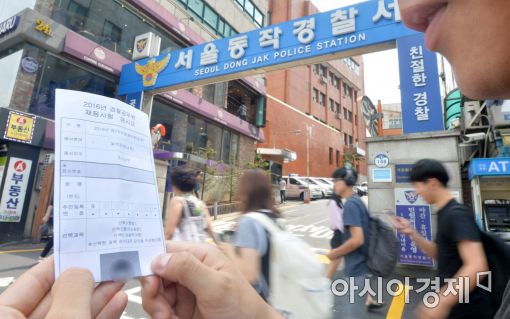
Previously, in 2006, the police improved the physical examination standards to allow individuals with mild color blindness to be recruited as police officers. Since then, there have been recommendations from the National Human Rights Commission and continuous demands to relax recruitment restrictions for those with moderate or more severe color vision deficiencies. In 2022, this issue was even selected as a public policy proposal task by the Presidential Office.
Accordingly, the National Police Agency began analyzing the feasibility of performing police duties according to the degree of color vision deficiency through research projects such as the "Improvement of Recruitment Restrictions for Police Officers with Color Vision Deficiency" conducted last year, initiating efforts to revise the color vision standards.
According to the amendment, among those with color vision deficiencies, individuals with deuteranopia (green color blindness) and tritanopia (blue color blindness) will be allowed to apply for police officer recruitment exams regardless of the severity of their condition. However, current standards will be maintained for specialized units such as the Police Special Forces and forensic departments, where more precise color discrimination ability is required.
A National Police Agency official explained, "Even though the color vision standards are being relaxed, we will do our best to select and train excellent police officers to ensure that their ability to perform duties that protect the safe daily lives of the public does not decline."
Additionally, the National Police Agency plans to expand the types of drugs tested during police officer recruitment to six categories.
Until now, the "TBPE" test conducted by the National Police Agency was criticized for its limited detection range of drugs and somewhat low accuracy.
Recently, various new drugs have emerged, and the severity of threats to public health and safety posed by drugs has increased, leading to ongoing calls to expand the types of drugs tested during police recruitment.
Accordingly, the National Police Agency recently investigated drug abuse statistics and drugs popular among young people, selecting six representative drugs (Philopon, Cannabis, Ketamine, Ecstasy, Cocaine, Opium) as the target drugs for testing.
The testing will be conducted on all candidates who pass the first stage exams (written, practical, and document screening). In the second half of this year, diagnostic reagents will be developed and promoted to examinees as well as national and public hospitals and general hospitals.
Once the amendment passes the review by the Ministry of Government Legislation and is officially promulgated, the improved color vision standards and drug testing will be applied starting with the 2025 police officer recruitment.
© The Asia Business Daily(www.asiae.co.kr). All rights reserved.
















