March Retail Sales Up 0.7% MoM
Exceeding Market Forecast (0.4%)
U.S. retail sales increased significantly more than expected last month. Analysts suggest that a strong labor market supporting consumption raises the risk of prolonged hot inflation.
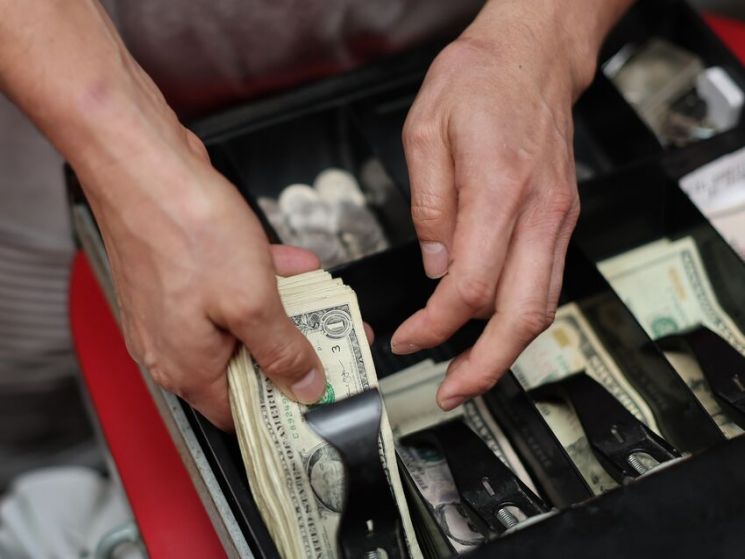
According to the U.S. Department of Commerce on the 15th (local time), March retail sales rose 0.7% month-over-month. Consumption increased at a pace well above market expectations (0.4%).
Retail sales excluding automobiles and gasoline increased by 1%, also surpassing expert forecasts (0.3%).
Among 13 retail sales categories, 8 sectors showed growth. E-commerce consumption rose 2.7%, gas station sales increased by 2.1%, while automobile sales declined by 0.7%.
The retail sales indicator is considered a pillar accounting for two-thirds of the U.S. real economy and is used to assess overall economic trends. The larger-than-expected increase in consumption last month raises concerns about the entrenchment of hot inflation. This strengthens the view that the U.S. Federal Reserve (Fed) will be more cautious about cutting interest rates.
Andrew Hunter, Deputy U.S. Economist at Capital Economics, analyzed, "The recent revival in employment growth and the continued resilience of consumption are further reasons to doubt that the Fed will start cutting rates anytime soon."
Estelle Ou and Eliza Winger, economists at Bloomberg Economics, stated, "Consumers remain mindful of high interest rates, but income growth is supporting everyday spending. The March retail sales data suggest that consumption heading into the second quarter is stronger than initially expected and that the anticipated gradual slowdown in spending this year may be delayed."
U.S. Treasury yields have risen following the release of the March retail sales data. The 2-year U.S. Treasury yield, sensitive to monetary policy, rose 8 basis points (1bp=0.01 percentage points) from the previous trading day to 4.96%. The 10-year U.S. Treasury yield, a global bond yield benchmark, moved up 11 basis points to around 4.61%.
© The Asia Business Daily(www.asiae.co.kr). All rights reserved.
!["The Woman Who Threw Herself into the Water Clutching a Stolen Dior Bag"...A Grotesque Success Story That Shakes the Korean Psyche [Slate]](https://cwcontent.asiae.co.kr/asiaresize/183/2026021902243444107_1771435474.jpg)
















