Successful Intubation After Multiple Attempts
Brain Damage from Cardiac Arrest... Child with Disability
Parents Claim "Medical Staff Neglected Son"
Court States "Medical Staff Regularly Monitored Condition"
The parents of a child who suffered brain damage and walking disabilities after visiting the emergency room of a general hospital in Incheon filed a lawsuit against the hospital seeking damages worth hundreds of millions of won. However, the court ruled against the plaintiffs and ordered them to bear all litigation costs.
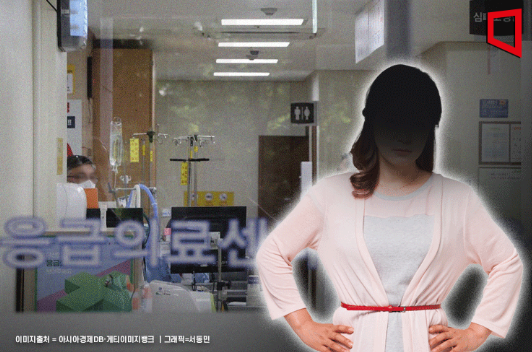
On the 15th, the 14th Civil Division of the Incheon District Court announced that it had ruled against A and his parents in a damages lawsuit filed against the chairman of a medical foundation in Incheon. The court also ordered the plaintiffs to bear all litigation costs.
Previously, in June 2017, A, who was 2 years old at the time, showed symptoms of fever and chills and visited the emergency room of a general hospital in Incheon with his parents. A’s parents explained to the medical staff, "Our son had a fever for two days and was diagnosed with hand, foot, and mouth disease at another hospital, so we gave him medication," adding, "He had never been sick before, but last night he suddenly woke up startled every 20 minutes."
In response, the medical staff administered a syrup-type sedative to A, but he swallowed only about half and spat out the rest. Twenty minutes later, he vomited, and a nurse supplied oxygen through a nasal tube. Despite increasing the oxygen supply, A’s oxygen saturation continued to drop, and the medical staff eventually attempted intubation to open the airway.
Intubation is a procedure in which a flexible plastic tube is inserted into the trachea. Pediatric residents and specialists alternated attempts to insert a 5mm diameter tube into A’s airway for over 30 minutes but repeatedly failed. A’s oxygen saturation kept decreasing until he eventually went into cardiac arrest. The medical staff performed emergency chest compressions, and when A’s pulse returned, another resident made several attempts at intubation and finally succeeded. However, A went into cardiac arrest again four minutes later. After a second round of chest compressions, his pulse returned, but he suffered brain damage due to encephalitis and hypoxia, resulting in walking and cognitive disabilities.
Virus testing detected Enterovirus 71, which causes hand, foot, and mouth disease, in A. This disease commonly occurs in summer and autumn and is characterized by blisters and ulcers in the mouth and vesicular rashes on the hands and feet. It is usually a mild illness with low-grade or no fever. Rarely, it can cause brainstem encephalomyelitis, neurogenic pulmonary edema, pulmonary hemorrhage, shock, and in severe cases, death.
In 2020, A’s parents filed a damages lawsuit against the hospital seeking a total of 390 million won for medical expenses and consolation money. They claimed that "the medical staff neglected our son, who was suffering from respiratory distress and hypoxia, worsening his condition," and that "delayed intubation caused cardiac arrest and brain damage."
However, the court’s judgment differed. The court stated, "There is no evidence that the hospital staff negligently observed A’s condition or delayed treatment such as intubation," adding, "According to the hospital’s nursing records, the medical staff continuously monitored A’s blood pressure and oxygen saturation. Nurses were present continuously, providing oxygen and suction therapy, and doctors closely observed and regularly checked his condition."
The court explained, "Three doctors took turns attempting intubation and completed it after 38 minutes," noting, "Typically, an experienced doctor can perform intubation within 10 minutes if successful on the first try, but since A was an infant under 24 months, his airway was smaller compared to an adult." The court further stated, "The prolonged time required for intubation alone does not indicate a breach of duty of care by the medical staff," and "It is also difficult to establish a causal relationship between the brain damage and the medical staff’s actions."
© The Asia Business Daily(www.asiae.co.kr). All rights reserved.
![Clutching a Stolen Dior Bag, Saying "I Hate Being Poor but Real"... The Grotesque Con of a "Human Knockoff" [Slate]](https://cwcontent.asiae.co.kr/asiaresize/183/2026021902243444107_1771435474.jpg)
















