Previously, low-income households purchasing government rice had to manually verify the payer and applicant against the resident center account, causing difficulties... Breaking away from the traditional procedure, a virtual account system was introduced and practically applied, drastically reducing processing time.
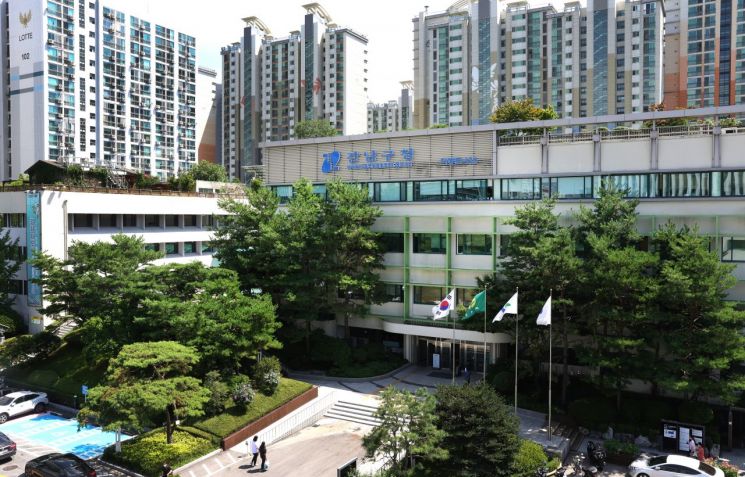
Gangnam-gu (District Mayor Jo Seong-myeong) has introduced a virtual account system for government grain purchases by low-income households nationwide for the first time since March.
Low-income groups such as basic livelihood security recipients and near-poverty households can purchase government grains (Narammi) at a low price every month.
According to the procedure, applicants (household heads) apply for grain purchases at the community service center by the 10th of each month and pay the purchase amount into the community service center's grain management account. In 22 neighborhoods, the final list of applicants and grain payments were sent to the district office's Social Security Division, which then consolidated the information and deposited it to Seoul City.
There had long been hidden difficulties for community service center staff with this grain payment deposit method. The person in charge had to verify each applicant against the payer one by one, and when the household head applied but another household member or family paid, a lot of time was spent each month identifying the applicant (household head) on the grain account.
The district viewed this manual process as an outdated administrative waste in an era where computerization is widespread, and from August began building a system to apply the virtual account method currently used for tax payments.
The virtual account method of the local financial management system (Next-generation e-Hojo), currently used in some cities and counties, was inconvenient for those who automatically transferred grain payments because the virtual account number changed every month. Staff also had to input the purchaser list into the system every month to issue new virtual account numbers and then notify the purchasers of the new account numbers.
After carefully reviewing these issues with the virtual account method, the district independently developed and operates a government grain virtual account system. This system matches a fixed unique virtual account to about 1,800 low-income households, resolving the problems of the previously mentioned virtual account payment method and allowing real-time confirmation of payers and payment amounts.
Based on this, the system was first applied in practice in March and showed effectiveness. In April, grain applicants paid the amount to their assigned virtual accounts, and district office and community service center staff could confirm payers and amounts in real time through the virtual account system without visiting the bank, finalizing the applicant list. As a result, the time required for payer verification and list preparation was drastically reduced.
Additionally, with the disappearance of the community service center accounts that received grain payments, administrative procedures were simplified accordingly. The process, which previously went through Applicant → Community Service Center → District Office → Seoul City, was reduced to Applicant → District Office → Seoul City, enabling faster administrative processing.
Along with this, the problem of managing accounts with remaining balances due to unidentified payers who could not apply for grains was also resolved.
Jo Seong-myeong, Mayor of Gangnam-gu, stated, “We have led administrative innovation by moving away from the conventional work methods practiced by local governments and improving them to be convenient for both residents and staff. We will eliminate unnecessary manual work time and use the saved time to provide high-quality welfare services to residents.”
© The Asia Business Daily(www.asiae.co.kr). All rights reserved.

















