Iran's First Airstrike on Israeli Mainland
Concerns Over Strait of Hormuz Blockade and Oil Price Surge in Full-Scale War
Forecast of Oil Prices Surpassing $130 per Barrel
Inflation Pressure and Fears of Delayed Interest Rate Cuts
As Iran's airstrike on mainland Israel ignited the threat of a 'Fifth Middle East War,' concerns are rising that an oil shock originating from the Middle East could engulf the global economy. With international oil prices on the verge of surpassing $100 per barrel, the future trend of global oil prices is expected to be determined by Israel's response method, intensity, and whether a full-scale war breaks out. While the United States and the Group of Seven (G7) are making all-out efforts to prevent escalation, if the Middle East crisis intensifies, the global economy could face shocks from soaring oil prices and delayed interest rate cuts due to high inflation.
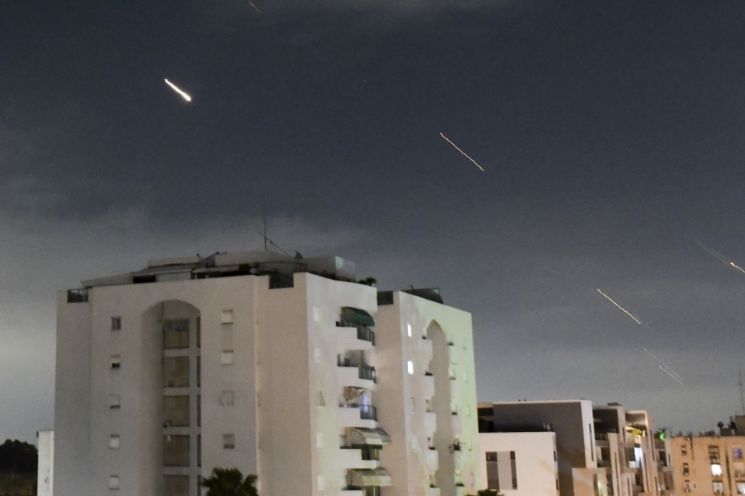 On the 14th (local time), Israel's Iron Dome air defense system was launched in central Israel to intercept missiles fired from Iran.
 [Image source=AP Yonhap News]
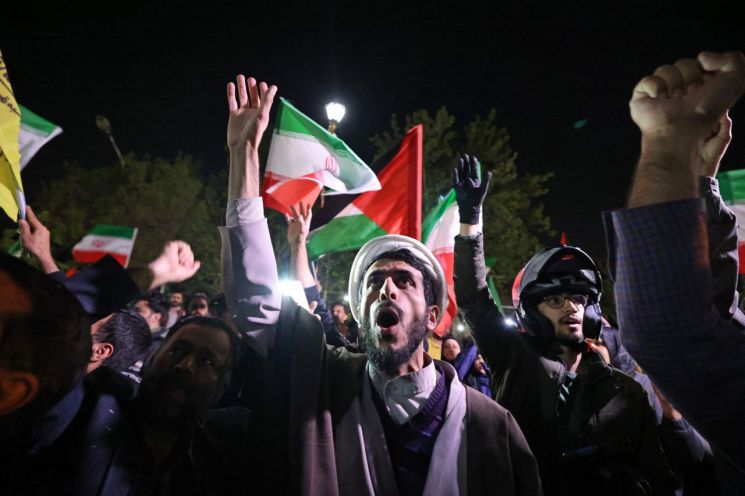 Protesters gathered in front of the British Embassy in Tehran, waving Iranian and Palestinian flags after Iran launched drone and missile attacks on Israel.
 [Image source=AFP Yonhap News]
According to the global commodity market on the 14th (local time), concerns are growing that geopolitical risks will increase due to the direct conflict between Israel and Iran, leading to a rise in international oil prices.
WTI Already Up 20% This Year... Sharp Rise Possible if Hormuz Strait is Blocked
International oil prices had already been surging due to supply concerns such as the extension of production cuts by the Organization of the Petroleum Exporting Countries (OPEC) and Mexico's export reductions, as well as geopolitical instability in the Middle East. The global crude oil price benchmark, Brent crude from the North Sea, closed at $92.18 for June contracts on the 12th, and West Texas Intermediate (WTI) closed at $85.66 for May contracts, marking the highest level since October last year. Prices have jumped about 20% since the beginning of this year.
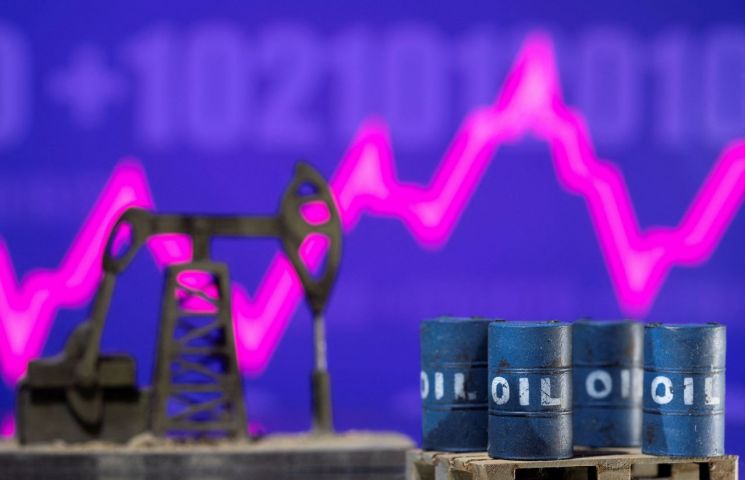
The Middle East situation has rapidly deteriorated as Iran launched its first-ever mainland retaliation attack on the 13th against Israel, which had earlier bombed its consulate in Syria on the 1st. If Israel retaliates against Iran and the conflict between the two countries escalates to the point where Iran blocks the Strait of Hormuz, a key export route for Middle Eastern oil-producing countries, oil prices are expected to soar further. Iran had already issued a pre-warning by brazenly seizing a Portuguese vessel in the Strait of Hormuz the day before its attack on Israeli mainland. Approximately 20% of the world's oil and liquefied natural gas (LNG) shipments pass through the Strait of Hormuz, so if Iran blocks the strait, the impact on the international crude oil market is expected to be uncontrollable. Some forecasts predict international oil prices could surge to $130 per barrel. During the Fourth Middle East War in 1973, when Egypt launched a surprise attack on Israel, major Middle Eastern oil producers banned oil exports, causing oil prices to spike.
Earlier, Bob McNally, CEO of Rapidan Energy, said, "If Iran directly attacks Israel, Brent crude could soar to $100 per barrel," adding, "If the Strait of Hormuz, a major oil trade route, is disrupted by this incident, oil prices could surge to $120-$130 per barrel."
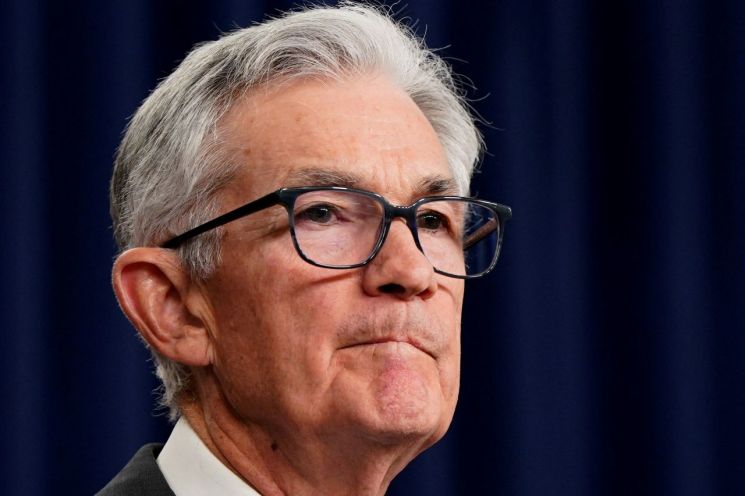
A sharp rise in oil prices could fuel inflation and delay the timing of interest rate cuts by central banks such as the U.S. Federal Reserve (Fed). This raises concerns that the global economy could be pushed into a recession with rising prices, known as stagflation. Neil Shearing, Chief Economist at Capital Economics, forecasted, "We expect the Fed to adopt a more cautious approach to rate cuts due to the Middle East incident." Particularly for South Korea, which heavily depends on energy imports, there are concerns that high oil prices, a strong dollar, inflation shocks, worsening trade balance, and delayed rate cuts could dampen the economic recovery.
The Direction of the Global Economy Depends on Israel's Response... International Oil Prices and Safe-Haven Asset Flows Will Vary
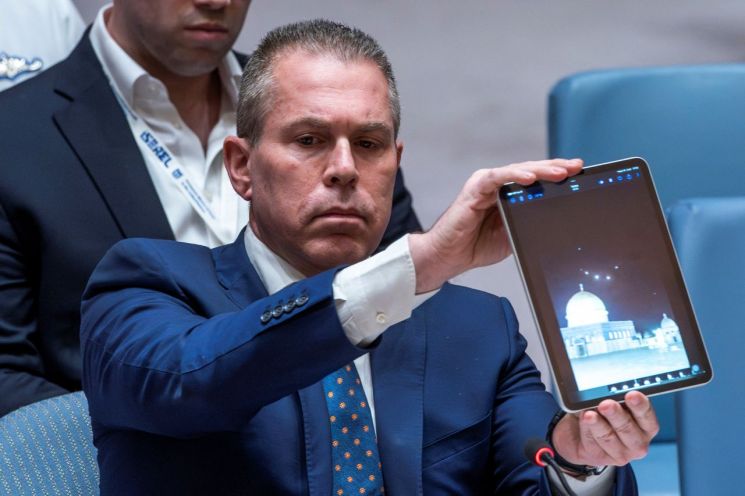 Gilad Erdan, Israel's Ambassador to the United Nations, is showing Security Council member states a missile attack video at a meeting on the Middle East situation held at the UN Headquarters in New York.
 [Image source=Reuters Yonhap News]
The key issue is whether the conflict escalates. The direction of international oil prices and the global economy depends on the level of Israel's response. Iran has already stated that its attack was a retaliatory measure for the assault on its embassy and that it will moderate the intensity of attacks and does not intend to continue defensive operations. Meanwhile, the United States and the G7 have condemned Iran but are urging all parties, including Israel, to refrain from escalating the conflict in the Middle East. However, many Israeli wartime cabinet members support retaliatory measures against Iran, and there are disagreements over the timing and intensity of the response, making it difficult to predict future developments. Israeli Defense Minister Yoav Gallant stated on the day, "The confrontation with Iran is not over yet."
Giovanni Staunovo, an analyst at UBS Group AG, analyzed, "This is the first time Iran has attacked Israel on Israeli mainland, so oil prices could surge sharply right after the market opens. However, whether the oil price surge continues depends on Israel's response."
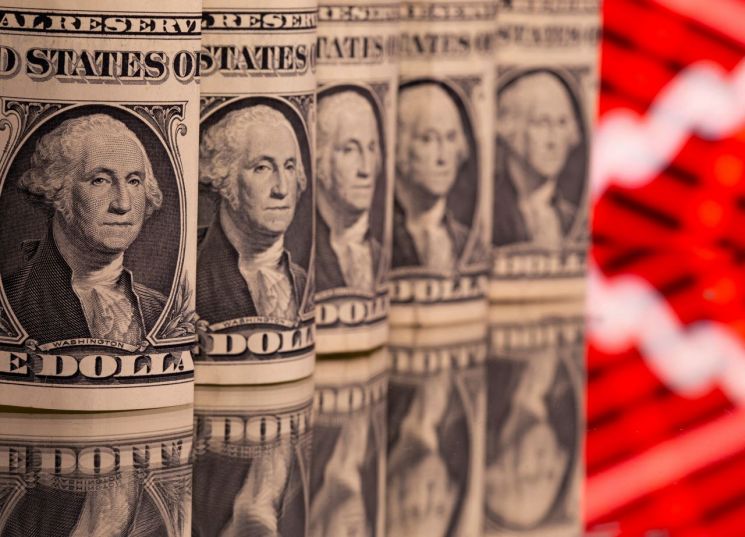 As geopolitical tensions escalate, there are forecasts that investors will flock to safe-haven assets such as U.S. Treasury bonds, gold, and the dollar.
 [Image source=Reuters Yonhap News]
There are also forecasts that investors will flock to safe-haven assets such as U.S. Treasury bonds, gold, and the dollar.
Patrick Armstrong, Chief Investment Officer (CIO) at Plurimi Wealth LLP, said, "Seeking refuge assets at such moments is a natural reaction for investors," adding, "Investor reactions depend on Israel's response. If Israel does not escalate the risk further, it could be an opportunity to buy risk assets at lower prices."
© The Asia Business Daily(www.asiae.co.kr). All rights reserved.
![Clutching a Stolen Dior Bag, Saying "I Hate Being Poor but Real"... The Grotesque Con of a "Human Knockoff" [Slate]](https://cwcontent.asiae.co.kr/asiaresize/183/2026021902243444107_1771435474.jpg)


















