16 out of 100 People Defaulted on Student Loans Last Year
"Means Increase in Young People Facing Financial Hardship"
Among 100 student loan borrowers, 16 were unable to repay their loans even after employment. This is the highest delinquency rate in 11 years.
According to data provided by the National Tax Service on the 13th to Yang Kyung-sook, a member of the National Assembly's Planning and Finance Committee from the Democratic Party of Korea, the amount of delinquent student loans, which are subject to repayment obligations, reached 66.1 billion KRW at the end of last year, a 19.7% increase from the previous year (55.2 billion KRW).
The total amount of student loans subject to repayment also increased by 13.1%, from 356.9 billion KRW in 2022 to 403.7 billion KRW last year. The delinquency rate, which is the ratio of delinquent loans to the total loans subject to repayment, was 16.4%, the highest in 11 years since 2012 (17.8%).
The post-employment student loan repayment system provides loans to university (graduate) students and requires them to repay the principal and interest based on their income level once they start earning income through employment or other means. If a student loan borrower's annual income exceeds the 'repayment income threshold,' they are designated as a mandatory repayment target for the following year. The repayment income threshold in 2022 was 15.1 million KRW.
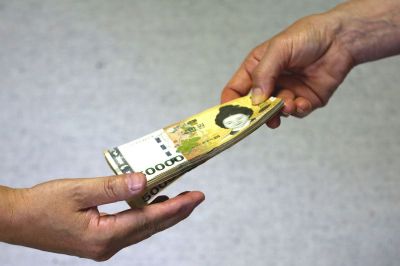
At the end of last year, the number of delinquent borrowers was 51,116, an increase of 15.6% (6,900 people), and the delinquency rate compared to the total borrowers (318,395 people) was 16.1%. This means that out of 100 people who had repayment obligations, 16 were unable to repay their student loans. The average delinquent amount per person increased by 3.2% (40,000 KRW) to 1.29 million KRW.
Assembly member Yang said, "The rapid increase in the scale and number of delinquencies indicates that more young people are experiencing economic difficulties to the extent that they cannot repay student loans after graduating from university," and emphasized, "The government must take this seriously and prepare fundamental measures to create jobs for young people."
In fact, the recovery of the employment market has recently been slowing down after COVID-19. The number of employed people aged 15 and over last month was 28.396 million, an increase of 173,000 compared to a year ago. This is the smallest increase in 3 years and 1 month since February 2021, when employment decreased by 473,000.
The number of employed youth (aged 15?29) decreased by 131,000, and the youth employment rate fell by 0.3 percentage points (p) to 45.9%, marking a decline for the first time in six months.
© The Asia Business Daily(www.asiae.co.kr). All rights reserved.
![Clutching a Stolen Dior Bag, Saying "I Hate Being Poor but Real"... The Grotesque Con of a "Human Knockoff" [Slate]](https://cwcontent.asiae.co.kr/asiaresize/183/2026021902243444107_1771435474.jpg)
















