Family Center and Saeil Center Collaborate
Expanded to 104 Vocational Training Programs
Increase in Domestic Marriage Immigrants
Employment Connection and Individual Counseling Provided
The Ministry of Gender Equality and Family will operate about 100 vocational training courses at family centers nationwide starting this year to develop the job skills of marriage immigrants who wish to find employment or start a business. Marriage immigrants will be able to receive education for adapting to work life at family centers and receive support for job placement.
The Ministry of Gender Equality and Family announced this in a press release on the 9th. The training courses conducted this year are planned and operated jointly by vocational training institutions such as family centers and Women New Employment Centers (Saeil Centers). Although Saeil Centers have previously operated vocational training courses for marriage immigrants, the number of programs will be expanded from the existing 9 (operated by Saeil Centers) to 104 in cooperation with family centers starting this year.
An official from the Ministry of Gender Equality and Family explained, "Marriage immigrants often find it difficult to adapt to work life and culture and have trouble handling computers," adding, "We have prepared programs that provide preliminary education at family centers and enable vocational training."
According to the "2022 Status of Foreign Residents in Local Governments" analyzed by the Ministry of the Interior and Safety using data from the Population and Housing Census by Statistics Korea, as of November 1, 2022, the number of foreign residents residing long-term in Korea for more than three months was 2,258,248, an increase of 5.8% (123,679 people) compared to the previous year. In particular, the number of marriage immigrants increased by 0.6% (1,124 people) compared to the previous year.
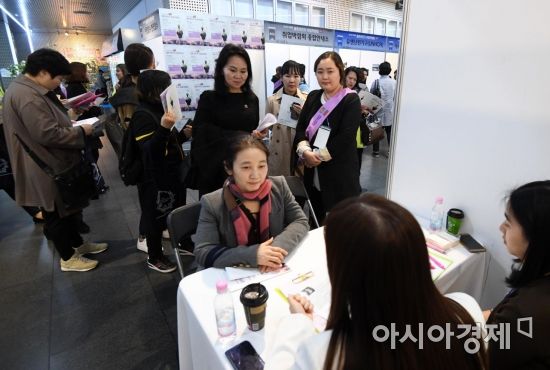 Photo by Mun Honam munonam@
At 77 family centers nationwide, the entire process from basic education such as language and understanding workplace culture to vocational training and job placement support is provided. The entire program consists of 104 courses and is conducted for about 1,000 participants. All courses are free of charge, and an educational activity allowance of 100,000 KRW is paid for every 40 hours.
In the preliminary education stage, more than 60 hours of education is provided over 1 to 3 months. Family centers conduct education to enhance vocational skills, including job-specific Korean language education, computer training, and workplace culture education.
In the vocational training stage, more than 60 hours of education is provided over 2 to 5 months. The fields include ▲bilingual instructors ▲judicial and medical interpreters and translators ▲trade clerks ▲automobile seat manufacturing experts (Ulsan automobile parts partner companies) ▲historical and cultural storytellers (Gyeongju cultural guides), as well as ▲entrepreneurship courses such as online shopping mall operators and overseas purchasing agents.
After completing the preliminary education and vocational training courses, participants are connected to employment opportunities at local schools, courts, companies, and institutions. Individual counseling regarding difficulties in work life and working conditions after employment will also be provided.
The entire operation schedule can be checked on the Ministry of Gender Equality and Family website, and applications can be made through the family center websites.
© The Asia Business Daily(www.asiae.co.kr). All rights reserved.
















