Third Largest Investment After Intel and TSMC
Expected to Expand Investment to $44 Billion
The U.S. government is reported to provide Samsung Electronics with semiconductor subsidies ranging from $6 billion to $7 billion (approximately 8.124 trillion to 9.478 trillion KRW), according to major foreign media on the 8th (local time).
Samsung Electronics is investing $17 billion (approximately 23.018 trillion KRW) to build a semiconductor manufacturing plant in Taylor, Texas. The subsidies will be used to construct four facilities including this semiconductor plant, other factories, an advanced packaging facility, and a research and development center. Additionally, the funds are expected to be allocated to other facilities that have not yet been disclosed.
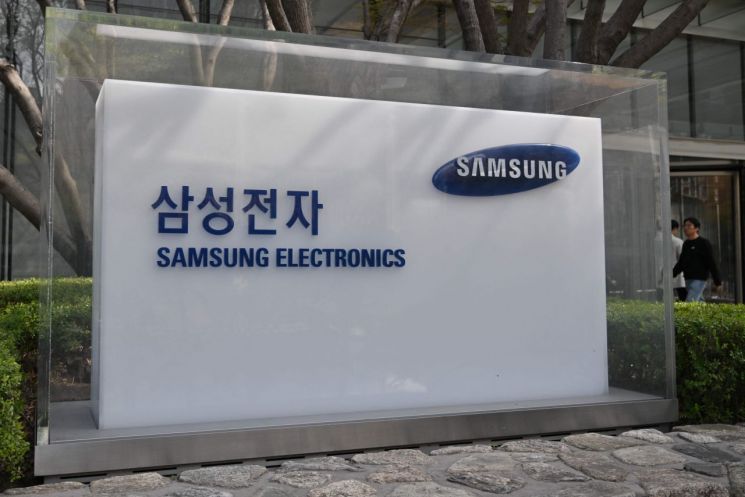
Earlier, on the 5th, The Wall Street Journal (WSJ) reported that Samsung Electronics is scheduled to announce additional investment plans on the 15th. Including the additional investment, Samsung Electronics’ total investment in the U.S. is expected to expand to more than $44 billion (approximately 59.576 trillion KRW), doubling the original plan.
The U.S. government also offers low-interest loans in addition to direct subsidies, but sources believe Samsung Electronics will not take out loans.
If this continues, Samsung Electronics is expected to receive the third-largest subsidy after Intel and TSMC, according to foreign media citing sources. The day before, the U.S. government announced direct subsidies of $6.6 billion (approximately 8.9364 trillion KRW) and loans worth $5 billion (approximately 6.77 trillion KRW) to TSMC. TSMC plans to expand its investment from the original $25 billion (approximately 33.85 trillion KRW) to $65 billion (approximately 88.01 trillion KRW) and build a third factory in Arizona by 2030. Intel received a total of $19.5 billion (approximately 26.403 trillion KRW), including $8.5 billion (approximately 11.509 trillion KRW) in direct subsidies.
Initially, the prevailing view was that Samsung Electronics would receive only $2 billion to $3 billion (approximately 2.708 trillion to 4.062 trillion KRW) and TSMC $5 billion in support, but the amounts have exceeded expectations. Following Samsung Electronics, U.S. semiconductor company Micron is also expected to receive several billion dollars in support within weeks.
According to the Semiconductor Industry Association, the U.S. share of global semiconductor manufacturing sharply declined from 37% in 1990 to 12% in 2020. To reduce dependence on China and Taiwan, the U.S. enacted the CHIPS Act in 2022. The act provides large subsidies to companies building semiconductor production facilities domestically to prevent new factory construction in China and other countries.
© The Asia Business Daily(www.asiae.co.kr). All rights reserved.

















