Interest Rate Futures Market, June Rate Cut Probability Drops to 50% Range
Inflation Cooling Slowly, Employment Remains Strong
JPMorgan Delays Rate Cut Forecast to July
Market expectations for a Federal Reserve (Fed) interest rate cut this year are fading. With inflation easing slowly and U.S. employment proving stronger than expected, investors now anticipate that the Fed will begin cutting rates in the second half of the year, with only two cuts. Some even suggest there may be no rate cuts this year.
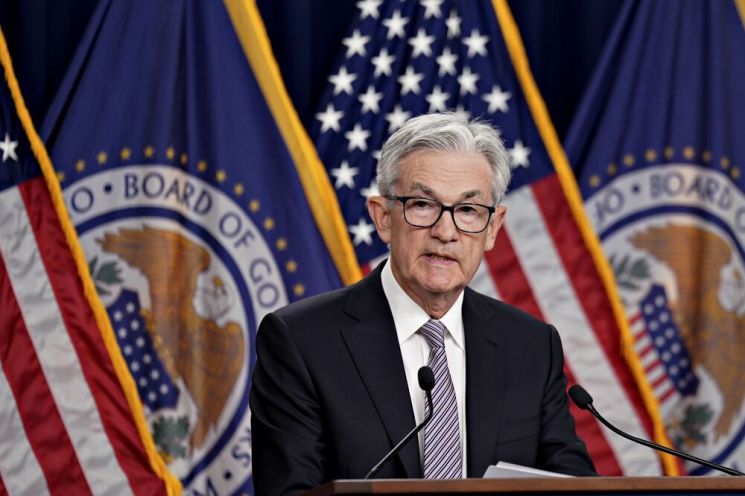
According to the Chicago Mercantile Exchange (CME) FedWatch on the 8th (local time), federal funds futures on that day priced in about a 51.3% chance that the Fed would cut rates by at least 0.25 percentage points at the June Federal Open Market Committee (FOMC) meeting. This is a significant drop from over 73% a month ago.
The disappearance of investors' rate cut expectations is evident in various places. The futures market's year-end federal funds rate forecast, estimated by market research firm FactSet, stands at 4.75%. This is not only higher than the forecast of below 4% from a few months ago but also above the median year-end rate forecast of 4.6% on the Fed's March FOMC dot plot. According to LSEG, the expected rate cut magnitude by year-end in the futures market has shrunk from 150 basis points (bp) (1bp = 0.01 percentage points) at the beginning of the year to 60bp now. Investors expect only two rate cuts this year.
As inflation concerns persist and the U.S. economy remains robust in growth and employment, expectations for rate cuts are rapidly fading. According to the U.S. Department of Labor's March employment report released on the 5th, nonfarm payrolls increased by 303,000 from the previous month, significantly exceeding the expert forecast of 214,000. The unemployment rate fell from 3.9% in the previous month to 3.8% in March. Confirming a much stronger labor market than expected, JP Morgan delayed its forecast for the Fed's first rate cut from June to July.
At the beginning of the year, investors had been building expectations for a rate cut in March. However, the forecast for a cut, which was pushed back to June after the January FOMC, is now retreating further into the second half of the year.
Fed officials have also poured cold water on market expectations with hawkish (favoring monetary tightening) remarks, saying rate cuts are premature. Neel Kashkari, president of the Minneapolis Federal Reserve Bank, said last week that if inflation does not subside, the central bank will delay rate cuts. On the 6th, Lorie Logan, president of the Dallas Fed, warned that inflation easing may have stalled and said, "It is too early to think about rate cuts."
As pivot expectations retreat, Treasury yields are also surging. The U.S. 10-year Treasury yield, a global bond yield benchmark, rose 4 basis points from the previous trading day to 4.42%, while the 2-year Treasury yield, sensitive to monetary policy, increased 6 basis points to around 4.79%.
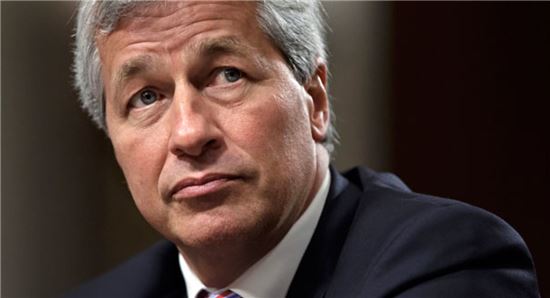
Meanwhile, Wall Street has even seen forecasts that rates could soar above 8% within a few years. Jamie Dimon, chairman and CEO of JP Morgan, known as the "Emperor of Wall Street," warned in a 61-page annual letter to shareholders that "massive fiscal spending, the trillions of dollars in annual costs associated with the green economy, global rearmament, and global trade restructuring?all of these cause inflation," and that U.S. rates could rise above 8% in the coming years. He explained that he is preparing for scenarios where rates either fall to 2% or rise above 8%.
Dimon stated, "In a scenario where the federal funds rate exceeds 6%, there is a high likelihood of significant stress on the banking system and highly leveraged companies," adding, "Rates have been extremely low for a long time, and it is difficult to know how many investors and companies are truly prepared for a high-rate environment." He further analyzed, "If rates rise by 2 percentage points, the value of most financial assets essentially falls by 20%. Certain real estate assets, especially office real estate, could decline further due to recession and rising vacancy rates."
He also expressed skepticism about the U.S. economy achieving a soft landing. He said, "The market estimates the probability of a soft landing at 70-80%, but I believe the probability is much lower."
Investors are focusing on inflation indicators that will influence the future path of interest rates. On the 10th, the March Consumer Price Index (CPI) will be released, followed by the March Producer Price Index (PPI) on the 11th. The core CPI from last month, one of the most important inflation indicators influencing the Fed's rate path, is expected to rise 3.7% year-over-year, down from 3.8% the previous month.
Jason Pride, Chief Investment Officer (CIO) of Glenmede, said, "Investors are waiting for monetary policy easing, but current conditions are far from a rate cut. With a strong labor market, manufacturing expansion, and rising commodity prices, the Fed is unlikely to rush into rate cuts."
© The Asia Business Daily(www.asiae.co.kr). All rights reserved.
![User Who Sold Erroneously Deposited Bitcoins to Repay Debt and Fund Entertainment... What Did the Supreme Court Decide in 2021? [Legal Issue Check]](https://cwcontent.asiae.co.kr/asiaresize/183/2026020910431234020_1770601391.png)















