Daewoongjeon Hall Shows Characteristics of Early and Mid-Joseon Period and Jeolla Province
Gaunru Pavilion Built Across Both Sides of the Valley Slopes
The Daeungjeon Hall of Munsusa Temple in Gochang and the Gawunru Pavilion of Gounsa Temple in Uiseong are designated as national cultural heritage treasures. The Cultural Heritage Administration announced on the 9th that it will finalize the designation after collecting opinions from various sectors for a month and reviewing them through the Cultural Heritage Committee.
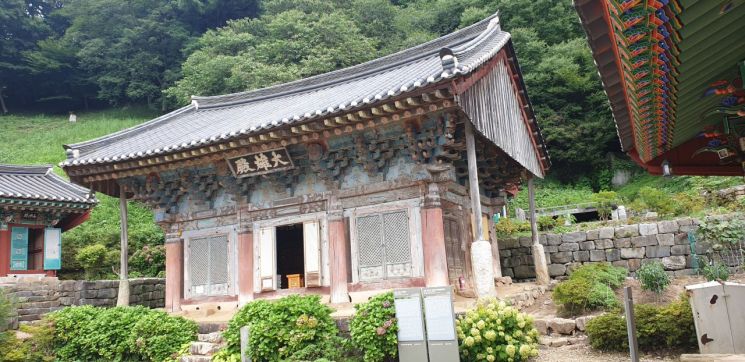
Munsusa Temple is a representative Munsu meditation site (文殊道場) in the Jeolla Province region. It is said to have been founded by the monk Jajang Yulsa (慈藏律師) in the 4th year of King Uija of Baekje (644). According to the "Munsusa Temple Founding Record (1758)," it was reconstructed in the 40th year of King Seonjo (1607) after the Imjin War, and again renovated by the monk Hoejeok Seongohwasang in the 4th year of King Hyojong (1653). The Cultural Heritage Administration explained, "Based on records that the disciple Sangyu created the Three Buddha Seated Statues and the Ten Kings Statues the following year (1654), it is presumed that it was reconstructed again during this period."
The main Buddha hall, Daeungjeon, is the building enshrining the treasure "Gochang Munsusa Wooden Seated Statues of Sakyamuni and the Three Buddhas." Its size is three bays wide at the front and two bays deep at the side. The simple yet robust form and structure of the bracket system reflect the architectural styles from the early to mid-Joseon period and the regional characteristics of Jeolla Province.
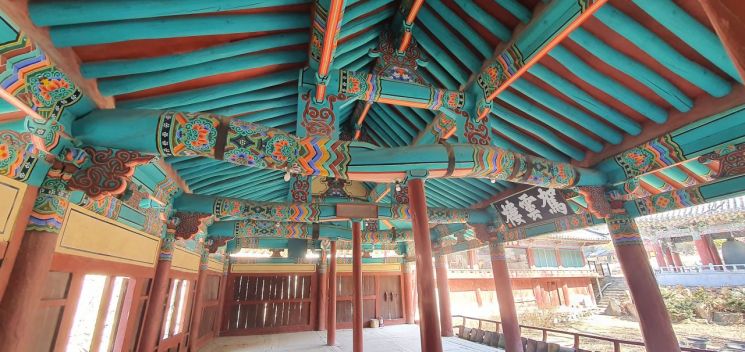
The roof was originally a paljak style (a hip-and-gable roof with triangular gables on the sides and sloping tiled roof), with brackets arranged on all four sides, but was later changed to a matbae style (a gable roof with slopes only on the front and back, with wooden panels attached on the sides to block wind and rain). It faithfully retains the dapo-style matbae roof technique and style. The dancheong (traditional multicolored paintwork) also preserves old techniques using traditional mineral pigments and animal glue, giving it high academic and historical value.
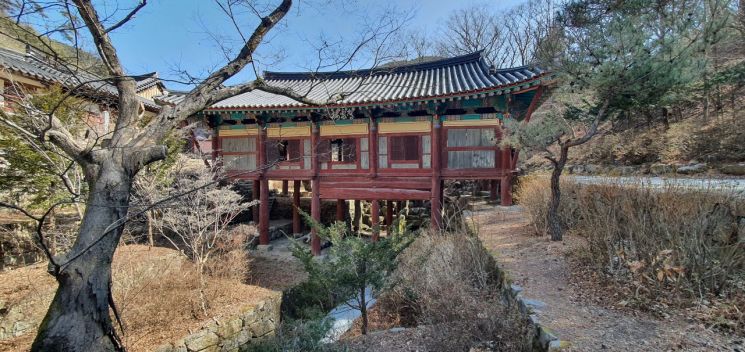
Gounsa Temple, the head temple of the 16th district of the Jogye Order of Korean Buddhism, is said to have been founded by the monk Uisang during the Silla period. According to the "Gounsa Temple Historical Monument (1729, 1918)," the Gawunru Pavilion at the entrance was built in 1668. It is the largest temple pavilion built spanning a valley.
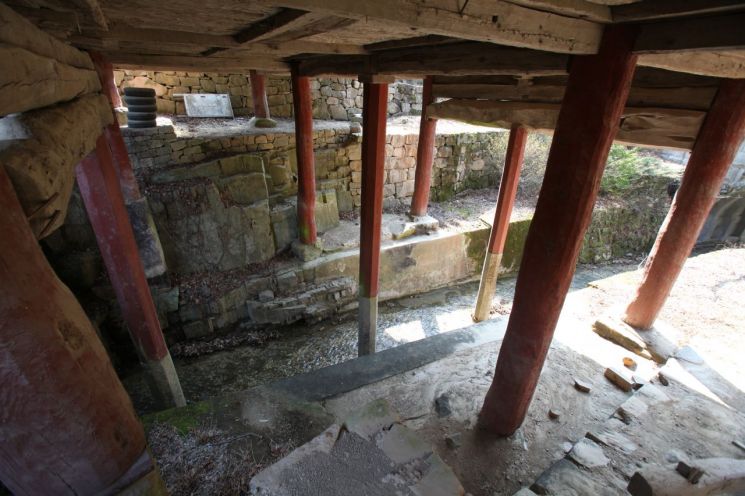
Its size is five bays wide at the front and two bays deep at the side. It has a rectangular floor plan and a paljak-style roof. The architectural style from the mid to late Joseon period is well preserved. The building is constructed spanning both sides of the valley. Three pairs of long pillars support the pavilion from the valley floor, with relatively wide spacing between the pillars. The Cultural Heritage Administration evaluated, "It has a unique structure different from existing temple pavilions," and added, "It harmonizes well with nature, giving it high academic and artistic value."
© The Asia Business Daily(www.asiae.co.kr). All rights reserved.



















