Corporate Credit Card Used to Raise 109.5 Billion KRW for Material Purchases
Short-Term Loans of 500 Billion KRW Due Within the Year
Exploring Various Funding Channels
Hanwha Impact, the intermediate holding company of Hanwha Group, is exploring various funding methods as large-scale debt maturities continue amid poor performance. Recently, it borrowed 109.5 billion won in operating funds using a corporate purchase-only card to pay suppliers. It must respond to debt maturities of around 500 billion won within the year.
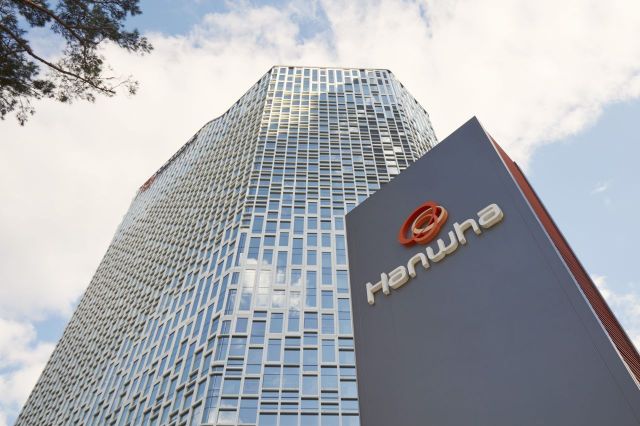
According to the investment banking (IB) industry on the 9th, Hanwha Impact recently used a corporate purchase-only card to settle 109.5 billion won in operating funds, with DB Financial Investment as the lead manager. Simultaneously with the payment, Hyundai Card, a credit card company, issued asset-backed securities (ABSTB) of the same amount using the card payments receivable from Hanwha Impact as the underlying asset (a type of collateral). In July, three months later, when Hanwha Impact repays the loan to a special purpose company (SPC), the funds will be repaid at maturity to the ABSTB investors.
A corporate purchase-only card is a payment agreement system where the purchasing company pays the delivery amount by credit card and then sends the statement to the card company, which pays the delivery company the purchase amount. Through this transaction, Hanwha Impact was able to postpone the payment of 109.5 billion won in purchase payments by three months. If Hanwha Impact requests at maturity, the payment date can be further extended, but an extension fee must be paid.
The reason Hanwha Impact shifted the immediate cash liquidity burden using the purchase card is closely related to its financial situation. As of the end of last year, Hanwha Impact had 644.4 billion won in borrowings based on individual financial statements. Of this, 462 billion won must be repaid within the year, indicating a high short-term debt repayment burden.
It is practically difficult to respond to maturing debt with annual cash flow. EBITDA shrank from the 300 billion won range in 2022 to the 200 billion won range last year. Due to the poor performance of its subsidiary Hanwha Total, consolidated EBITDA also drastically decreased to around 20 billion won annually. This means the ability to repay debt is rapidly weakening.
The poor performance of the subsidiary Hanwha Total is analyzed to be adversely affecting Hanwha Impact’s financial condition. Hanwha Total accounts for more than 95% of the combined sales of Hanwha Impact affiliates. Last year, sales declined and operating losses occurred due to a drop in petrochemical product spreads and poor performance in the solar power sector. Due to poor performance, a ‘negative’ outlook was attached to its credit rating (AA) in the first half of last year. If it deteriorates further, the credit rating will fall to AA-.
Hanwha Impact’s financial burden continues to increase as investments for petrochemical plant maintenance rise. Capital expenditures (CAPEX) increased from 219 billion won in 2022 to 371.3 billion won cumulatively through the third quarter last year. CAPEX nearly doubled.
In 2022, 210 billion won was invested in acquiring shares of Hanwha Power Systems, and about 32.7 billion won was invested in acquiring shares of the bio company Inari Agriculture. Last year, 226.9 billion won and 400 billion won were spent on acquiring shares of HSD Engine and Hanwha Ocean, respectively.
The high dividend payout ratio also affects the deterioration of financial stability of the core subsidiary Hanwha Total. Hanwha Total’s dividend payout ratio rose to 100% from 2021. The payout ratio refers to the proportion of total dividends to net income, which serves as the dividend source. This means all net income is paid out as dividends to Hanwha Total. However, from Hanwha Total’s perspective, dividend income is generated, so Hanwha Total’s high dividends do not adversely affect Hanwha Impact’s financial soundness.
An IB industry official said, "Funding through the purchase-only card merely delays payment by about three months," adding, "Hanwha Impact faces a series of debt maturities within the year, so it must continuously secure liquidity to repay or refinance its borrowings."
© The Asia Business Daily(www.asiae.co.kr). All rights reserved.
![A Woman Who Jumps Holding a Stolen Dior Bag... The Mind-Shaking, Bizarre Con of a "Human Knockoff" [Slate]](https://cwcontent.asiae.co.kr/asiaresize/183/2026021902243444107_1771435474.jpg)
















