Precautions for Infectious Disease 'Severe Fever with Thrombocytopenia Syndrome (SFTS)'
-
Minimize Skin Exposure and Apply Repellent During Outdoor Activities
Gwangyang City in Jeollanam-do has urged caution against tick-borne infectious diseases during the spring season, when the busy farming period begins and outdoor activities increase.
Severe Fever with Thrombocytopenia Syndrome (SFTS), a tick-borne infectious disease, is more likely to occur in spring due to increased exposure to ticks from outdoor activities such as farming, harvesting forest products, and hiking.
SFTS has an incubation period of 5 to 14 days and is accompanied by clinical symptoms such as high fever over 38 degrees Celsius and gastrointestinal symptoms (nausea, vomiting, diarrhea, etc.).
It also has a high fatality rate of about 12 to 47% (18.7% cumulative fatality rate in Korea from 2013 to 2022), and since there are no preventive vaccines or treatments, avoiding tick bites is the best prevention method. Not only farmers who frequently work outdoors but also the general public who engage in weekend farming or hiking need to be cautious to avoid infection.
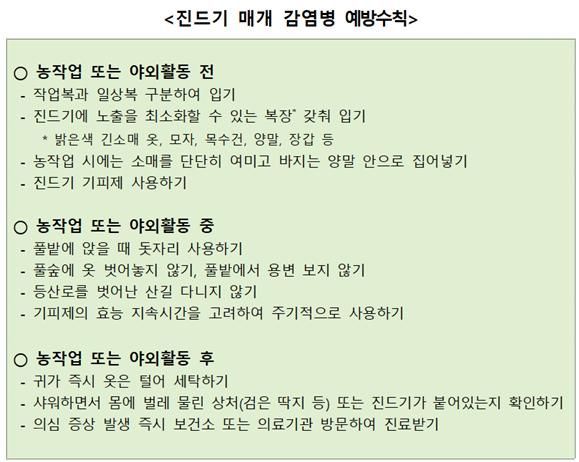
Preventive measures include ▲ minimizing skin exposure by wearing hats, long sleeves, long pants, hiking boots, neck scarves, gloves, and long socks before outdoor activities ▲ applying tick repellents ▲ sitting on mats or similar items outdoors ▲ brushing off, washing, and laundering clothes after outdoor activities.
Meanwhile, the Gwangyang Public Health Center continuously provides education on preventing tick-borne infectious diseases to high-risk groups such as agricultural workers. It also strengthens quarantine measures by distributing tick repellents and promotional materials for disease prevention, doing its best to prevent and block the spread of infectious diseases.
Kim Bok-deok, director of the Public Health Center, said, “The incidence of SFTS significantly increases every year between April and November, when farming and outdoor activities are frequent,” and added, “Please pay special attention to preventing tick-borne infectious diseases by following preventive measures, and if any suspicious symptoms appear, visit a medical institution immediately for diagnosis and treatment.”
© The Asia Business Daily(www.asiae.co.kr). All rights reserved.

















