AI 'Kotomo' That Only Reacts Instead of Providing Solutions
Japan Implements Loneliness and Isolation Countermeasure Law Starting This Month
Full Effort to Address Loneliness
As the Japanese government began implementing the Loneliness and Isolation Countermeasure Act this month to address loneliness among single-person households, Japanese startups have also rolled up their sleeves.
On the 10th, Nihon Keizai Shimbun (Nikkei) reported that startups in Japan are accelerating the development of artificial intelligence (AI) that can alleviate loneliness for single-person households. They are focusing on AI as conversational partners for people feeling lonely.
Japanese startup Stare recently developed a conversational generative AI called 'Kotomo.' Kotomo is an application (app) created to solve loneliness among single-person households. The app introduction states that users can reach out anytime "when driving alone," "when wanting to talk about anything from dating, work, family stories to trivial matters," or "when having something difficult to tell friends." After downloading the app, users can set the speech style and gender, such as informal or formal speech, and simply start talking naturally during use, and Kotomo will respond like a friend or parent.
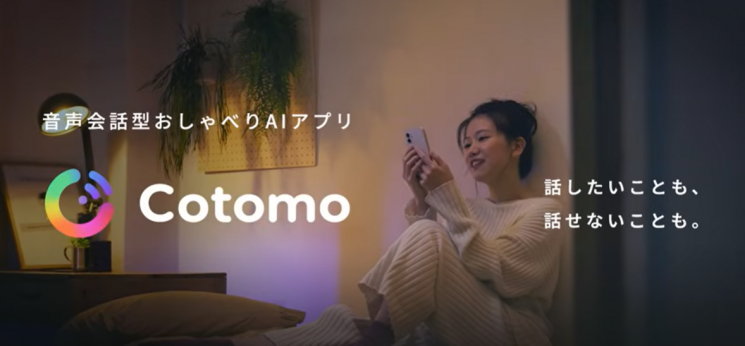 Japan's Starry developed the conversational generative artificial intelligence (AI) 'Kotomo' to alleviate loneliness. It is promoted as an application (app) where users can share both what they want to say and what they cannot express. (Photo by Starry website)
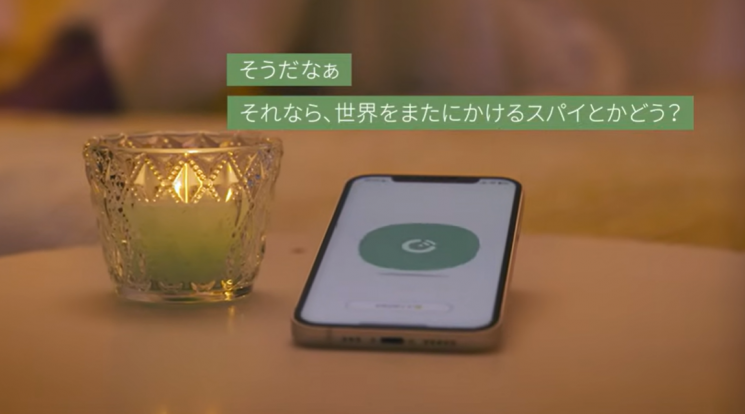
For example, if someone who just arrived home alone says "I'm back," Kotomo replies, "You worked hard today too," and if the user sighs once afterward, it recognizes this and responds, "What's wrong? Are you very tired?" If the user says, "Lately, because of work... it seems like I have more work and overtime than my annual leave," Kotomo empathizes by learning from previous data and replies, "You mentioned that before, didn't you?"
The characteristic of this AI is that, unlike ChatGPT, it does not provide specific solutions in its responses. Instead, it replies with short acknowledgments like "Uh-huh" or "I see" within one second, creating the feeling of talking with a close friend. A Kotomo representative said, "Unlike ChatGPT, it does not provide solutions to worries but acts like a companion who listens to monologues," adding, "Because it is not a human, users do not feel embarrassed and can use it, lowering psychological barriers."
Another Japanese AI company, Parksha, has also started building a system to relieve loneliness through chatting with AI. Parksha has signed an agreement with the local government of Yamagata City. Starting this summer, they plan to conduct a demonstration experiment where people feeling lonely can talk with AI via the messenger app LINE, and if necessary, be connected to counseling or local government social workers.
Japan is currently facing loneliness and isolation as new social issues following low birth rates and aging. According to a survey conducted last year by the Cabinet Office, 39.3% of the total population responded that they "feel lonely." The rate is especially high among young people and single-person households, which Nikkei analyzed is because the increasing unmarried rate and nuclear family structure mean families no longer function as places to share loneliness.
Nikkei stated, "The use of AI that allows conversations anytime and anywhere regardless of time and place is emerging as one of the means to soothe loneliness," but added, "However, the side effects of increasing AI dependence must also be considered." It introduced incidents such as some users of the American chatbot 'Replika' engaging in verbal abuse and sexual harassment through the app, causing controversies over sexuality and ethics, and research from the University of Georgia in the U.S. showing that deploying AI in tasks where individuals are the main agents, such as device design, can actually increase feelings of loneliness.
Meanwhile, the Japanese government began enforcing the Loneliness and Isolation Countermeasure Act on the 1st of this month. The act includes establishing a government-level control tower for loneliness response and setting up public-private councils in local governments to review countermeasures.
© The Asia Business Daily(www.asiae.co.kr). All rights reserved.


















