Forest Fire Spotters Searching for Sparks in Mountains, Forests, and Fields
An Important Job Protecting Forests Domestically and Internationally
Popular as a Second Career for Middle-Aged and Older Adults
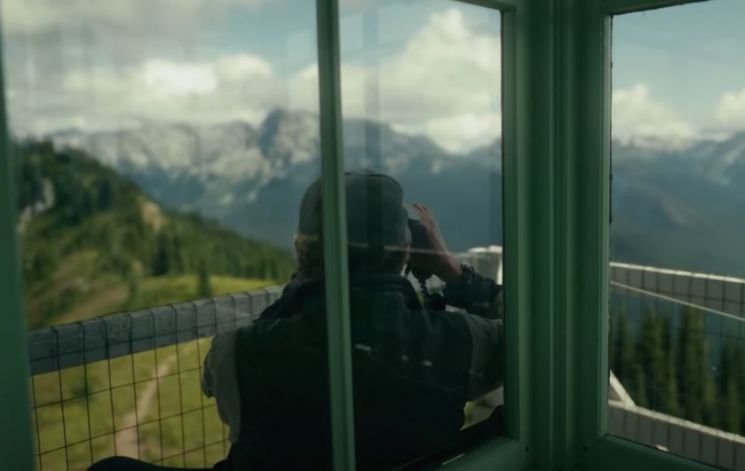
What if there was a job where you could gaze at lush mountains and forests all day long? Surprisingly, this is a real occupation in many countries around the world. Moreover, their work is essential to protect precious lives, assets, and the environment. Forest fire and wildfire lookouts are agents who detect and suppress fires occurring in untouched natural areas at an early stage.
Wildfires That Quickly Spread into Large-Scale Fires
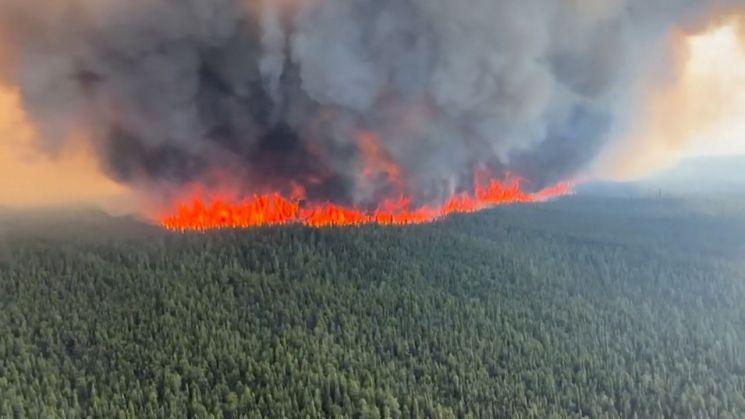 A wildfire occurring at Tumbler Ridge in British Columbia, Western Canada [Image source=Yonhap News]
Forest fires or wildfires are as much man-made disasters as they are natural phenomena. During the dry winter and spring transitional seasons, even the wind rubbing against trees can ignite sparks. If these sparks are not caught early, they can quickly grow into massive infernos.
Recent climate changes have become a catalyst for wildfires. Especially in countries with dense forests such as the United States and Canada, massive wildfires frequently occur. For example, a wildfire in Canada last August claimed the lives of four firefighters, destroyed numerous homes, and was only contained after burning an area of 140,000 km² (1.4 times the size of South Korea).
Watching the Mountains to Spot Sparks
Lookouts, also known as 'Fire lookouts,' monitor sparks that could potentially escalate into massive wildfires. Governments and local authorities employ lookouts not only in continental countries like the U.S. and Canada but also in Europe and Korea.
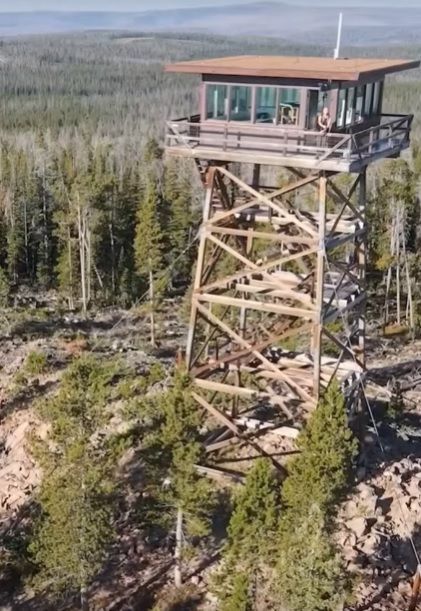
They stay in lookout towers located in the middle of vast forests or mountains, watching for smoke caused by sparks. If smoke is spotted, their main task is to immediately report it to nearby emergency centers using communication equipment. Recently, small flying devices such as drones are also used to survey distant areas, but 'human observation skills' remain an irreplaceable means of monitoring.
To monitor vast natural areas, lookout towers must be built sparsely, which means the number of personnel working at each tower is very limited. The New York Times (NYT) once described the life of American fire lookouts as "the loneliest job in the world." Salaries for wildfire lookouts vary greatly by country, state, and region, but they are generally known to earn over 50 million KRW annually.
Popular as a New Career for Middle-Aged and Older Adults
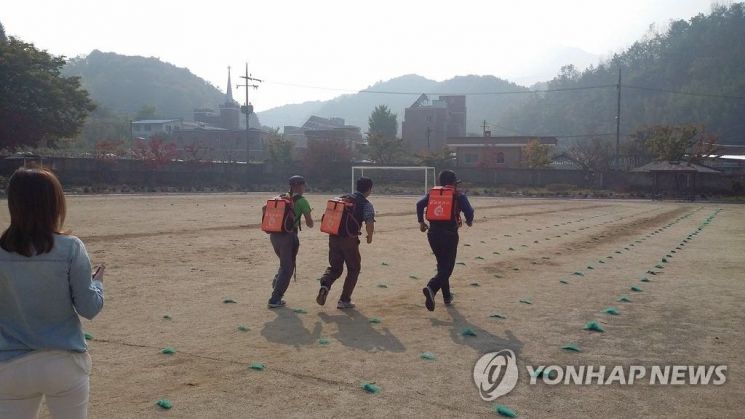 Physical fitness test for selecting domestic wildfire watchers. Since they have to carry firefighting equipment and walk long distances, a certain level of physical fitness is required.
 [Image source=Yonhap News]
In Korea, the Korea Forest Service or local governments hire wildfire lookouts and specialized prevention and suppression teams. In particular, domestic wildfire lookouts are popular jobs for retired middle-aged and older adults preparing for their second life. The average age of wildfire lookouts in Korea is known to be from the late 50s to early 60s.
In Korea, wildfire lookouts are usually hired by local governments for periods typically under six months. They are paid weekly or monthly, with monthly wages around 2 million KRW based on the minimum hourly wage.
However, prevention and suppression teams carry wildfire prevention equipment and patrol mountains and forests, and must be able to remove flammable materials in emergencies. Therefore, a certain level of physical fitness suitable for long-distance hiking is required. If you want to protect the forests of the Korean Peninsula while taking care of your health, why not consider becoming a wildfire lookout?
© The Asia Business Daily(www.asiae.co.kr). All rights reserved.



















