Reduced Earnings Due to Contraction in Fund Management
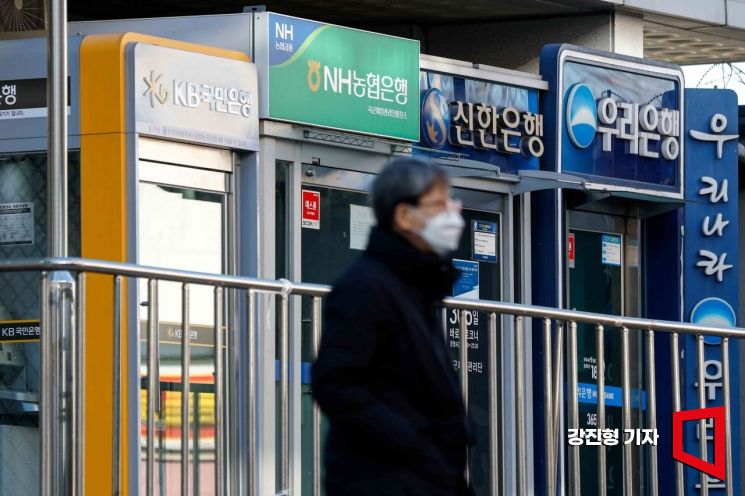
Last year, the surplus funds of households in South Korea decreased by more than 50 trillion won. This was due to the impact of high interest rates and economic sluggishness, which slowed the growth of household income.
According to the '2023 Financial Flow (Provisional)' statistics released by the Bank of Korea on the 4th, the net fund operation amount of households and non-profit organizations was 158.2 trillion won, down 50.8 trillion won from the previous year (209 trillion won). The net fund operation amount is the value obtained by subtracting the fund procurement amount from the fund operation amount of the economic entity, and can be interpreted as the surplus funds of the economic entity.
Jung Jin-woo, head of the Financial Flow Team at the Economic Statistics Bureau, explained, "As interest rates rose, loan interest costs increased, and the overall sluggish economy continued, reflecting a decrease in the overall income growth rate."
The fund operation amount decreased from 283.5 trillion won in 2022 to 194.7 trillion won last year. Due to the decrease in surplus funds, the scale of operation for all products such as deposits and bonds shrank, and the operation of equity securities and investment funds turned to a decline. Financial activities themselves were restrained due to high interest rates, reducing income from financial asset management. Team leader Jung said, "Financial activities were very active during the COVID-19 pandemic period and are now in the process of normalizing."

Household fund procurement amounted to 36.4 trillion won, down 38.1 trillion won from the previous year (74.5 trillion won) as borrowing from deposit-taking institutions decreased. Despite the increase in housing-related loans, other loans such as household credit loans and small business loans shrank due to rising loan interest rates. According to the Bank of Korea, mortgage loans increased by 51 trillion won over one year, but other loans decreased by 32.5 trillion won.
For non-financial corporations (general companies), the net procurement scale last year was 109.6 trillion won, down 88.5 trillion won from the previous year (198.1 trillion won). Fund operation amount (30.8 trillion won) decreased as deposits and bond operations of financial institutions turned to net disposal and foreign direct investment also declined, and fund procurement amount (140.4 trillion won) also decreased mainly due to borrowing from financial institutions and bond issuance. The scale of operation recorded the lowest since the statistics compilation, and the scale of procurement was the lowest since 2017. The impact of increased domestic and international uncertainties, increased funding costs due to rising interest rates, reduction in foreign direct investment, and sluggish sales was significant.
In the case of the general government, the net fund procurement scale also shrank from 24 trillion won to 13 trillion won in one year. This was mainly due to a decrease in government spending exceeding income, leading to a reduction centered on government bonds.
© The Asia Business Daily(www.asiae.co.kr). All rights reserved.


















