18 Nationwide Visits to Public Livelihood Sites
60 Economic Issue Vice Minister Meetings Held
Dynamic Economy Roadmap Announced in First Half
First Steps Toward Labor Market Structural Reform
Changes Including MOEF Work Efficiency
Weekend Meetings Moved to Weekdays with Staff Officers Participation
On the 1st of March, a day before the announcement of the consumer price index for March, Choi Sang-mok, Deputy Prime Minister for Economic Affairs and Minister of Strategy and Finance, visited an apple farm in Gunwi-gun, Daegu. This visit followed his trip to Seongnam Hanaro Mart on the 25th of last month to check prices. He said, "You can be fooled once by the gold (geum) apples, but not twice." He emphasized that since the recent soaring fruit prices are largely due to abnormal weather, fundamental measures such as breed improvement are necessary. Deputy Prime Minister Choi stated, "This incident has become a good opportunity to identify problems that may arise due to climate change," and added, "Next year, we will provide support in advance so that apple prices do not become as expensive as they are this year."
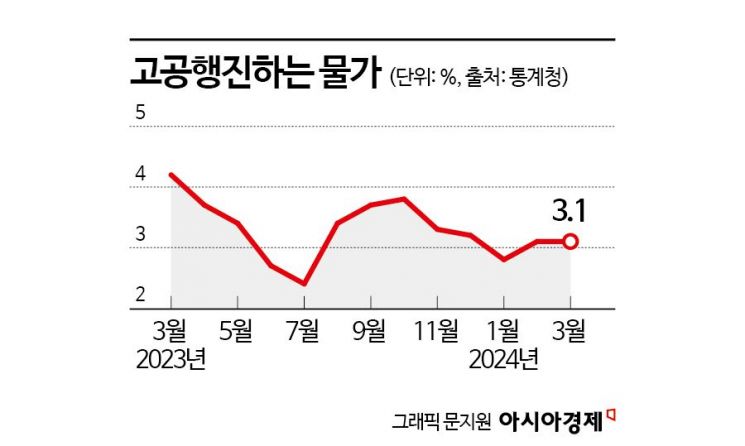
However, with the general election approaching, the issue of prices was not easy to handle. The consumer price index, which fell to 2.8% in January, rose back to the 3% range in February and March. The prices of daily necessities remain stubbornly high, and the psychological burden of whether the consumer price index is 2.9% or 3% is vastly different. Deputy Prime Minister Choi said, "We expect prices to gradually stabilize downward from next month," signaling efforts to ease concerns.
Deputy Prime Minister Choi will mark his 100th day in office on the 6th. At the end of last year, a sense of crisis pervaded the Korean economy. The so-called triple high (high inflation, high interest rates, high exchange rates) combined with low growth raised concerns about a stagflation phase. Korea’s economic growth rate was only 1.4% last year. External shocks such as Russia’s invasion of Ukraine, the war between Israel and the Palestinian armed group Hamas, and the US-China rivalry compounded the situation. Domestically, economic vitality sharply declined due to low birth rates and an aging population.
Deputy Prime Minister Choi diagnosed this as a "complex crisis." In his inaugural speech, he emphasized, "We will swiftly establish a price stabilization policy and expand the recovery of exports to all areas of people’s livelihoods and domestic demand, focusing all efforts on restoring the livelihood economy."
He devoted his first 100 days to price stabilization, boosting domestic demand, and expanding exports. Starting from January 16, he held ministerial meetings with related departments every two weeks (six times) to discuss price trends and countermeasures, while continuing field visits. Beginning with a visit to Yeongcheon Market in Seoul on December 13 last year as a nominee, he visited Garak Market (January 23), an apple farm in Chungbuk (January 29), Incheon Airport Customs (January 30), Seongnam Hanaro Mart (March 25), and the Apple Research Center (April 1). He visited livelihood sites 18 times in total. He also held 60 ministerial and vice-ministerial meetings to review and respond to the overall economic situation, including prices, livelihoods, finance, and exports.
He provided 200,000 won in electricity bill discounts to 1.26 million small business owners and doubled the income deduction rate from 40% to 80% for credit card use in traditional markets during the first half of the year. About 150 billion won was invested to stabilize agricultural and livestock product prices, and for the first time since the introduction of the burden system in 2002, 32 out of 91 burdens were reviewed and adjusted to reduce the public’s financial burden. Since the budget was tight, all possible tax reduction policies were mobilized.
After the general election on the 10th, Deputy Prime Minister Choi’s economic team is expected to drive a "dynamic economy." When he was nominated in December last year, his first declaration was about a dynamic economy. He stated at the time, "We will dramatically enhance economic dynamism through structural reforms." This was based on the judgment that innovation such as structural reform and deregulation is necessary to address the reality of the population crisis and to raise the falling potential growth rate.
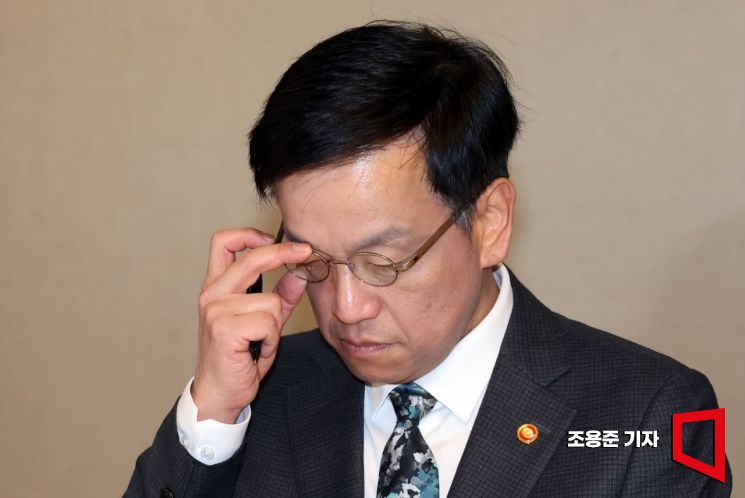 Choi Sang-mok, Deputy Prime Minister for Economic Affairs and Minister of Economy and Finance, is touching his glasses after delivering opening remarks at the Price-Related Ministers' Meeting held on the 6th at the Government Seoul Office in Jongno-gu, Seoul. Photo by Jo Yong-jun jun21@
The dynamic economy roadmap will be announced soon. Based on diverse opinions collected from related ministries, a "Dynamic Economy Roadmap" outlining practical tasks and directions for the next three years will be announced in the first half of the year. Major individual tasks such as the "Plan to Enhance Social Mobility" and the "Plan to Strengthen the Growth Ladder for Small and Medium Enterprises" will be announced sequentially in April and May.
Efforts to accelerate deregulation will also continue. This includes easing land regulations on development-restricted areas and leftover farmland and mountain land, which have been obstacles to corporate site selection. Investment support will be strengthened to secure a global technological edge by adding facilities for high-bandwidth memory (HBM) semiconductor design and manufacturing, OLED process equipment, and component technologies to the existing seven fields and 50 facilities designated as "national strategic technology commercialization facilities," including semiconductors, secondary batteries, vaccines, and displays.
The first step toward labor market structural reform has also been taken. Attending the Economic, Social, and Labor Council plenary session on February 6, Deputy Prime Minister Choi said, "Social dialogue is urgently needed to create sustainable jobs and realize a dynamic economy for future generations." He urged, "Although it will be a challenging process, when labor, management, and government walk together with the spirit of ‘companion journey,’ we can go far with mutual consideration and patience."
Experts pointed out that follow-up measures must be pushed forward intensively to restore economic dynamism and raise the potential growth rate. Lee Yoon-soo, professor of economics at Sogang University, said, "Bold innovations in labor, pensions, and education proposed by the government are essential tasks to restore growth engines."
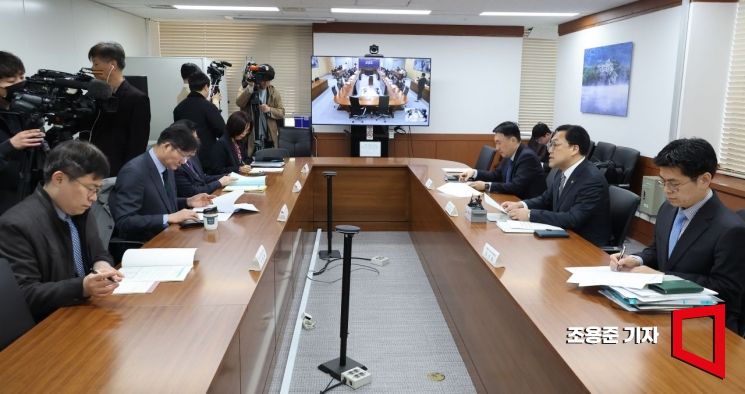 Kim Byunghwan, the 1st Vice Minister of the Ministry of Economy and Finance, is speaking about recent employment trends at the Job Task Force meeting held on the 15th at the Government Seoul Office in Jongno-gu, Seoul. Photo by Jo Yongjun jun21@
Inside the Ministry of Strategy and Finance, changes such as improved work efficiency are noticeable. The policy review senior officials’ meeting, which used to be held every Sunday, was moved to Friday. This meeting involves the Deputy Prime Minister, the first and second vice ministers, and first-grade officials (such as directors and deputy ministers) reviewing weekly policy announcements, schedules, and events, and discussing matters to be shared among departments. A ministry official said, "The biggest change felt since Deputy Prime Minister Choi took office is being able to rest on weekends," adding, "This is a significant change in life and greatly improves work-life balance."
The participation of junior officials in meetings has also increased. For example, the ministry’s messenger app, Telegram, includes work channels that involve junior officials. Communication channels have been created where not only the Deputy Prime Minister but also directors participate, and junior officials can join these channels to observe policy reporting and feedback processes.
One junior official said, "Receiving condensed information from a director and understanding the overall reporting process and picture are quite different," adding, "Seeing and hearing directly what issues the Deputy Prime Minister checked and questioned makes it clear which parts should be focused on and prepared for in our work."
© The Asia Business Daily(www.asiae.co.kr). All rights reserved.
![User Who Sold Erroneously Deposited Bitcoins to Repay Debt and Fund Entertainment... What Did the Supreme Court Decide in 2021? [Legal Issue Check]](https://cwcontent.asiae.co.kr/asiaresize/183/2026020910431234020_1770601391.png)

















