Reorganization of Waterfront-Centered Urban Spatial Structure, 'Busan Waterfront Management Master Plan' to be Completed Early Next Year
Innovative Design Elements Significantly Applied Through Collaboration with City Chief Designer (Professor Na G
Busan City is transforming Busan into an international waterfront city by reorganizing the urban spatial structure centered on the "waterfront" through the establishment of the "Busan Waterfront Management Master Plan."
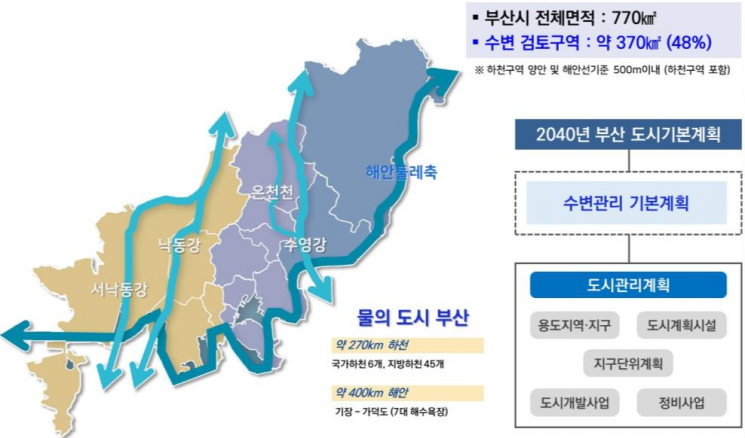
To enhance urban competitiveness and citizens' quality of life, the city is redefining the value of waterfront spaces. Since February last year, the city has been developing the "Busan Waterfront Management Master Plan," which aims to restore publicness and vitality, and establish principles and standards for systematic development and utilization.
The waterfront spaces, an important asset of Busan, have become rigid due to industrialization and urbanization, being occupied by industries and infrastructure. The disconnection from citizens' daily spaces, along with urban stagnation, aging of existing facilities, and privatization of waterfronts, has continuously raised the need for better utilization and management of waterfront spaces.
The city plans to create waterfront spaces as everyday areas easily accessible to citizens and as vibrant hubs that serve as new foundations for sustainable urban development, establishing policies and strategies for Busan to become a future-oriented waterfront city.
The "Busan Waterfront Management Master Plan" was initiated in February last year and is being developed with the goal of completion by early next year.
In particular, the city intends to significantly apply innovative design elements to this master plan through collaboration with the city’s chief designer (Professor Na Geon from Hongik University), thereby enhancing the attractiveness and urban brand of waterfront city Busan.
While envisioning waterfront city Busan, the city plans to establish a unique urban design identity exclusive to Busan through a service design thinking approach and discuss systematic planning methods, including differentiated plans from the citizens’ perspective.
Additionally, the city will regularly seek ways to apply attractive, vibrant, and innovative design elements throughout the waterfront spaces through collaborations related to urban design.
The main contents of the "Busan Waterfront Management Master Plan," which aims for an open waterfront, a vibrant waterfront, a safe waterfront, and a healthy waterfront, are as follows.
First, to create a citizen-centered open waterfront, the plan explores securing spaces shared by all such as parks and open areas, forming Busan’s distinctive landscapes through creative skylines and architectural designs, and establishing various access systems such as pedestrian pathways.
As a measure to boost Busan’s future vitality, the plan envisions creating future vitality hubs such as mixed-use residential, commercial, and office spaces, strengthening connectivity between hubs including the city center, and supporting diverse uses and activities by creating leisure and cultural specialized spaces.
Furthermore, to realize new policies, clear and predictable standards such as architectural guidelines will be presented.
Mayor Park Hyung-jun stated, “Busan is a city formed by attractive seas and rivers, and the waterfronts spread throughout the city are public spaces that enhance the city’s charm and citizens’ quality of life, as well as tangible and intangible assets. Like world-class waterfront cities such as New York and Singapore, our city will also transition to a waterfront-centered urban structure and apply innovative urban design to grow into a global hub city.”
© The Asia Business Daily(www.asiae.co.kr). All rights reserved.

















