Sale to OCI due to existing owner gift tax burden
OCI without pharmaceutical experience fails to find proper direction
Hanmi-origin sales expert resigns after integration collapse
Expecting profit turnaround in CNS treatment without Hanmi
With the collapse of the Hanmi Pharmaceutical-OCI merger, the management of OCI's affiliate Bukwang Pharmaceutical, which was to be 'entrusted' to Hanmi, has entered a foggy state. Amid Bukwang Pharmaceutical's poor performance, including posting losses for two consecutive years for the first time since its founding last year, and the resignation of the CEO dispatched as a 'relief pitcher' from Hanmi Pharmaceutical, attention is focused on what breakthrough OCI will devise.
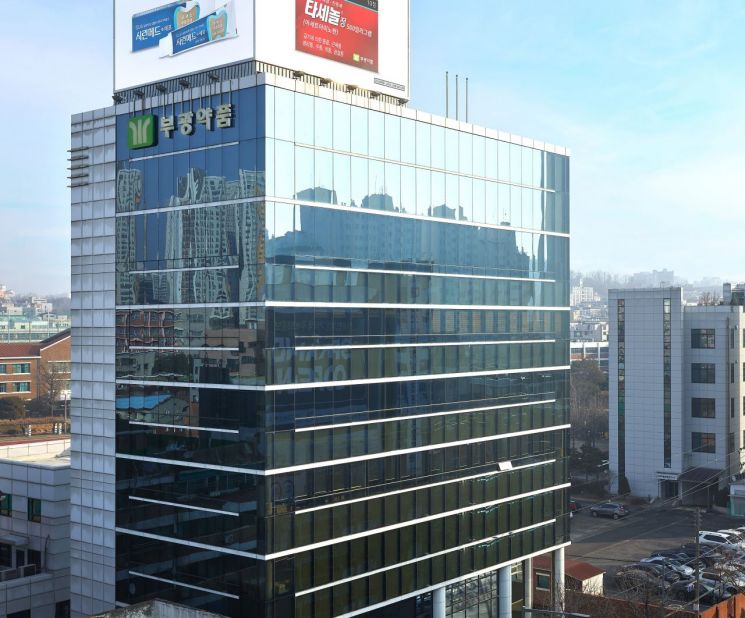
Woo Gi-seok, who was appointed as the co-CEO of Bukwang Pharmaceutical during the integration process of the two companies, resigned on the 1st. CEO Woo is a pharmaceutical sales expert who worked at Hanmi Pharmaceutical for 30 years and concurrently served as CEO of Bukwang Pharmaceutical and Online Pharm, Hanmi Pharmaceutical’s pharmacy sales affiliate. Bukwang Pharmaceutical has shifted to a sole CEO system under Lee Jae-young, who has a background in inspection.
OCI Chairman Lee Woo-hyun expressed strong trust even after the merger fell through, saying, "We recruited a person well-known as a sales expert, and we will not send him to Hanmi Pharmaceutical," because he considered him the right person to revive Bukwang Pharmaceutical’s performance. Bukwang Pharmaceutical recorded an operating loss for the first time in 2022. Last year, sales were 125.9 billion KRW, with an operating loss of 36.4 billion KRW, showing a decrease in sales and an increase in operating losses compared to the previous year.
This period coincided with OCI acquiring half of the shares owned by the Bukwang Pharmaceutical owner family, becoming the largest shareholder. At that time, Bukwang Pharmaceutical was in a situation similar to Hanmi Pharmaceutical. The founder, Chairman Kim Dong-yeon, began succession of management rights by gifting shares to his eldest son, President Kim Sang-hoon. However, difficulties in securing funds for gift tax payments led to frequent sales of shares by the owner family.
Then OCI appeared. OCI, having secured over 1 trillion KRW in surplus funds due to the boom in its main business, polysilicon, became the largest shareholder as it acquired more than half of the shares held by the Bukwang Pharmaceutical owner family. Although they pledged 'joint management through consultation on major management decisions,' President Kim Sang-hoon stepped down as an inside director immediately after the integration and withdrew from management. Meanwhile, OCI Chairman Lee Woo-hyun took the position of inside director at Bukwang Pharmaceutical and led management as sole CEO.
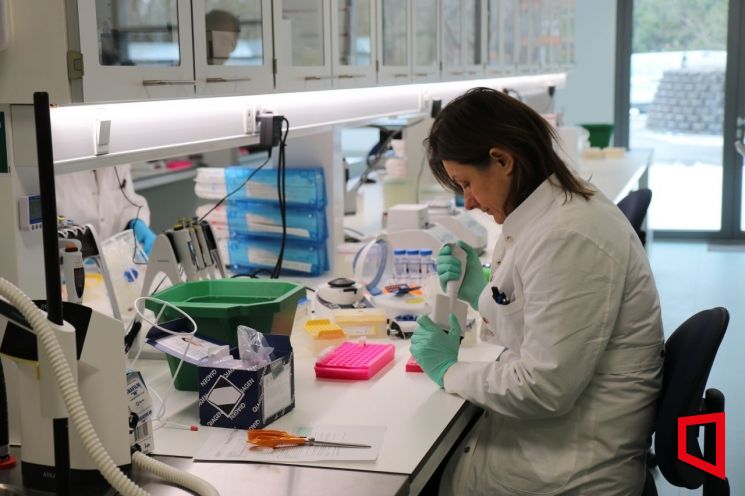 Researchers at the Contera Pharma Institute located in Copenhagen, Denmark, are conducting new drug development research.
 Photo by Lee Chunhee
Bukwang Pharmaceutical had focused its funds on research and development (R&D) for several years before transferring shares to OCI, but after OCI’s acquisition, the management burden from 'excessive capital investment' began to intensify. Bukwang Pharmaceutical maintained an operating profit margin of 2-3% annually but invested 13% of its sales in R&D. Last year, this proportion surged to 27%. The company also expanded its affiliates over a long period, acquiring Denmark’s Contera Pharma in 2014 and jointly establishing Jaguar Therapeutics in 2019.
Bukwang Pharmaceutical is focusing on sales of central nervous system (CNS) treatments such as mental and neurological disorders while downsizing its sales organization for cardiovascular and gastrointestinal specialty drugs, which were its traditional main products. In this process, there are concerns that sales of existing specialty drugs have been hit, as the number of drugs with sales exceeding 10 billion KRW dropped from four in 2022 to just one anemia treatment drug, Feroba, last year.
Inside and outside Bukwang Pharmaceutical, there are remarks that OCI, which has no experience in the pharmaceutical business, has taken a 'novice driver' approach and set the wrong direction. A pharmaceutical industry insider said, "The company’s difficulties began when it concentrated its sales efforts on CNS treatments that have yet to develop commercially viable proprietary products." Additionally, the health functional food brand 'Bukwang Lab,' launched in February last year, is reportedly yet to produce significant results.
This year, Bukwang Pharmaceutical has set major goals of large-scale product portfolio restructuring and distribution channel efficiency improvement. It is concentrating investment on high-profit products and preparing to withdraw low-profit products. The recruitment of CEO Woo was the result of OCI’s demand for a pharmaceutical manager to lead this effort and Hanmi Pharmaceutical’s interest in expanding its product lineup by influencing Bukwang Pharmaceutical. However, immediately after the integration failed, CEO Woo resigned, leaving CEO Lee to lead Bukwang Pharmaceutical alone. His appointment as an inside director of a Bukwang Pharmaceutical subsidiary last year was his first experience related to pharmaceuticals.
Bukwang Pharmaceutical hopes that its CNS treatment investments made so far will bear fruit this year. Contera Pharma’s Parkinson’s disease dyskinesia treatment 'JM-010' plans to complete global Phase 2 clinical trials this year, and the schizophrenia treatment Latuda, imported from Japan, is scheduled for domestic release in the second half of this year. Chairman Lee said, "The launch of Latuda is expected to significantly increase sales in the CNS field, and we anticipate Bukwang Pharmaceutical turning a profit this year."
© The Asia Business Daily(www.asiae.co.kr). All rights reserved.


















