Intern Appointment Registration Ends in 2 Days for First Half of the Year
Specialist Training System Faces Full-Scale Paralysis
Training Hospitals "Discussing Measures to Fill the Gap"
As of the 2nd, the registration for appointment at each hospital for interns (residents) who passed the first half of this year's internship has ended, and it was reported that more than 90% of the 10 candidates did not register. Accordingly, the government has determined that the collapse of the specialist training system has 'officially' begun and has started to prepare countermeasures.
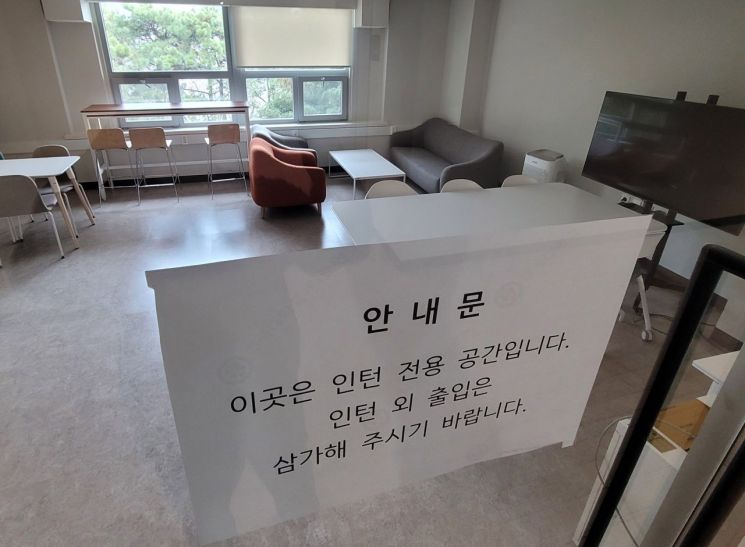 An empty intern-only space at a university hospital in Seoul on the 2nd, the deadline for intern appointment registration. [Image source=Yonhap News]
According to the Central Accident Response Headquarters for the medical community's collective action, on the last day of internship appointment registration in the first half of this year, the 2nd, less than 10% of the total 2,697 successful interns registered at training hospitals. Jeon Byeong-wang, the general director of the Central Accident Response Headquarters, stated at a briefing on the 28th of last month, "This year's successful interns were guided to register their appointments with the Training Environment Evaluation Committee by April 2," adding, "If they do not register by then, internship training in the first half of this year will be impossible."
An intern refers to a first-year training process in which a newly graduated medical student who has passed the national medical examination and obtained a general physician qualification rotates through all clinical departments at a training hospital to learn basic clinical skills. Completion of the one-year internship is required to apply for a resident (specialist) position.
New interns who have not registered by this day must undergo training starting in the second half of the year in September or from March next year.
They typically handle basic inpatient care in hospitals, assisting professors and specialists to focus on treatment and surgery. For example, they are responsible for procedures such as inserting urinary catheters or reinserting tubes that have come out. As the intern shortage in most training hospitals became a reality in the first half of this year, university hospital professors have frequently had to suspend outpatient care or surgeries to go to wards and directly perform procedures such as inserting urinary catheters for inpatients. The Ministry of Health and Welfare has implemented emergency medical measures such as rehiring retired senior doctors and assigning a significant portion of intern duties to PA (Physician Assistant) nurses.
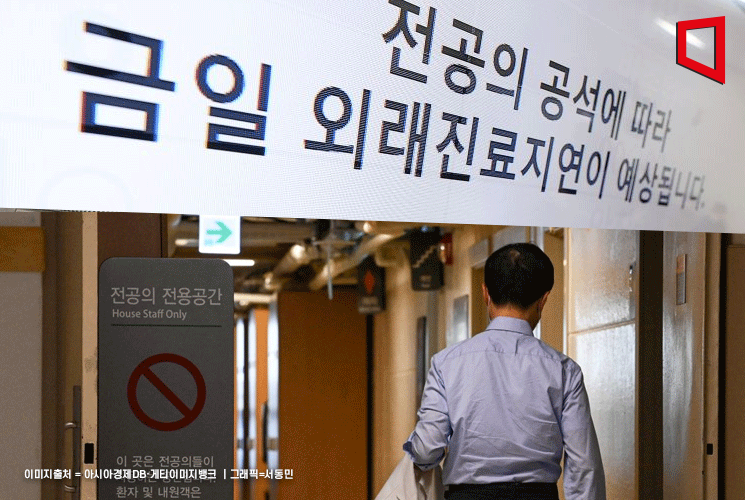
The bigger problem, according to the government, is that even if interns who were supposed to be appointed return in the second half of this year, the training periods for residents will be delayed one after another, making it impossible to maintain the normal specialist output schedule for several years. This is because the annual contracts and education for interns and residents, which operated like clockwork from March to February of the following year, have become impossible. As a result, there are expected disruptions in the timely supply of military doctors and public health doctors after next year.
If internship training is not conducted in the first half of the year, recruiting residents in the first half of next year will also become impossible. According to medical law, one must complete one year of internship training to apply for residency. Therefore, interns who gave up appointment registration in the first half of this year cannot apply for the residency program starting in March next year. In addition to residents who have already resigned and left, the training for new residents next year will be delayed by at least six months to over a year, causing the entire educational function of training hospitals to become entangled. The government foresees that if the currently departing residents also return, most training hospitals will exceed their annual resident capacity, raising concerns about the deterioration of resident training quality.
The medical community shares the same concerns. Woo Bong-sik, director of the Medical Policy Research Institute of the Korean Medical Association, said, "Missing one cohort year means the entire training system that has been maintained until now is completely collapsing," adding, "It will take more than five years, the duration of one full training cycle including one year of internship and four years of residency, until a new system is established." He further stated, "There is no way to fill the long-term resident gap that started with the refusal of internship appointments in the first half of this year. Ultimately, training hospitals will have no choice but to endure for several years by only accepting emergency and severe patients as they do now."
© The Asia Business Daily(www.asiae.co.kr). All rights reserved.


















