Capacity Increase and Ingredient Differentiation Strategy While Maintaining Prices
Raw Material and Production Costs Rise
Reserved on Price Cuts or Hikes
"We plan to increase cost-effective (performance relative to price) products to enhance benefits that consumers can actually feel."
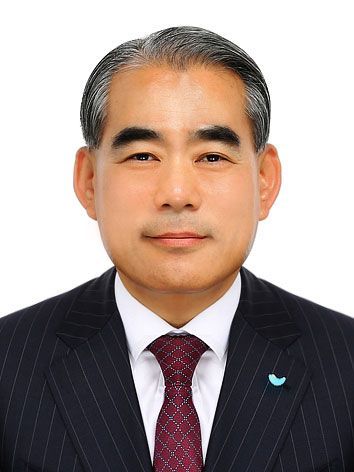
Hwang Jong-hyun, CEO of SPC Samlip, said this on the 29th during the 56th SPC Samlip Annual General Meeting held at Ansan Arts Center in Ansan, Gyeonggi Province, meeting with reporters. He stated, "We are continuously discussing related matters in management meetings to align with the government's emphasis on price stabilization."
He hinted, "We plan to prepare cost-effective products by maintaining the price range while increasing the volume or adding differentiated ingredients compared to existing products," adding, "We also plan to launch new products reflecting this around next week."
Considering the recent controversies in the food industry over tactics such as 'shrinkflation,' where product prices remain the same but volume is reduced to effectively raise prices, and 'skimpflation,' where price and volume remain unchanged but quality is lowered, SPC Samlip's strategy is interpreted as competing on quantity and quality within a similar price range.
Earlier, SPC Samlip introduced a limited edition last month of the steady seller product "Jeongtong Cream Bread," first launched in 1964, and "Cream Daebbang," which has a similar price per gram but is 6.6 times larger in size. This new product, commemorating the 60th anniversary of the launch and focusing on unique consumer experiences, is expected to be expanded into more diverse areas with cost-effective products.
Recently, the food industry has been under pressure as the government is pushing strongly for price stabilization ahead of the April 10 general elections next month. Major companies producing ramen, snacks, and ice cream, which posted strong performances last year, and consumer groups citing the decline in some international raw material prices, are demanding price reductions. CJ CheilJedang has already decided to reduce prices by an average of 6.6% starting next month on three consumer products: 1kg and 2.5kg all-purpose flour and 3kg frying flour. Some competitors are also reviewing the timing and extent of price cuts.
SPC Samlip, which operates bakery businesses including bread and sandwiches, food businesses including flour, eggs, and rice cakes, and food ingredient distribution, recorded consolidated sales of 3.4333 trillion KRW last year, up 3.6% from the previous year, and operating profit increased by 2.4% to 91.7 billion KRW, marking its best performance. If demands for price reductions spread to the confectionery and bakery industry later, it will not be exempt. Some manufacturers have already declared that they will not raise product prices this year.
However, regarding whether there are plans to lower product prices or refrain from price increases, CEO Hwang was reserved, saying, "Prices of other raw materials such as sugar and cocoa have surged, and overall production costs have risen." SPC Samlip lowered prices by 100 to 200 KRW each on 20 products including bread and cream bread in June last year.
Meanwhile, at the general meeting held that day, all agenda items were approved as originally proposed, including approval of financial statements (cash dividend of 1,700 KRW per share), appointment of inside director (Kyung Jae-hyung), appointment of outside directors (Jeon Seong-gi and Lee Im-sik), appointment of audit committee members (Jeon Seong-gi and Lee Im-sik), and approval of director remuneration limit (4 billion KRW).
© The Asia Business Daily(www.asiae.co.kr). All rights reserved.
![User Who Sold Erroneously Deposited Bitcoins to Repay Debt and Fund Entertainment... What Did the Supreme Court Decide in 2021? [Legal Issue Check]](https://cwcontent.asiae.co.kr/asiaresize/183/2026020910431234020_1770601391.png)















