Ministry of Agriculture, Food and Rural Affairs Announces 'Rural Depopulation Response Strategy'... Introduction of Regulatory Innovation Zones
The government has decided to introduce regulatory innovation zones that allow industries other than agriculture to be established in rural areas. This is to significantly ease location regulations in rural areas to prevent rural extinction.
The Ministry of Agriculture, Food and Rural Affairs announced the "Strategy to Respond to Rural Extinction According to the New Rural Paradigm" on the 28th, which includes these measures.
Since May last year, the Ministry has formed a project headquarters to respond to rural extinction, reviewing tasks to overcome the crisis of rural extinction in the era of population decline and aging through field meetings with experts in related fields. This year, the strategy was finalized through the ministry's reform promotion team.
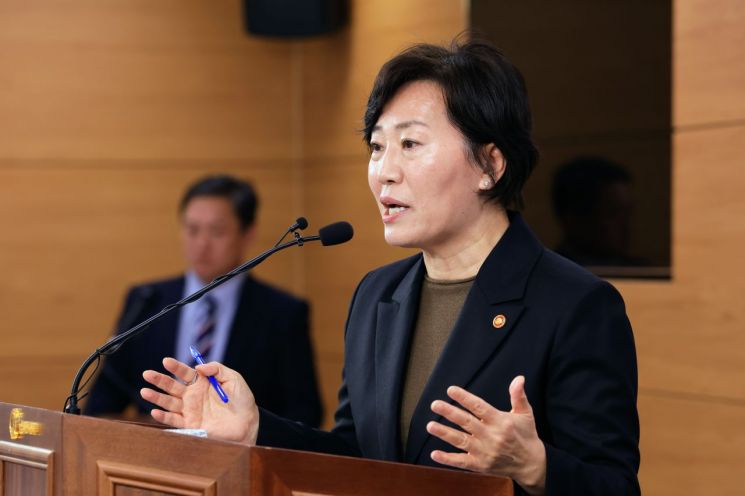 Song Miryeong, Minister of Agriculture, Food and Rural Affairs, is giving a preliminary briefing on the 'Rural Calling Response Promotion Strategy' at the Government Sejong Complex on the 27th.
The "Strategy to Respond to Rural Extinction" focuses on the steadily increasing demand for entrepreneurship, workation, and 4-do-3-chon lifestyles in rural areas, aiming to transform rural spaces into opportunities where people, companies, resources, and social services converge and integrate.
The new rural paradigm centers on transforming the value and function of rural spaces into 'creative spaces' where farmers, youth, innovators, and entrepreneurs gather; 'smart spaces' that maximize rural potential through the application of advanced technologies; and 'network spaces' that are integrated and functionally connected. The Ministry of Agriculture, Food and Rural Affairs has concretized this through three main strategies: ▲job creation and economic revitalization ▲creation of living and relational populations ▲innovation in rural quality of life. It also promotes the expansion of related systems and infrastructure such as rural spatial planning and extinction risk indices.
First, the ministry aims to revitalize jobs and the economy by utilizing rural spaces and resources. It actively supports youth entrepreneurship in agriculture and rural-type businesses. To activate rural-type business startups using various tangible and intangible rural resources beyond agricultural production such as smart agriculture, it provides package support including funding and housing. Innovative companies with technologies such as the Internet of Things (IoT) and Artificial Intelligence (AI) that wish to conduct technology demonstrations in rural areas will be offered rural spaces as testbeds using shared village resources, along with office and residential spaces.
It also promotes job creation and industrial base expansion through fostering upstream and downstream industries related to agriculture. By establishing 'Agricultural Industry Innovation Belts' at city and county levels, it clusters related companies such as smart farms, convergence companies, food tech, and green bio, and supports inter-agency linkage and collaboration projects. In high-risk rural extinction areas, a small-scale special zone system at the eup and myeon levels called Autonomous Regulatory Innovation Zones (rural-type opportunity development special zones) will be introduced, providing rural-tailored incentives such as eased location regulations when companies, residents, and local governments prepare autonomous regulatory plans for regional development.
Additionally, regulatory relaxation will be pursued to meet diverse rural location demands from youth and entrepreneurs. Agricultural promotion areas under 3 hectares will be gradually deregulated (estimated 21,000 hectares nationwide), and restrictions on mountain land use and temporary use in privately owned mountain areas where the designation purpose has been lost due to environmental changes (estimated 3,600 hectares) will be lifted. For population-declining areas, the scope of mountain land use permit criteria that local governments can relax by ordinance will be expanded from the existing 10% to 20%.
To boost rural vitality, efforts will be made to create living and relational populations in rural areas. Infrastructure for stay and settlement will be innovated to realize the 4-do-3-chon lifestyle for citizens. Installation of 'rural stay-type rest areas' on farmland will be permitted, and 'rural living experience farms' equipped with housing, farms, and experience spaces will be created, centered on local governments. To activate the use of vacant houses in rural areas, the special exemption for accommodation business demonstration will be expanded nationwide to 500 houses, and information on vacant houses available for sale will be linked with private platforms to promote peer-to-peer transactions. Support for rural vacant house regeneration will be strengthened through designation of vacant house maintenance districts and joint vacant house regeneration projects between companies and local governments.
Furthermore, new demands such as urban residents' healing and remote work will be utilized to enhance connections to rural areas. The establishment of rural workation centers based on public-private cooperation will be promoted, and development and operation of healing industry plans such as agricultural and mountain village healing programs will be prepared. Using the creativity of private travel agencies, themed tourism products by city and county (Rural Creative Tour) will be developed, and mountain village spaces where people want to stay will be created through projects like the Dongseo Trail and premium forest creation.
Extensive promotion and sales of rural areas will also be conducted. Information on rural vacant houses, farmland, and other resources will be provided through the three major rural banks: vacant house banks, farmland banks, and talent banks. Nationwide campaigns to spread the value of agriculture and rural areas will be carried out, including the cultivation of one million rural supporters and a nationwide one-week rural living experience.
Collaboration on digital technology and inter-ministerial cooperation will be strengthened to innovate rural quality of life. Rural spatial planning will present a rural service supply network to respond to the era of population extinction. Approximately three 'revitalization areas' will be designated in each of the 139 rural city and county regions, and residential, industrial, and service functions will be systematically arranged to create rural living spaces without inconvenience anytime and anywhere. A resident proposal and agreement system will be introduced, allowing local actors such as residents and companies to lead planning, with central and local governments signing rural agreements to support finances and regulatory relaxation.
Infrastructure will be supplemented to ensure that rural areas can receive public medical services that meet citizens' expectations. Support for facilities and personnel at regional public hospitals will be strengthened, and a mobile remote consultation system will be established through visiting 'rural house call buses' and public health centers. Expansion of rural care villages will be pursued, and support for rural care and medical services will be provided in connection with neighboring villages.
The distinctiveness and quality of education in rural schools will also be enhanced. Through a rural school operation idea contest, school operation models suitable for rural characteristics such as joint curricula between schools will be discovered and disseminated. Institutional foundations and cooperation with related agencies will be strengthened to activate demand-tailored rural study programs. Diversity in rural culture and education will be increased through support for cultural and artistic activities using idle facilities and activation of experiential activities at Neulbom School using rural experience facilities.
The rural service delivery system will also be innovated. Living care communities where rural residents directly provide services will be fostered. Demand-responsive transportation services such as on-demand shuttle buses reflecting resident needs will be expanded, and a plan to partially subsidize costs when private vehicles are used to support neighbors' mobility will be considered. A 'Smart Community Center' connecting health institutions and villages through ICT-based intelligent services will be established, and private use of complex SOC facilities in central areas, support for mobile living services within villages, and unmanned service terminal facilities will also be operated.
Song Mi-ryeong, Minister of Agriculture, Food and Rural Affairs, said, "Population decline and regional extinction are major threats to our society, but if we respond well to rural extinction, it will provide clues to simultaneously solve national issues such as urban problems, low birth rates, and balanced development between urban and rural areas." She added, "Through the new rural paradigm, we will actively lead policies based on the knowledge and experience accumulated so far to transform rural areas into spaces where all citizens want to live, work, and rest."
© The Asia Business Daily(www.asiae.co.kr). All rights reserved.

















