與 "Rebounding, Speed of Recovery is Key"
野 "Atmosphere is Fine, but Public Sentiment Under Close Watch"
Voter Turnout, Medical School Expansion Issue, and Controversial Remarks Are Variables
"We have hit rock bottom." - Hong Seok-jun, Director of the Comprehensive Situation Office, People Power Party Election Countermeasures Committee
"It seems we have seized the momentum." - Lee Hae-chan, Standing Election Countermeasures Chairman, Democratic Party of Korea
The official 13-day general election campaign has begun. On the first day, the 28th, both the ruling and opposition parties prominently emphasized judging the other side, with the ruling party calling for a "judgment on the Guhya" and the opposition party calling for a "judgment on the regime." Both sides agree that the opposition party, which has put forward the regime judgment, is showing fierce momentum. However, regarding the trend, the ruling party focuses on the possibility of a rebound.
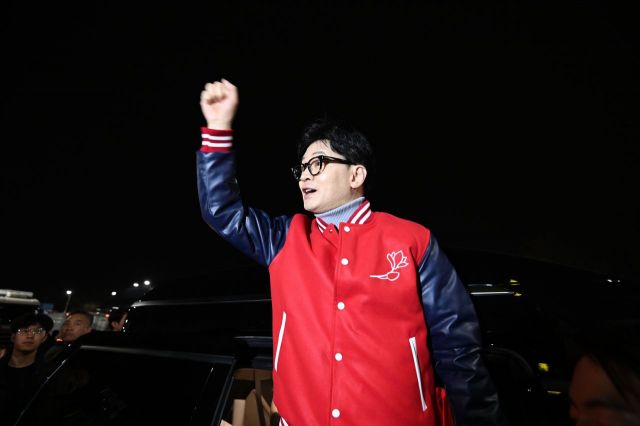
On the same day, Director Hong said in a BBS Radio interview, "Overall, the environment is not favorable, but we hit rock bottom last week," adding, "We are in a phase of upward rebound, and the key will be how much we can rebound during the official campaign period."
On the other hand, the opposition party sees the response to the judgment phase as high enough to issue a "warning against complacency." Chairman Lee appeared on a YouTube channel that day and said, "So far, the atmosphere has been good," but added, "From now on, it will be very sensitive." Kim Boo-kyum, Standing Election Countermeasures Chairman of the Democratic Party, argued on YTN Radio, "There are about 30 constituencies where the outcome will be decided by around 2,000 votes, so we cannot say the Democratic Party is dominant."
The political world is particularly interested in voter turnout. Apart from the trend in opinion polls, the actual voting is crucial. In the previous general election four years ago, the turnout was 66.2%, and the early voting rate was 26.7%. The early voting rate, which will be conducted on the 5th and 6th of next month, is expected to primarily determine the public's voting intention. Additionally, voter turnout by generation is also a concern. According to opinion polls so far, people in their 40s and 50s tend to lean toward the opposition, while those in their 60s and 70s tend to lean toward the ruling party. Therefore, the degree of voter mobilization by generation becomes critical. Historically, the voter turnout for those in their 40s has been lower than average, whereas those aged 60 and above have shown turnout rates above average.
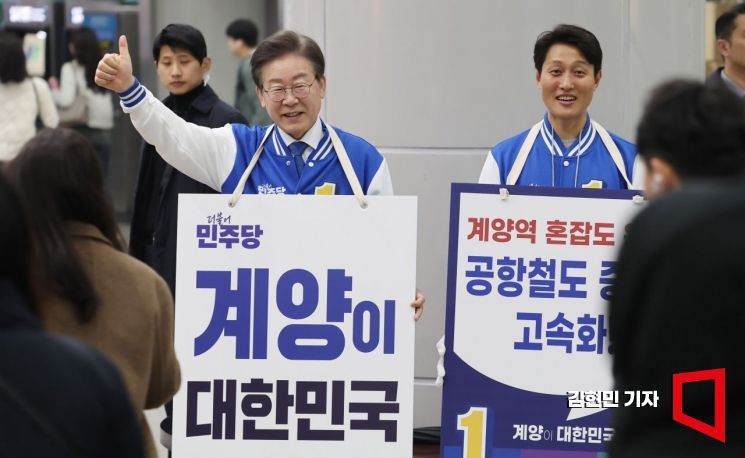 Lee Jae-myung, leader of the Democratic Party of Korea, is greeting citizens on their way to work at Gyeyang Station in Incheon on the 28th. Photo by Hyunmin Kim kimhyun81@
The ongoing crisis in the medical community over the issue of increasing medical school quotas is also a variable in the general election situation. If the government and ruling party, which have expressed a willingness to resolve the issue, can find a breakthrough and reach a visible agreement, it could lead to a reversal in public opinion. However, since the issue fatigue regarding the medical school quota controversy is high, if the conflict intensifies, it will be a significant burden for the ruling party.
Current issues can also sway public opinion. On this day, Seoul city buses went on a full strike for the first time in 12 years, increasing inconvenience for citizens. This, combined with rising prices of items such as radish and apples, could exacerbate citizens' dissatisfaction. 'Verbal blunders' and 'slips of the tongue' have now become constants in the election variables.
© The Asia Business Daily(www.asiae.co.kr). All rights reserved.
![Clutching a Stolen Dior Bag, Saying "I Hate Being Poor but Real"... The Grotesque Con of a "Human Knockoff" [Slate]](https://cwcontent.asiae.co.kr/asiaresize/183/2026021902243444107_1771435474.jpg)

















