If Autumn Weather Prolongs, Bees May Exhaust and Die Next Spring
Artificially Lowering Hive Temperature Needed to Preserve Colonies
Despite the clear signs of spring, honeybees are still nowhere to be seen. Where did all those bees disappear to? A study revealed that most of them died from 'overwork' last fall. A research team from Washington State University announced on the 26th (local time) that "if the fall season, when honeybees are mainly active, is prolonged due to climate change, there is a high possibility that beehives will collapse the following spring." The study was published in the international academic journal Scientific Reports.
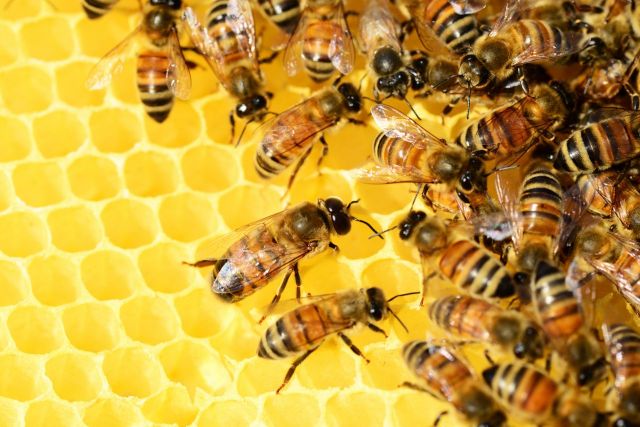
The researchers measured the life cycle of honeybees through virtual simulations. Unlike humans, who can decide their own working hours, bees cannot. When they detect a 'mild climate,' they go out to collect nectar regardless of their physical condition.
The problem lies in the fact that the warm fall climate has been extended due to climate change. As a result, the bees' activity during the fall has noticeably increased. With longer flight times, the overall lifespan of the honeybees has shortened, and eventually, most worker bees become exhausted and die the following spring. Without workers to manage the hive, the colony, which is the core of the honeybee ecosystem, collapses.
In other words, the reason honeybees have disappeared this year is that most of the bees overworked themselves to death last fall. Furthermore, when the researchers ran simulations to predict how honeybee populations might change in 2050 and 2100, it was found that the number of honeybees is likely to sharply decline in most areas of the Pacific Northwest.
The only hope remains near Canada, where colder regions still exist. However, in most areas including North America, honeybee populations are expected to decrease.
So, is there a way to forcibly prevent honeybees from overworking? The research team suggested that bees should be encouraged to gather inside the hive before they overwork themselves to death. In other words, the hive should be placed inside a cold storage unit to artificially lower the surrounding temperature. Using this method, it is expected that the bees will 'sense' that winter has arrived normally and stop flying.
© The Asia Business Daily(www.asiae.co.kr). All rights reserved.

















