Ministry of Health, Labour and Welfare Announces 2 Deaths and 106 Hospitalizations
Flood of Report Calls... Possible Additional Damage
Unable to Identify Causative Substance
The number of deaths due to side effects from Kobayashi Pharmaceutical's red yeast rice (Hongguk) health supplement has increased to two. The number of hospitalized patients has also surged from around 70 to 100, and consultation calls are flooding in, indicating that it will take time for the situation to calm down.
On the 27th, Japanese local media such as Jiji Press, citing the Ministry of Health, Labour and Welfare's announcement, reported that as of the previous night, the number of deaths caused by the supplement increased from one to two, and the number of hospitalized patients rose from about 70 to 106.
Kobayashi Pharmaceutical announced the day before that one person had died from kidney disease after taking the supplement, but on the same day, additional damage cases were reported, raising the death toll to two. The Ministry of Health, Labour and Welfare stated that the medical staff noted that the second deceased also had kidney damage, similar to the first deceased. The first deceased was known to have purchased and consistently consumed 35 packets over three years of "Hongguk Choleste (Cholesterol) Help," which is known to contain cholesterol-lowering components of red yeast rice.
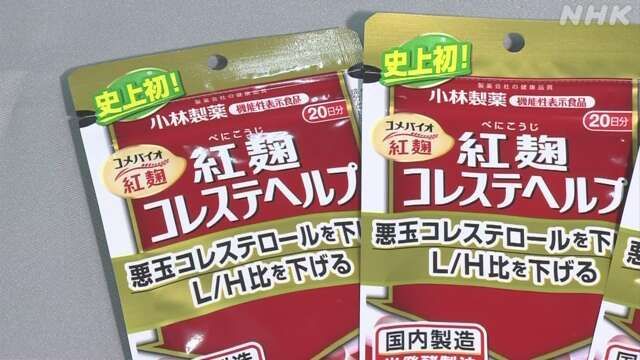
Not only the number of deaths but also the number of hospitalized patients increased to 106, and since the recall announcement on the 22nd, 3,600 patient consultations have been received at the inquiry desk, suggesting that the scale of damage is likely to expand further.
The Ministry of Health, Labour and Welfare has notified the company to dispose of all three products containing red yeast rice. However, since Kobayashi Pharmaceutical's red yeast rice raw material is supplied to 50 companies nationwide, there are concerns that this alone will not prevent additional damage. Accordingly, corporate responses such as voluntary recalls of red yeast rice-containing products are also continuing nationwide, from a cosmetics company in Kobe City that received the raw materials to a seasoning company in Tokyo.
Criticism is also mounting that Kobayashi Pharmaceutical's delayed response worsened the problem. Kobayashi Pharmaceutical reportedly received the first report of side effect damage cases in mid-January and began its own investigation into the cause, but delayed reporting to administrative agencies. The Ministry of Health, Labour and Welfare only received the first report on the 22nd, two months later. Afterward, the ministry requested specific information about the victims' situations related to the incident from Kobayashi Pharmaceutical, but the company showed a lukewarm attitude. Eventually, only after summoning the person in charge to the Ministry of Health, Labour and Welfare for a face-to-face investigation the day before, was it confirmed that a second death had occurred.
Currently, neither Kobayashi Pharmaceutical nor the Ministry of Health, Labour and Welfare has identified the substance causing the side effects. In 2014, the Cabinet Office Food Safety Commission warned that citrinin, a mycotoxin produced by red yeast rice mold, could cause liver damage, but citrinin was not detected in the current supplement.
Professor Emeritus Hideaki Karaki of Tokyo University School of Medicine told NHK, "Citrinin was not detected in the problematic supplement," adding, "We are considering the possibility that a more toxic substance was mixed in, and there is a need to expedite the identification of the causative substance." The Japanese government has decided to expedite fact-finding and resolution of the situation. The Ministry of Health, Labour and Welfare, the Consumer Affairs Agency (equivalent to Korea's Consumer Agency), the Ministry of Agriculture, Forestry and Fisheries, and other related departments plan to hold a meeting in the afternoon to discuss countermeasures.
© The Asia Business Daily(www.asiae.co.kr). All rights reserved.


















