Plans for Utilizing 57 Closed Schools
Local Governments and Residents Consider Daebudo Lease
The Gyeongbuk Office of Education has established and is implementing a basic plan for the management of closed school properties to promote their sound and efficient use and contribute to the development of local communities.
The basic plan for closed school management prioritizes self-utilization in response to the rapidly changing society in preparation for future education. It was prepared to contribute to local community development through preservation management that comprehensively considers areas expected to see increased educational demand, regional hubs, and land price increases due to regional development, as well as cooperation with local governments and residents.
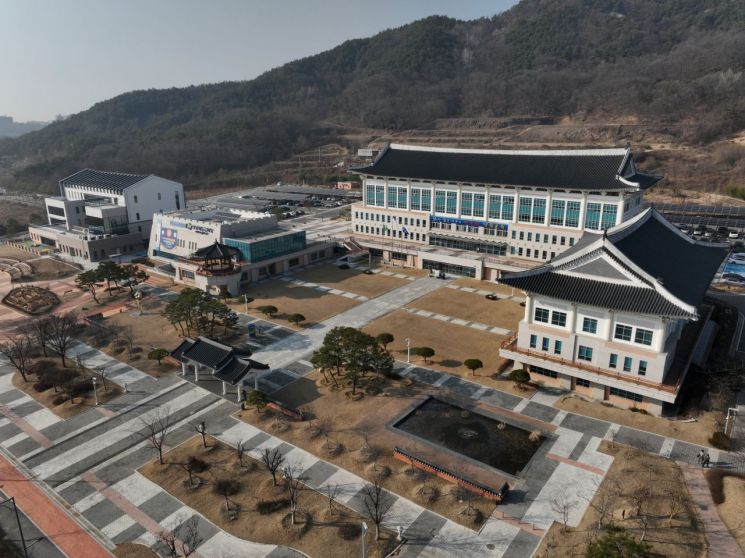
Currently, the Gyeongbuk Office of Education manages 731 closed schools, of which 490 have already been sold. Among the 241 unsold closed schools, 74 are self-utilized, 110 are leased, and 57 remain unused.
An official from the Gyeongbuk Office of Education stated, “The basic plan for closed school management includes provisions to maximize the self-utilization of the 57 unused closed schools for educational purposes, and if utilization is difficult, to lease them to local governments and residents through public contests.”
Examples of excellent self-utilization of closed school properties include the Gyeongju Korean Language Education Center and the Safety Experience Center, which have been providing basic Korean language education and experience-centered safety education since opening in March last year. Additionally, auto camping sites have been created using closed school properties in the Gimcheon and Yeongdeok areas, providing healing spaces for educational families.
Furthermore, by establishing the Dokdo Education Center on Ulleungdo Island, Gyeongbuk plans to create and provide an educational space where students from across the country, as well as from Gyeongbuk, can learn about and experience Dokdo, our territory.
This year, the plan is to promote the sale of three unused closed schools in the Gimcheon, Sangju, and Uljin areas to local governments and agricultural corporations.
Sales to local governments involve the construction of stay-type return-to-farming and rural settlement schools and rural space maintenance projects, while agricultural corporations will operate facilities for agricultural product distribution, processing, and sales to revitalize the rural economy.
Institutions that acquire closed schools must use them for the originally intended purposes for 10 years.
The Gyeongbuk Office of Education will establish special registration clauses that allow contract cancellation if these conditions are not met, and will thoroughly verify compliance through regular and special inspections.
Lim Jong-sik, Superintendent of the Gyeongbuk Office of Education, said, “Through efficient management of closed school properties, we will manage these assets so that they contribute to local community development by expanding lifelong education and welfare opportunities for residents and increasing income.”
© The Asia Business Daily(www.asiae.co.kr). All rights reserved.
![Clutching a Stolen Dior Bag, Saying "I Hate Being Poor but Real"... The Grotesque Con of a "Human Knockoff" [Slate]](https://cwcontent.asiae.co.kr/asiaresize/183/2026021902243444107_1771435474.jpg)
















