Approval of Next Year's Budget Guidelines at the State Council
Strengthening Support for Niche Childcare and Housing Stabilization
The government has decided to expand the budget related to marriage, childbirth, and childcare support to respond to the ultra-low birthrate society. It also plans to strengthen investments to enhance social mobility by expanding national subsidies to support a fair start for young people and reinforcing self-reliance support for vulnerable groups.
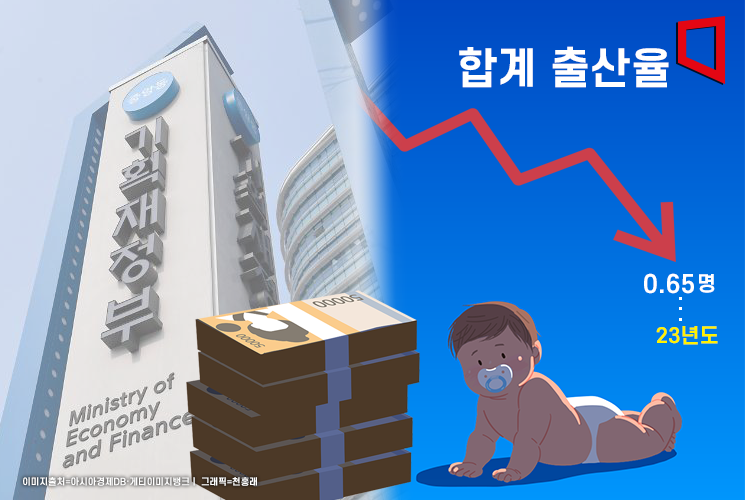
On the 26th, the Ministry of Economy and Finance announced that the "Guidelines for Budget Preparation and Fund Operation Plan," which includes these contents, were approved at the Cabinet meeting. The Ministry of Economy and Finance cited expanding investments to respond to the ultra-low birthrate society and to establish an age-friendly social infrastructure as the primary focus for next year's health and welfare investment direction. They aim to improve conditions for work-family balance by expanding institutional and financial support for childbirth and childcare, such as reduced working hours during childcare periods, parental leave, and flexible work arrangements.
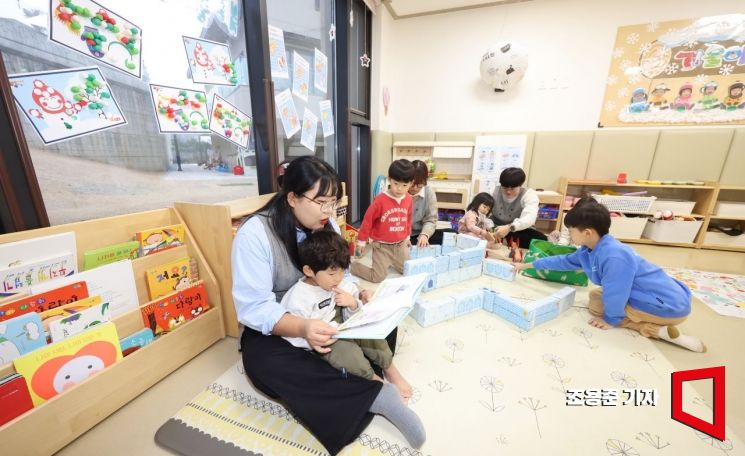
They will also strengthen gap childcare support utilizing public and private capabilities and continue to provide stable housing support during marriage and childbirth. Gap childcare is a service that addresses niche demands such as short-term childcare needs during commuting hours for dual-income families struggling with their elementary school children's school attendance support. Institutional and financial support for work-family balance will also be expanded. In particular, they plan to focus on supporting employment stability during childbirth and childcare periods and preventing career interruptions. Efforts will also be made to build an age-friendly society by expanding welfare housing for the elderly and supporting continued employment and job provision for elderly people who have reached retirement age.
The Ministry of Economy and Finance decided to expand investments to respond to the ultra-low birthrate society because the total fertility rate recorded 0.65 in the fourth quarter of last year, indicating a serious low birthrate problem. The total fertility rate is the average number of children a woman is expected to have in her lifetime, and dropping to the 0.6 range is the first time since statistics began. According to the Korea Economic Research Institute, due to low birthrate, the working-age population in 2050 is expected to decrease by 34.75% compared to 2022, and the gross domestic product (GDP) is projected to decline by 28.38%.
The budget also includes a focus on investment directions for youth. To support a fair start for young people, national subsidies will be expanded, and public sale and public rental housing for the youth will continue to be supplied. Support for the Youth Leap Account will be strengthened to back youth asset formation. Customized employment services will be provided to support the creation of quality private-sector jobs preferred by young people. They will nurture young talent in advanced and new industries and expand regionally tailored jobs through collaboration between universities and local governments.
Investment directions to enhance social mobility were also presented. First, they will continue investing in welfare for the vulnerable by strengthening self-reliance support for vulnerable groups. Support for the Basic Livelihood Security System will be expanded, and necessary services will be meticulously supplemented according to the characteristics of vulnerable groups such as the elderly and disabled parents. Work incentives will be strengthened to support the transition of basic livelihood recipients out of the system. The medical delivery system will be reorganized to resolve regional disparities and accessibility issues, and investments will be expanded in essential medical fields such as severe, pediatric, and emergency care.
Kim Dong-il, Director of the Budget Office at the Ministry of Economy and Finance, said, "In this year's budget, the budget related to essential medical care such as internal medicine, surgery, and obstetrics was significantly expanded," adding, "Since there is high public demand for this, we plan to carefully review it when preparing next year's budget."
© The Asia Business Daily(www.asiae.co.kr). All rights reserved.
![Clutching a Stolen Dior Bag, Saying "I Hate Being Poor but Real"... The Grotesque Con of a "Human Knockoff" [Slate]](https://cwcontent.asiae.co.kr/asiaresize/183/2026021902243444107_1771435474.jpg)

















