Established New System in January Last Year... Stock Price Doubled in One Year
Frequent Opinion Conflicts, But Resolved Through Coordination
"Two People Have Different Tendencies... Coordination Also Underway in Succession Process"
It has been one year since global streaming company Netflix has operated under a new co-CEO system led by Ted Sarandos and Greg Peters, the 'two tops' following founder Reed Hastings. Although there were many predictions that the two co-CEOs, who have completely opposite tendencies, would clash, so far their successful coordination has been credited with Netflix's growth.
Netflix's recent stock price has nearly doubled in the past year. On January 20 last year, when founder Hastings handed over the co-CEO position to then-Chief Operating Officer (COO) Peters, Netflix's stock price was $342.50; by the 22nd of this month, it rose 83.4% to $628.01. Netflix experienced its first subscriber decline in the first half of 2022, 11 years after its founding, causing the stock price to drop to the $175 range, but under the two co-CEO system, the stock price has shown a recovery trend.
The Wall Street Journal (WSJ) stated, "While competitors like Disney and Paramount are struggling in the streaming business, Netflix found new ways such as blocking password sharing and generated profits," adding, "'Hollywood's emperor' Sarandos and tech expert Peters, who focuses on data, have put Netflix back on track."
The reason Netflix's co-CEO system is attracting attention is that the 'two tops' system, which is widely perceived to cause confusion in major company decision-making and responsibility allocation, has been operating for a long time in a growing global company. Netflix introduced the co-CEO system during its transition from a founder-led to a professional management structure. In 2020, founder and then-CEO Hastings promoted then-COO Sarandos to co-CEO, establishing the system first. The current co-CEO system of Sarandos and Peters was established in January last year.
Initial evaluations of the two-person co-CEO system were reportedly skeptical. However, at this point one year later, those concerns have not materialized. Of course, CEOs Sarandos and Peters occasionally have disagreements. Earlier this month, at an executive meeting held in Los Angeles, they clashed over the contract for broadcasting rights with World Wrestling Entertainment (WWE). Afterwards, they continued discussions, narrowed their differences, and ultimately concluded a $5 billion, 10-year contract.
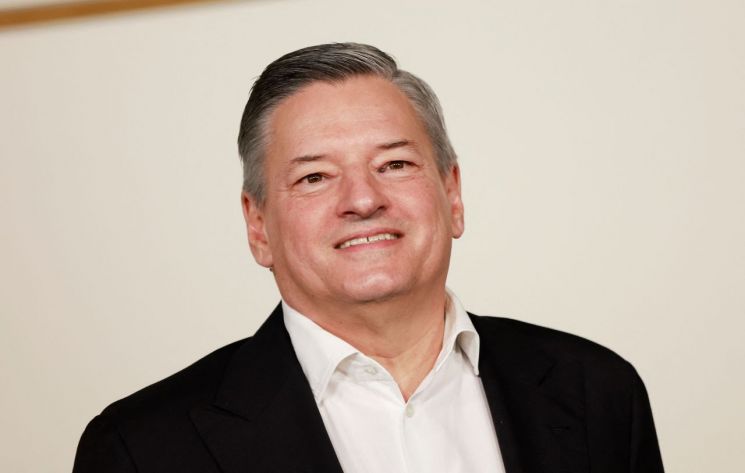
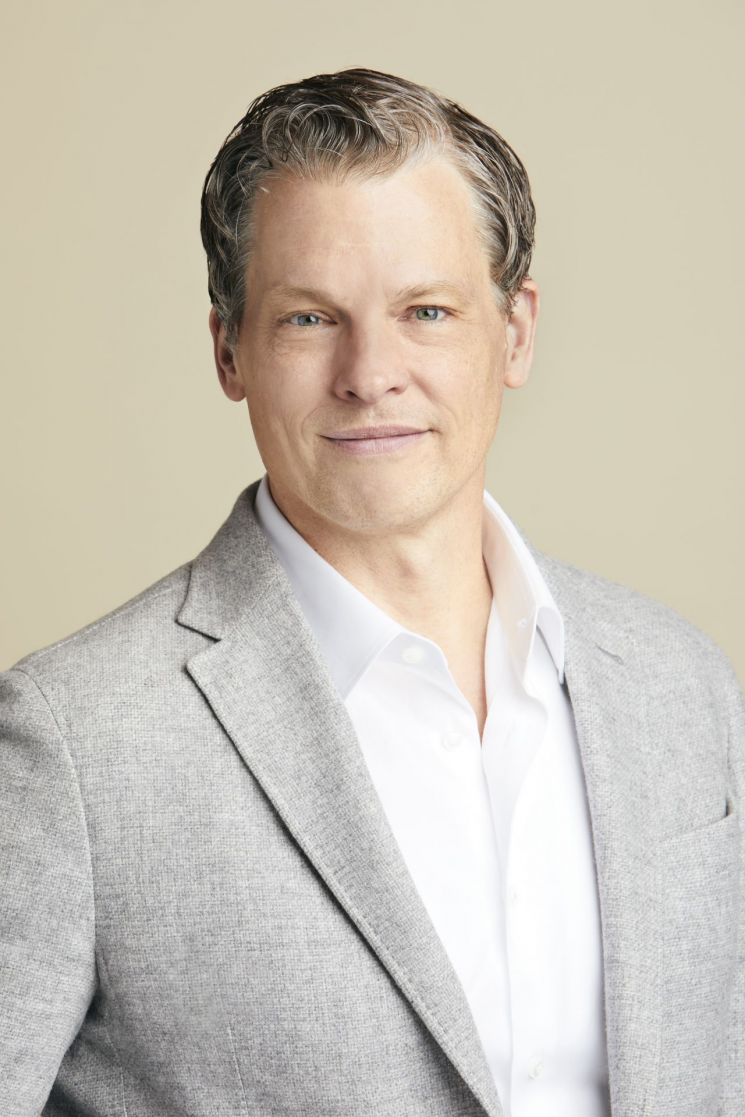
Additionally, Sarandos expressed doubts about Peters' plans, including long-term investments in the gaming industry, while Peters criticized Netflix's spending on certain films or shows. Bill Holmes, who worked as Netflix's business development executive, told WSJ, "For this process to work, both individuals must be experts in their respective fields and have a well-established relationship between them," adding, "That was a new aspect for Netflix."
The reason the Netflix co-CEO system is working better than expected is believed to be influenced by the contrasting personalities of the two. Analysts say their differences actually help create harmony.
Content expert Sarandos enjoys TV sitcoms and stand-up comedy and boasts a broad network, often inviting Hollywood stars to his home to build relationships. In contrast, Peters, who once dreamed of becoming an astronaut, is a military veteran who studied physics and astronomy, has a strong interest in science, and tends to trust data. Based on this, Sarandos CEO is in charge of content, marketing, and legal affairs, while Peters CEO handles product, human resources, technology, advertising, and gaming.
Founder Hastings had long identified these two as co-CEOs and worked on succession planning to ensure their harmonious collaboration. To this end, he appointed Mark Feigen, an expert specialized in CEO training, as an executive and coordinated reporting systems and communication to prevent issues. WSJ reported, "The true test of the co-CEO partnership has yet to come," adding, "If the company faces growth stagnation, increased pressure to cut costs, or competition over which new business to invest in, the success of the two-top system will become apparent."
© The Asia Business Daily(www.asiae.co.kr). All rights reserved.



















