Collect seafood and test radiation levels using a food-specific radiation detector
If levels exceed standards, request detailed testing from the Seoul Institute of Health and Environment
If detailed tests also exceed standards, ban sales, recall, and dispose of all affected items
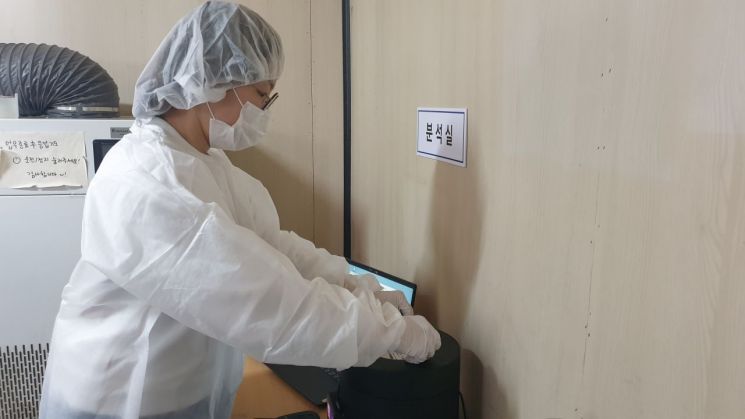
Geumcheon-gu (Mayor Yu Seong-hoon) announced that it will establish and operate a permanent radiation inspection facility for seafood, the "Food Safety Center," to ensure the safety of food for its residents.
This initiative is being promoted to alleviate residents' concerns about seafood by collecting seafood year-round and conducting radiation tests following the discharge of radioactive contaminated water from the Japanese nuclear power plant.
The district will prioritize collecting seafood items with high consumption or a history of radiation detection from traditional markets, large supermarkets, and restaurants (sashimi restaurants) for radiation testing. The priority collection items include 24 types of fish (mackerel, pollock, anchovy, etc.), 10 types of cephalopods (clams, squid, etc.), 2 types of crustaceans (shrimp, crab), and 4 types of seaweed (gim, kelp, etc.), totaling 40 species.
At the "Food Safety Center," a "food-dedicated gamma nuclide measuring device" is used to test radiation levels of iodine-131 and cesium-134+137 in seafood. The "gamma nuclide measuring device" measures gamma rays from samples to determine radioactivity and can quickly inspect multiple products.
The detection standard set by the district is 10 Bq/kg, which is more stringent than the domestic food radiation safety standard of 100 Bq/kg. If radiation exceeding 10 Bq/kg is detected at the "Food Safety Center," a detailed inspection will be requested from the Seoul Institute of Health and Environment. If the detailed inspection also exceeds the standard, the seafood in question will be banned from distribution and sale, recalled, and completely disposed of. Inspection results can be checked on the Geumcheon-gu Public Health Center website.
The district aims to collect at least 18 samples weekly and conduct 500 inspections annually this year, operating a dedicated food radiation safety management team. The team consists of collection and inspection units, with six consumer food hygiene inspectors appointed from Geumcheon-gu residents assigned to the inspection unit to enhance transparency.
Mayor Yu Seong-hoon said, "In addition to radiation testing, we plan to conduct inspections related to seafood origin labeling," adding, "We will do our best to eliminate residents' concerns about food safety through thorough management from seafood distribution to sales."
© The Asia Business Daily(www.asiae.co.kr). All rights reserved.

















