Conducted Twice Weekly from March to November, Virus (Zika, Japanese Encephalitis, Dengue, West Nile, Yellow Fever) Analysis
Adherence to Outdoor Activity Precautions During Mosquito Active Period and Warning on Imported Mosquito-Borne Infectious D
The Busan Metropolitan City Health and Environment Research Institute is conducting the "Busan Area Mosquito Habitat Survey" from late March, when temperatures begin to rise, until November to proactively respond to mosquito-borne infectious diseases.
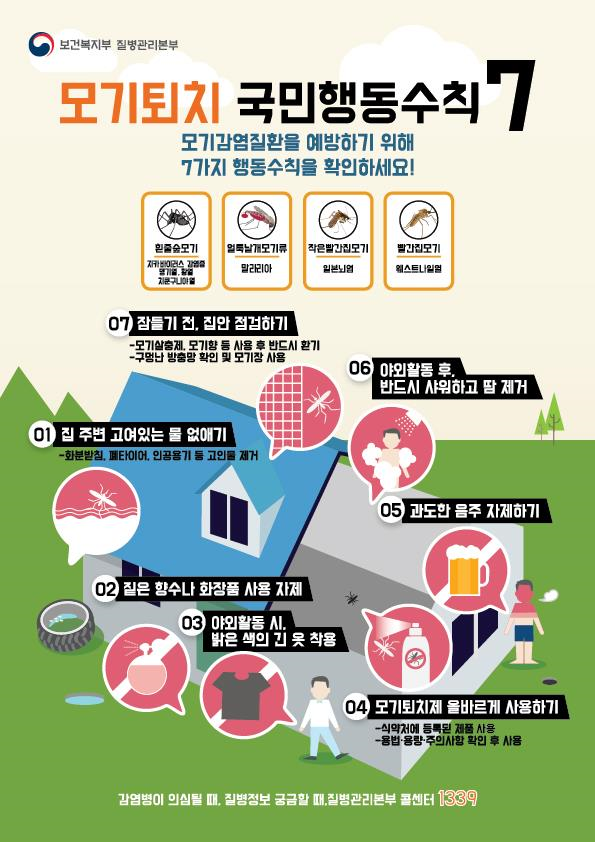
Global warming and ecological environmental changes are creating favorable conditions for mosquitoes that transmit diseases such as Zika virus infection, Japanese encephalitis, and dengue fever.
The institute, in collaboration with the Korea Disease Control and Prevention Agency, conducts annual surveys and research on mosquitoes to proactively respond to these mosquito-borne infectious diseases. As part of the Japanese encephalitis epidemic prediction survey project, mosquitoes are collected by region and season every year to monitor their distribution, frequency, and infection status with viruses and other pathogens.
In particular, as overseas travelers, who had decreased during the COVID-19 pandemic, are increasing again, the incidence of imported mosquito-borne infectious diseases is also showing an upward trend.
Imported mosquito-borne infectious diseases are illnesses transmitted by mosquitoes carrying viruses. Although there have been no domestic cases so far, the presence of competent vector mosquitoes in Korea poses a risk of transmission.
Cases of dengue fever imported by overseas travelers continue to occur annually, so strict adherence to preventive measures during travel is strongly advised.
The "Busan Area Mosquito Habitat Survey" analyzes five types of viruses within mosquitoes to predict infectious diseases transmitted by mosquitoes and to proactively respond to outbreaks.
After classifying and identifying mosquitoes such as Culex tritaeniorhynchus (small red house mosquito), Aedes albopictus (Asian tiger mosquito), and Culex pipiens (common house mosquito), pathogen infections are investigated through genetic analysis.
The viruses targeted in the survey are Zika virus, Japanese encephalitis virus, dengue virus, West Nile virus, and yellow fever virus.
The survey is conducted twice a week. Based on the survey results, the institute plans to cooperate with related organizations to strengthen prevention and control of mosquito-borne infectious diseases.
The survey results will be posted on the institute’s website and can be used as data for preventing vector-borne infections.
Jung Seung-yoon, Director of the Busan Metropolitan City Health and Environment Research Institute, stated, “As the possibility of tropical mosquito-borne infectious diseases rapidly increases due to global warming, we ask citizens to follow infection prevention guidelines outdoors and at home during the mosquito activity period.”
© The Asia Business Daily(www.asiae.co.kr). All rights reserved.

















