The United Nations and the European Union (EU) criticized the "Hong Kong version of the National Security Law" (Article 23 of the Basic Law), saying it weakens the fundamental freedoms of Hong Kong citizens. China responded to such criticism by calling it "interference in internal affairs."
According to foreign media reports including DPA, Volker T?rk, the UN High Commissioner for Human Rights, stated in a statement released on the 20th (local time) that he is "concerned that many provisions of the Hong Kong National Security Law were hastily passed by the legislature despite serious concerns that they are incompatible with international human rights law."
Commissioner T?rk also pointed out that the Hong Kong National Security Law "was passed without a thorough deliberation process and meaningful consultation, which is a regressive measure in protecting human rights in Hong Kong."
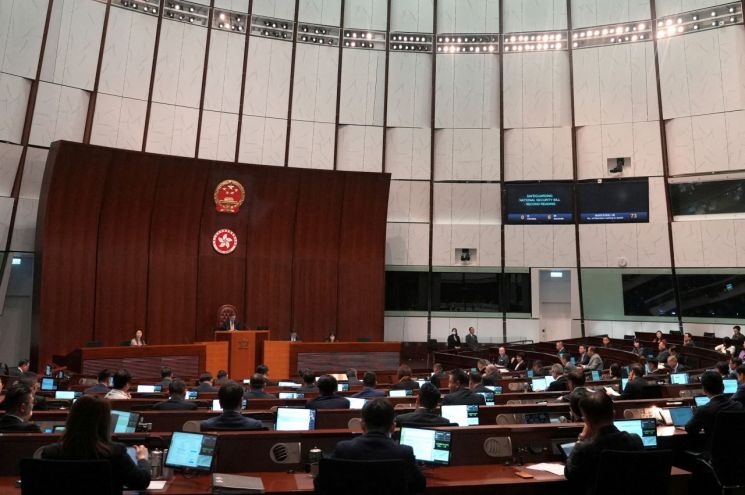
Josep Borrell, the EU High Representative for Foreign Affairs and Security Policy, also issued a statement on behalf of the EU, saying that the adoption of the Hong Kong National Security Law "could worsen infringements on fundamental freedoms and political pluralism." He noted, "The comprehensive provisions on foreign interference and state secrets, along with broad definitions, are particularly concerning." He added, "This raises questions about Hong Kong's long-term appeal as an international business hub," and stated that the law affects EU citizens, organizations, and companies.
Britain, which formerly colonized Hong Kong, also expressed concern. David Cameron, the UK Foreign Secretary, said, "The Hong Kong National Security Law undermines binding international obligations such as the Sino-British Joint Declaration and the International Covenant on Civil and Political Rights (ICCPR)." He added, "The broad definitions of national security and foreign interference will make it more difficult for people living, working, and doing business in Hong Kong."
China immediately pushed back. According to DPA, a spokesperson for the Chinese Embassy in the UK said, "This is a serious distortion of facts and a grave interference in China's internal affairs," adding, "Hong Kong-related matters are China's internal affairs, and the UK side is not in a position to make inappropriate remarks."
The Hong Kong National Security Law is a law supplemented by Hong Kong itself based on the law enacted in 2020. It includes 39 security crimes such as secession, subversion, terrorist activities, and collusion with foreign forces, along with corresponding punishments. Starting with the large-scale anti-government protests in 2019, China began tightening control over Hong Kong by enacting this law. The law passed the Hong Kong Legislative Council unanimously.
According to the draft law, acts that incite foreign forces to invade China by force are considered treason and can be punished with the maximum penalty of life imprisonment. Also, reckless violence that endangers the entire public safety of the city can be regarded as rebellion.
© The Asia Business Daily(www.asiae.co.kr). All rights reserved.

















