DreamArts, 2024 New Hires' Starting Salary at 5.04 Million Yen
Japan's Spring Labor Negotiations See Highest Wage Increase in 33 Years
Will It Spark Raises in Small and Medium Enterprises?
As Japanese companies raised their average wage increase rate in spring wage negotiations (Chuntu) to the highest level in 33 years, a small and medium-sized enterprise (SME) has emerged, drawing attention by announcing a 44% increase in starting salary. This is a strategy to significantly raise starting salaries with a dramatic increase rate that even large corporations dare not attempt, aiming to attract talent.
On the 23rd, Business Insider Japan reported that Dream Arts, an SME specializing in cloud services for large corporations, decided to raise the starting salary for employees joining in April 2024 by 44% to 5.04 million yen (45.2 million KRW). The company hires about 10 new employees annually and currently has a total of 273 employees.
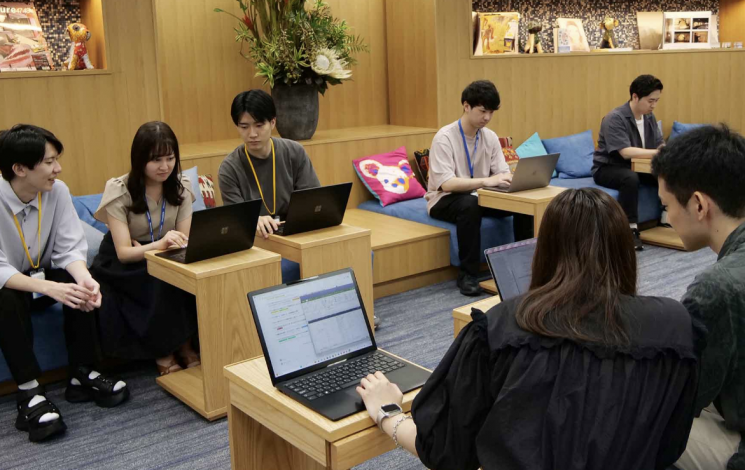
Before the raise, the starting salary at this company was 250,000 yen per month (2.24 million KRW) and 3.5 million yen annually (31.38 million KRW). With this increase, the monthly salary will be 360,000 yen (3.22 million KRW), and the annual salary will be 5.04 million yen. However, this includes overtime pay for 45 hours per month, while the company's average monthly overtime is recorded at 14 hours and 56 minutes.
Along with the starting salary increase, Dream Arts has been gradually raising wages for workers under 30 since 2019. As a result of the increases implemented by 2024, the monthly salary for workers under 30 has risen by 27.9% over five years. A company representative stated that the purpose of the wage increase was "to secure talent, we judged that an annual salary of 5 million yen (44.83 million KRW) was necessary, so we raised wages."
Japanese media positively evaluated the bold proposal by the SME as a catalyst for overall wage increases. Although the average wage increase rate in Chuntu reached 5.28%, the largest in 33 years, the gap in increase rates between large corporations and SMEs actually widened. The 5.28% figure represents the average wage increase rate for all companies, including large corporations. When classified by SMEs only, the average increase rate is 4.42%, which is 0.86 percentage points lower than the overall average. In 2023, the difference was 0.35 percentage points, indicating that the wage increase gap between large corporations and SMEs has further expanded.

While the cases of some companies cannot drive wage increases across all SMEs, there is growing hope that change will begin. Toshihiro Nagahama, chief economist at Dai-ichi Life Research Institute, explained, "There are significant differences depending on the industry, and wage increases by some companies alone cannot be seen as wage increases at the level of large corporations across all SMEs. However, wage increases in similar industries can be triggered. For example, Costco Gunma, which opened in Gunma Prefecture, set the part-time minimum hourly wage significantly above the regional average, resulting in an increase in part-time wages throughout the region."
Japanese media assessed that wage increase rates will be a good incentive to attract job seekers and those wishing to change jobs. Especially in Japan, where both large corporations and SMEs are experiencing labor shortages, wage increases are emphasized as an essential factor for acquiring talent. Business Insider pointed out, "In the future, companies that cannot respond to wage increases will find it increasingly difficult to secure talent," and warned, "As a result, companies that fail to raise wages may face market exit."
© The Asia Business Daily(www.asiae.co.kr). All rights reserved.


















