Ministry of Justice and Supreme Prosecutors' Office: "No Non-Prosecution Decision Authority for Cases Without Prosecution Rights"
Contrary to the Corruption Investigation Office Act Requiring Submission of All Records for Cases Without Prosecution Rights
The High-ranking Officials' Crime Investigation Office (HCIO) will implement a revised case handling regulation reflecting its existing position that it has the authority to issue non-prosecution decisions even for cases over which it does not have prosecution authority under the HCIO Act.
The Ministry of Justice and the Supreme Prosecutors' Office hold the position that "the HCIO does not have the authority to make non-prosecution decisions on cases over which it does not have prosecution authority under the HCIO Act, and since the HCIO Act stipulates that all case documents and evidence must be forwarded to the prosecution regardless of the request for prosecution, the revised regulation violates higher laws," raising concerns about confusion at investigation sites due to inter-agency conflicts.
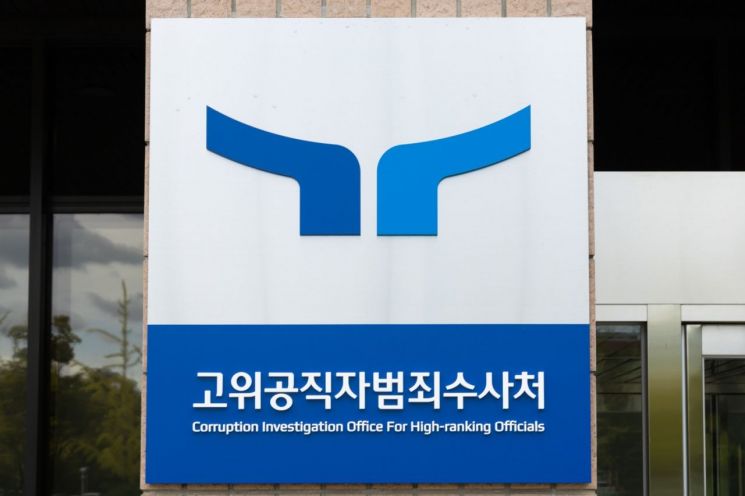 Government Gwacheon Complex, Corruption Investigation Office for High-Ranking Officials. Photo by Corruption Investigation Office for High-Ranking Officials
On the 18th, the HCIO announced that it plans to publish the revised case handling regulation, which includes deleting the provision requiring the forwarding of related documents to the Seoul Central District Prosecutors' Office when issuing a non-prosecution decision on cases without prosecution authority, in the official gazette on the 19th and then implement it.
Earlier, the HCIO had announced the draft revision of the case handling regulation containing these details for public comment in January.
The revised case handling regulation contains two main points.
First, it deleted Article 28, Paragraph 2 of the regulation, which stipulated that when the HCIO investigates a case over which it does not have prosecution authority and decides not to prosecute, it must send a case transfer document with related documents and evidence to a prosecutor belonging to the Seoul Central District Prosecutors' Office.
Second, it removed the investigative advisory group from Article 42 (Investigation Deliberation Committee, etc.) and integrated it into the Investigation Deliberation Committee.
Article 3, Paragraph 1, Subparagraph 2 of the HCIO Act limits the subjects that the HCIO can prosecute to ▲ the Chief Justice and Justices of the Supreme Court ▲ the Prosecutor General ▲ police officers of rank Superintendent or higher who are currently in office or retired from that position, for high-ranking officials' crimes and related crimes committed by themselves or their family members while in office.
Article 26 (Forwarding of Related Documents and Evidence by HCIO Prosecutors), Paragraph 1 of the HCIO Act states, "When an HCIO prosecutor conducts an investigation into high-ranking officials' crimes other than those specified in Article 3, Paragraph 1, Subparagraph 2, they must promptly forward the related documents and evidence to a prosecutor belonging to the Seoul Central District Prosecutors' Office."
The Ministry of Justice and the Supreme Prosecutors' Office argue that since the HCIO Act requires the HCIO prosecutor to forward related documents and evidence to the Seoul Central District Prosecutors' Office after completing investigations on cases other than those specified in Article 3, Paragraph 1, Subparagraph 2, over which the HCIO has direct prosecution authority, the revised regulation that does not require forwarding documents for cases where the HCIO decides not to prosecute violates higher laws.
For example, in the case of Superintendent Cho Hee-yeon, where the HCIO does not have prosecution authority, the Ministry of Justice and the Supreme Prosecutors' Office consistently maintain that the HCIO cannot even make a non-prosecution decision.
In 2021, the Supreme Prosecutors' Office stated in an opinion submitted to the office of National Assembly member Jeon Ju-hye that "HCIO prosecutors can make non-prosecution decisions only for cases where they have the authority to prosecute."
Also, the Ministry of Justice, after consultation with the Supreme Prosecutors' Office, reportedly conveyed an opposing opinion to the HCIO last month regarding the draft revision of the case handling regulation, stating, "Since it violates the higher HCIO Act, all cases without prosecution authority must be transferred to the prosecution."
The Ministry of Justice cited Articles 26, Paragraphs 1 and 2 of the HCIO Act as the basis.
Article 26, Paragraph 1 of the HCIO Act stipulates that for cases without prosecution authority, "the HCIO prosecutor must promptly forward related documents and evidence to a prosecutor belonging to the Seoul Central District Prosecutors' Office."
Article 26, Paragraph 2 requires the prosecutor of the Seoul Central District Prosecutors' Office, who receives cases without prosecution authority under Paragraph 1, to notify the HCIO Chief whether prosecution will be initiated.
The Ministry of Justice holds the position that these legal provisions clearly show that the authority to dispose of cases without prosecution authority lies with the prosecution.
Furthermore, the Ministry of Justice argues that if this interpretation is not followed, contradictions arise in the re-examination application procedure. In cases where a complainant or accuser appeals a non-prosecution decision by the investigative agency to the competent High Court through a re-examination application, if the court accepts it, prosecution must be immediately initiated. However, if the HCIO cannot prosecute a case but gains prosecution authority due to the court's acceptance of the re-examination application, it would result in a contradictory outcome.
Ultimately, for cases over which the HCIO does not have prosecution authority, complainants or accusers must have the non-prosecution decision reviewed through appeal or re-examination application after the prosecution's non-prosecution decision, and for this, the HCIO must forward all investigation materials of cases other than those it can prosecute itself to the prosecution as stipulated by the HCIO Act.
On the other hand, the HCIO states, "The revised case handling regulation supplements deficiencies that appeared in the operation of the system based on the HCIO Act and decisions by the Constitutional Court and courts."
The HCIO cites Article 27 of the HCIO Act as the basis for its authority to make non-prosecution decisions on all investigated crimes regardless of whether it has prosecution authority.
Article 27 (Transfer of Related Cases) of the HCIO Act states, "When the Chief makes a non-prosecution decision on a high-ranking officials' crime, they must transfer related crime cases discovered during the investigation process to the Supreme Prosecutors' Office."
Additionally, the HCIO cites Article 29 of the HCIO Act concerning re-examination applications as another basis.
Article 29 (Special Provisions on Re-examination Applications), Paragraph 1 of the HCIO Act states, "When a complainant or accuser receives a notification from an HCIO prosecutor that prosecution will not be initiated, they may apply for re-examination on the matter to the Seoul High Court."
This provision allows complainants or accusers to apply for re-examination to the court regardless of whether the HCIO has prosecution authority, provided the HCIO notifies a non-prosecution decision, and presupposes that the HCIO retains the relevant 'non-prosecution records,' according to the HCIO.
In practice, courts have dismissed re-examination applications on cases over which the HCIO does not have prosecution authority, stating reasons such as "the HCIO prosecutor's non-prosecution disposition is acceptable," which the HCIO interprets as decisions made on the premise that the HCIO prosecutor's non-prosecution disposition is lawful.
Finally, the HCIO points to the Constitutional Court's prior statement that "HCIO prosecutors have the same authority as prosecutors in the prosecution office" and "may perform the duties of prosecutors under Article 4 of the Prosecution Service Act," arguing that HCIO prosecutors naturally have the authority to dispose of cases (prosecution and non-prosecution decisions) that prosecutors in the prosecution office have.
The conflict over authority between the HCIO and the prosecution is not new.
In particular, since the HCIO enacted and promulgated the case handling regulation, conflicts have arisen over ▲ Article 14, Paragraph 3, Subparagraph 1, Item (b) and Article 25, Paragraph 2 of the established regulation explicitly stipulating 'conditional transfer with reserved prosecution rights,' ▲ Article 25, Paragraph 3 assuming that the police can request arrest warrants from the HCIO rather than the prosecution, ▲ and Articles 28, Paragraph 2 and 31, Paragraph 1, which allow the HCIO to make non-prosecution decisions while transferring cases to the prosecution for crimes over which it only has investigation authority but no prosecution authority.
Among these, regarding the conditional transfer with reserved prosecution rights, which caused the greatest conflict with the prosecution, the HCIO abandoned its previous position and, through a regulation revision in January 2022, deleted ▲ the proviso in Article 25, Paragraph 2 allowing the Chief to request the return of cases after other investigative agencies complete their investigations and Article 14, Paragraph 3, Subparagraph 1, Item (b), and ▲ Article 24, Paragraph 3 allowing requests to suspend other investigative agencies' procedures. The revised regulation has been in effect since March 2022.
Meanwhile, the revision also includes the abolition of the investigative advisory group and its integration into the Investigation Deliberation Committee.
© The Asia Business Daily(www.asiae.co.kr). All rights reserved.
![User Who Sold Erroneously Deposited Bitcoins to Repay Debt and Fund Entertainment... What Did the Supreme Court Decide in 2021? [Legal Issue Check]](https://cwcontent.asiae.co.kr/asiaresize/183/2026020910431234020_1770601391.png)















