Jeju's 80-Year-Old Abandoned House Reborn as Emotional Stay
Gyeongju Line Village Hotel Opens for Domestic and Foreign Guests
Nearly 100,000 Abandoned Houses Nationwide... Mostly in Rural Areas
Expanded Use for Returnees, Immigrants, and Cultural Spaces
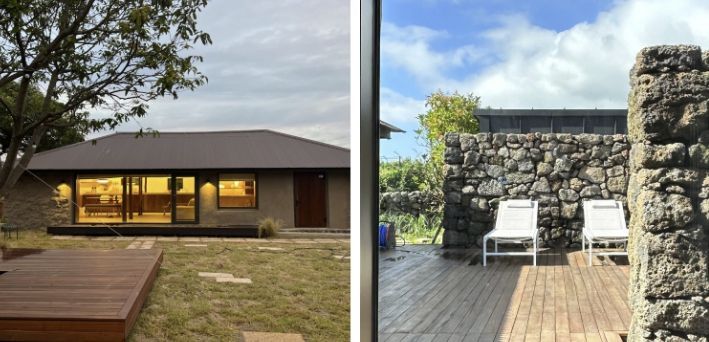
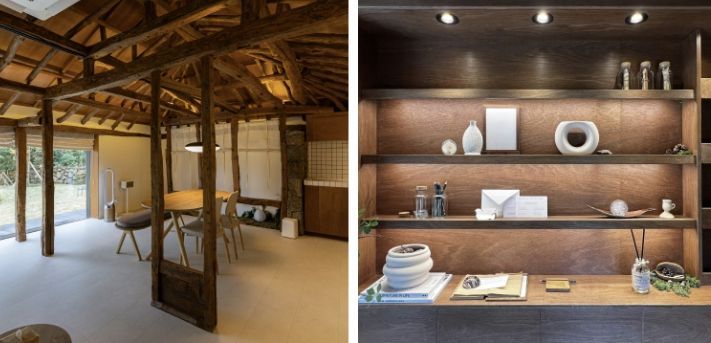
In Gosan-ri, Hangyeong-myeon, Jeju, there is an emotional detached stay called ‘Gosandodeuljip (Dodeuljip)’. Based on an empty house in Gosan built in 1945, the interior preserves the original form of the house as much as possible and is furnished with products from a furniture company that match Jeju’s unique sensibility. This place was created last July when Illoom, a living furniture brand of the Persys Group, collaborated with the vacant house regeneration startup ‘Dajayo’ to revitalize an abandoned empty house into a lodging space.
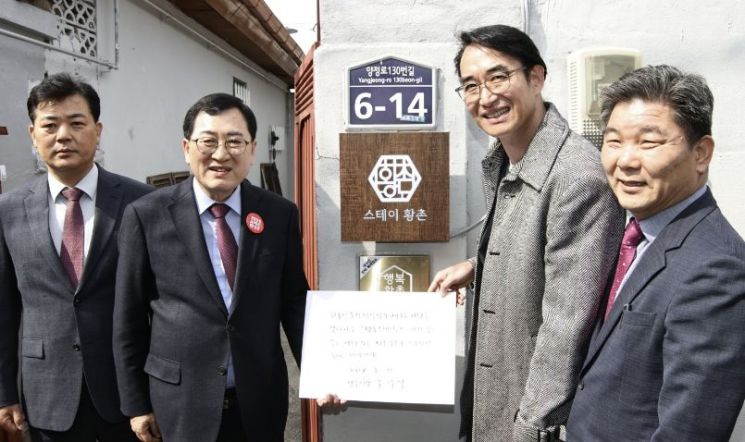
On the 11th, Gyeongju City held a plaque ceremony for the ‘Conversion of Foreign Tourist City Guesthouse Business to Domestic Guest Accommodation Special Case’ at the village hotel ‘Haengbok Kkumjari’, a hub facility for urban regeneration in Haengbok Hwangchon. This project was activated as the Tourism Promotion Act Enforcement Decree was applied, allowing village enterprises operating foreign tourist city guesthouses established under the urban regeneration activation plan to provide lodging and meals to domestic tourists for one year. The village hotels are mostly facilities renovated from empty houses where residents once lived but left, typically consisting of about two rooms. It is perfect for domestic tourists who want to stay in the old downtown area away from famous lodging facilities. On this day, along with the village hotel ‘Haengbok Kkumjari’, three other village hotels?Blue Planet, Hwang-o Inn, and Stay Hwangchon?also received plaques for the domestic guest accommodation special case conversion.
According to statistics from ‘Small-scale & Empty House Information Alert e’, a nationwide platform for urban and rural empty house information, as of 2022, there are 93,489 empty houses nationwide. The combined building area of these houses is 33.84 million square meters, and the land area is 69.85 million square meters, slightly smaller than Yeouido’s area (84 million square meters). By region, Jeonbuk (21,899 houses) accounts for 23.4% of the total, ranking first, followed by Gyeongnam (10,613 houses), Gyeongbuk (10,406 houses), Jeonnam (7,733 houses), and Gangwon (6,675 houses). The Seoul (2,972 houses), Incheon (3,945 houses), and Gyeonggi (4,734 houses) areas, the big three in the metropolitan area, also have thousands of empty houses. The government is promoting rural space maintenance projects (demolition) and support projects to attract returnees to farming and rural areas to increase utilization rates, fearing safety accidents related to empty houses, but progress is slow. The percentage of empty houses demolished nationwide was 23.5% in 2020, 18.8% in 2021, and 18.5% in 2022, while utilization-type empty house projects were 0.81% in 2020, 0.94% in 2021, and 0.74% in 2022, not exceeding 1%.
Accordingly, the government and local governments are starting full-scale surveys on empty houses this year and are preparing new measures for their utilization. Most utilization plans for empty houses are tailored to lifestyles. They are spaces where people live, eat, and enjoy. They are often used as housing to attract population. In Boeun-gun, Chungbuk, two ‘Hope Nests’ for returnees to farming and rural areas were recently completed. Hope Nests are projects that remodel rural empty houses neatly and provide them to urban migrants, located in Hagung-ri, Naebuk-myeon (building area 37.5㎡) and Jangseon-ri, Suhan-myeon (88㎡). Eligible residents are new returnees to farming and rural areas who plan to move to Boeun or have registered as agricultural management entities (farm registers) within two years. They pay no deposit and only pay a monthly rent of 150,000 to 200,000 KRW for two years, with the possibility of extension on a monthly basis.
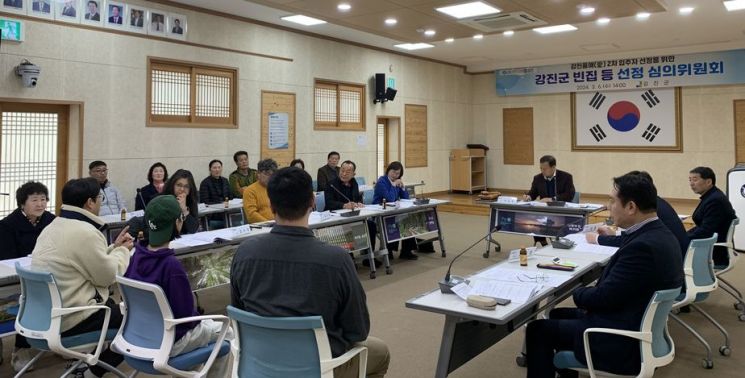
In Gangjin-gun, Jeonnam, the ‘Gangjin Pum-ae (愛)’ empty house remodeling support project is underway to attract urban populations. Those selected for this project can live in farmhouses rented by the county for two years at a low rent of 10,000 KRW per month with a deposit of 1 million KRW, and contracts can be extended twice, allowing a maximum stay of six years. Residents must complete their move-in registration after signing the contract and maintain the number of household members until the contract expires. Recently, 74 households nationwide applied for six available units, and Gangjin-gun selected five households as final residents. The selected households expressed aspirations such as “I will run a basketball class for children, utilizing my experience as a college basketball player in the U.S.” and “After returning to farming, I plan to operate an insect farm and have enrolled in a related university.” The third recruitment is scheduled for the end of March, and including one household in Doam-myeon that was not selected in the second recruitment, there will be 10 households in total.
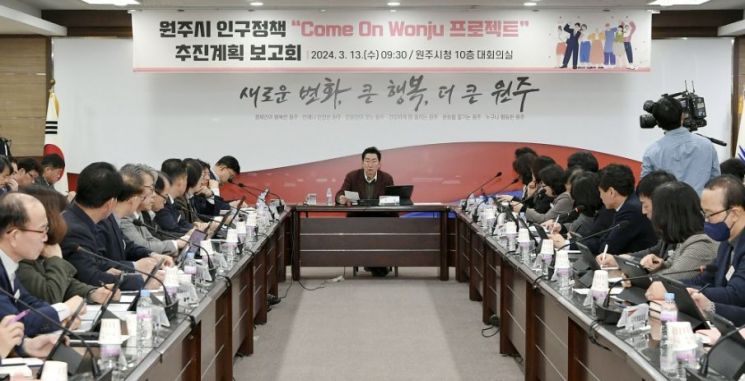
On the 13th, Wonju City announced that Mayor Won Kang-su decided to promote the long-term population inflow policy called the ‘Come On Wonju Project’. This project supports first-generation immigrants who have lived abroad for a long time by renovating and providing empty houses so they can settle down and take root again. This support system, named the ‘Incubation System’, is implemented through three stages: promoting Wonju, experiencing living there, and settling down, with detailed policy projects for each stage.
Additionally, Ulsan City has transformed empty houses into parking lots, rest areas, and vegetable gardens, while Chuncheon City in Gangwon converted eight empty houses and vacant stores into citizen cultural activity hubs last year. These places attracted 24,584 visitors annually and hosted 354 small group meetings. Haenam-gun in Jeonnam plans to convert empty houses, closed schools, and abandoned factories into public facilities such as rental housing for returnees to farming and rural areas, rest areas, and agricultural education centers. Jeongseon-gun in Gangwon plans to remodel empty houses by 2026 to create a food village to revive the old downtown commercial district that once thrived with miners.
© The Asia Business Daily(www.asiae.co.kr). All rights reserved.



















