Reappointment Virtually Confirmed Despite Social Controversy
Fundamental Institutional Fairness Needed for Resolution
Three-Year Single Term, Strengthened Shareholders, Enhanced Audit Committee Independence, etc.
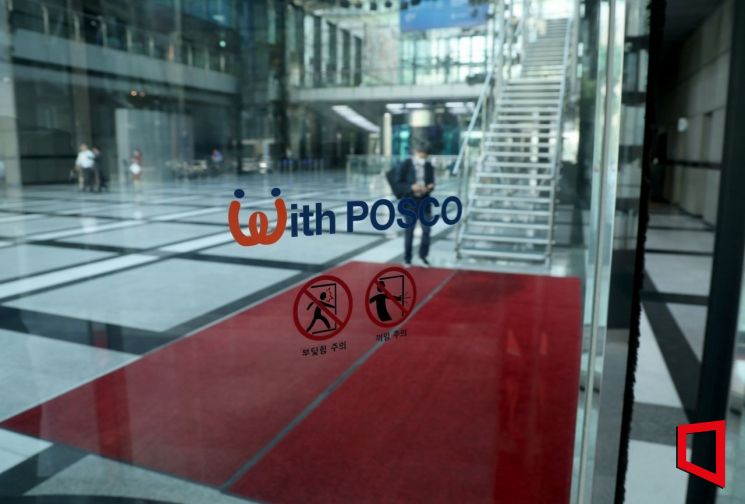
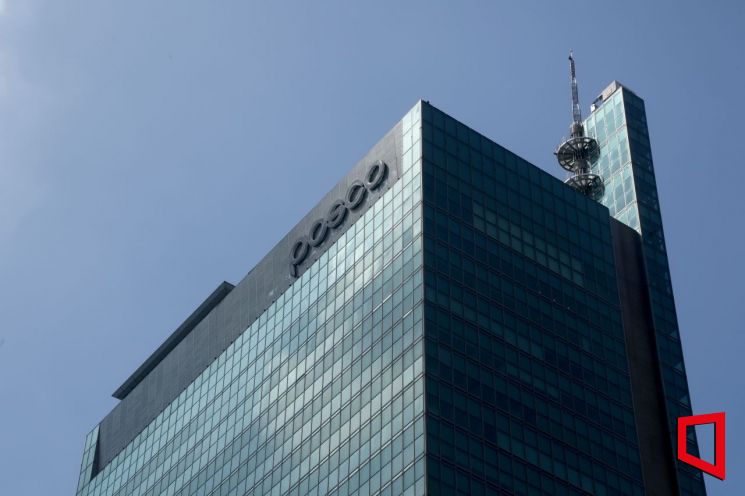
Posco Group, ranked 5th in the domestic business world by assets, will formalize its new leadership through a shareholders' meeting on the 21st. Following the two major global proxy advisory firms and the National Pension Service's approval of the agenda, the controversy over the ‘luxurious overseas board meetings’ that lasted for the past three months is likely to end as a ‘storm in a teacup.’ This is because only the chairman of the board resigned taking moral responsibility, while other outside directors have effectively been confirmed for reappointment despite the controversy. Experts agree that institutional fairness is fundamentally needed to resolve the issue of ‘outside director shaking’ in widely held companies.
The prevention of outside director shaking was raised when the National Pension Service recently supported the appointment of Posco Group Chairman candidate Jang In-hwa and outside director candidates Yoo Young-sook, Kwon Tae-gyun, and Park Sung-wook. Among them, outside directors Yoo Young-sook and Kwon Tae-gyun are under investigation for participating in the luxurious board meetings. Kim Tae-hyun, chairman of the National Pension Service, sparked the controversy by stating, "There are suspicions about whether past outside director activities were truly independent and whether there were conflicts of interest related to the luxurious board meetings during their tenure." As a result, Park Hee-jae, chairman of the nomination committee, voluntarily resigned with about a year left in his term. Ultimately, except for former chairman Park, the candidates are now facing reappointment procedures.
Experts evaluate that the very fact that the ‘luxurious board meeting’ controversy easily surfaced indicates vulnerability to external pressures. This can be interpreted as a lack of procedural transparency. Posco also selects outside director candidates through the Outside Director Nomination Committee composed of outside directors, which receives advice from a confidential advisory group. The candidates are submitted directly to the shareholders' meeting without going through the board of directors, so shareholders cannot know the process.
Therefore, various opinions have been raised among experts to prevent outside director shaking. Some suggest fixing the term of outside directors to a single three-year term. Professor Jo Myung-hyun of Korea University’s Business Administration Department said, "Outside directors cannot avoid being mindful of the chairman whenever their one- or two-year renewals come up," adding, "If the term is set as a single three-year term, they can think ‘once and done,’ allowing them to present independent opinions with conviction." He emphasized, "Outside directors should be composed mainly of people with rich corporate management experience, and at the same time, the corporate mindset must change."
Strengthening the role of shareholders to induce transparent management is also possible. Moon Sung, a lawyer at Yulchon and former head of the National Pension Service’s shareholder rights exercise team, said, "There is an option to partially amend the Commercial Act or Capital Markets Act to ensure the board of directors can fully exercise its monitoring function, but that takes too long," adding, "Rather, a platform should be provided for shareholders, the owners of the company, to make changes." He also said, "When disclosing corporate governance reports, items necessary for shareholders should be disclosed, and a structure should be created where shareholders can propose outside director candidates, including independent outside directors."
Some argue that the ‘restriction on voting rights of public interest corporations within business groups’ should be reconsidered. The idea is to assign external institutions a monitoring role so that public interest corporations can exercise voting rights and check the CEO. However, to prevent cases like KT&G where the CEO serves as chairman of the welfare foundation, fairly elected external personnel must be appointed. A corporate governance expert said, "Senior and junior presidents take turns chairing and act as rubber stamps for the KT&G board," calling it "a case where the public interest corporation lost its supervisory and monitoring functions."
Measures to strengthen the independence of the audit committee are also being discussed. Lee Ho-young, director of the ESG and Corporate Ethics Research Center at Yonsei University’s Business School, said, "The internal audit department’s reporting line should be directly under the audit committee instead of the CEO to guarantee independence," adding, "An audit committee support organization should be established, and to strengthen monitoring capabilities, at least two accounting experts and one legal expert should be secured."
© The Asia Business Daily(www.asiae.co.kr). All rights reserved.
![User Who Sold Erroneously Deposited Bitcoins to Repay Debt and Fund Entertainment... What Did the Supreme Court Decide in 2021? [Legal Issue Check]](https://cwcontent.asiae.co.kr/asiaresize/183/2026020910431234020_1770601391.png)

















