300 Billion KRW Allocated for Migrant Response
The European Union (EU) announced an aid package worth 7.4 billion euros (approximately 10.7 trillion KRW) to support Egypt over three years. This move is interpreted as a response to concerns over an increase in migrants entering Europe due to Egypt's economic difficulties and conflicts in neighboring countries.
According to major foreign media including the Associated Press on the 17th (local time), an EU delegation consisting of Ursula von der Leyen, President of the European Commission, and the leaders of Italy, Greece, and Cyprus signed a "strategic and comprehensive partnership" with Egyptian President Abdel Fattah el-Sisi in Cairo that afternoon. The partnership focuses on expanding cooperation between the EU and Egypt in areas such as security, renewable energy, and trade.
The aid package includes grants and loans worth 7.4 billion euros to Egypt over the next three years. The support consists of concessional loans of 5 billion euros (approximately 7.3 trillion KRW), investments of 1.8 billion euros (approximately 2.6 trillion KRW), and grants of 600 million euros (approximately 870 billion KRW). Notably, the grants include 200 million euros (approximately 300 billion KRW) allocated to address migration issues.
President el-Sisi of Egypt stated, "Today’s visit by European leaders will be a very important milestone in the relationship between Egypt and the European Union," and evaluated, "Through this negotiation, we have achieved a paradigm shift in the partnership." Italian Prime Minister Giorgia Meloni described it as a "historic agreement," explaining, "This plan demonstrates our will to strengthen and encourage new structural cooperation methods between both sides of the Mediterranean."
This large-scale economic aid from the EU is analyzed as a response considering Egypt’s economic difficulties and the surge in migrants heading to Europe. Recently, Egypt has experienced severe inflation and a foreign exchange crisis amid the COVID-19 pandemic and the Russia-Ukraine war. Egypt previously increased the size of its bailout from the International Monetary Fund (IMF) from 3 billion dollars (approximately 4 trillion KRW) to 8 billion dollars (approximately 11.7 trillion KRW) through an agreement.
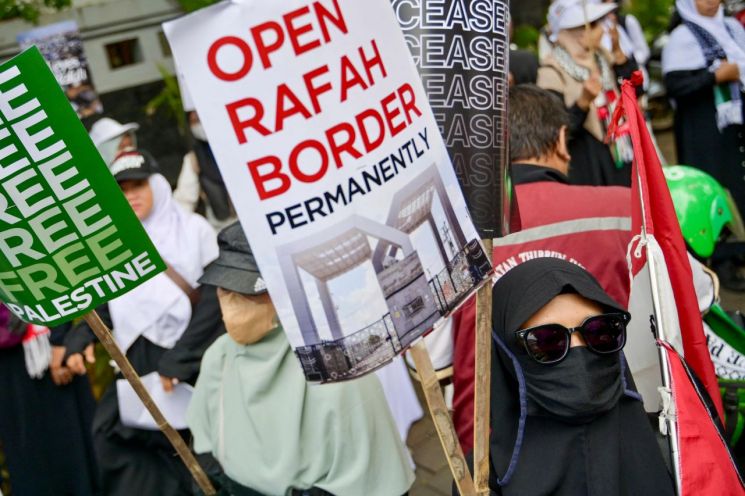
The refugee issue caused by war is also serious. According to reports, the number of refugees heading to Rafah due to the Israel-Hamas war exceeds 1 million. Additionally, Israel’s ground offensive on Rafah, the southernmost part of the Gaza Strip, is expected to cause hundreds of thousands of refugees to enter Egypt’s Sinai Peninsula. It is estimated that Egypt has received about 9 million migrants, including approximately 480,000 refugees and asylum seekers registered with the United Nations Refugee Agency. A significant number of these migrants are known to attempt illegal crossings of the Mediterranean to reach Europe.
Meanwhile, the EU has also formed partnerships with Tunisia and Mauritania to provide funding aimed at preventing migrant inflows through the Mediterranean. Some critics argue that providing money to African countries in exchange for migrant suppression could lead to migrant oppression and human rights violations. Yves Gedeon, Europe Director at Amnesty International, pointed out, "EU leadership must ensure that Egyptian authorities adopt clear human rights standards."
© The Asia Business Daily(www.asiae.co.kr). All rights reserved.

















