Niseko Introduces Accommodation Tax Up to 18,000 Won
Tokyo, First to Implement, Shows Signs of Increase
Niseko, Hokkaido in Japan, famous as a ski destination, announced that it will impose an accommodation tax of up to 2,000 yen (about 18,000 won) per night starting this November. On the 13th, Nihon Keizai Shimbun reported that Takeaki Matsumoto, Minister of Internal Affairs and Communications, agreed the day before to Niseko Town, a basic local government in Hokkaido, establishing an accommodation tax ranging from 100 to 2,000 yen (about 890 to 18,000 won) per person per day depending on the accommodation fee.
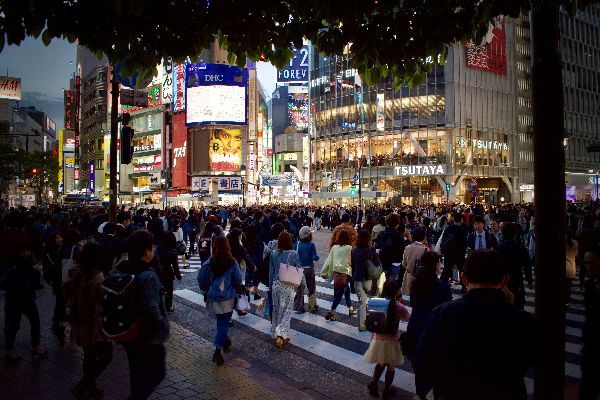 Accommodation tax has been collected since 2002 when Tokyo Metropolis started imposing it, followed by Osaka Prefecture, Kyoto City, Kanazawa City, Fukuoka City, Nagasaki City, and others. Most have a maximum amount of less than 1,000 yen (approximately 9,000 won).
 [Photo source=Pixabay]
Earlier, the Niseko Town Council created an ordinance regarding the introduction of the accommodation tax in December last year in response to the increase in tourists, and has been consulting with the Ministry of Internal Affairs and Communications. In Japan, accommodation taxes collected by local governments through ordinances are considered "non-statutory taxes" (法定外稅), so the consent of the Minister of Internal Affairs and Communications is required for their introduction. Nikkei reported that Niseko Town set a higher level of accommodation tax compared to other regions, considering the presence of many luxury hotels.
The accommodation tax has been collected since 2002 when Tokyo Metropolis started it, followed by Osaka Prefecture, Kyoto City, Kanazawa City, Fukuoka City, Nagasaki City, and others. Most have a maximum amount below 1,000 yen (about 9,000 won). Niseko Town plans to secure 162 million yen (about 1.44 billion won) annually from the accommodation tax collection to improve transportation networks and tourism information infrastructure.
More than 10 local governments besides Niseko Town are considering independent accommodation tax collection
In Hokkaido, besides Niseko Town, more than 10 local governments including Sapporo City and Hakodate City are considering independent accommodation tax collection. As the introduction of accommodation taxes spreads in Japan, Nihon Keizai Shimbun reported that in Tokyo Metropolis, there is a movement to raise the accommodation tax from 100 to 200 yen based on rising accommodation fees.
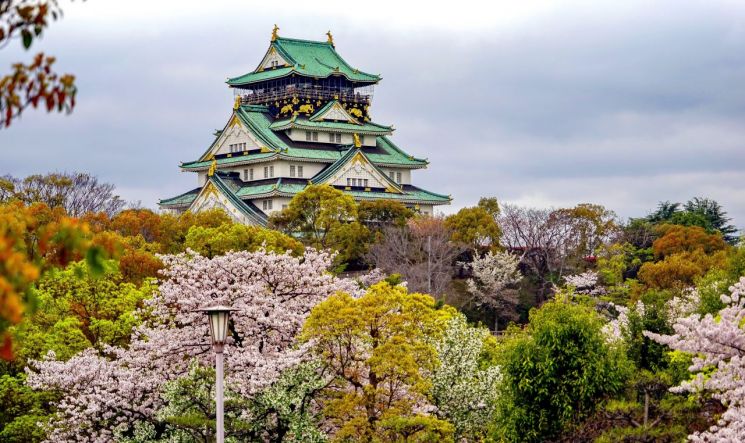 Osaka Prefecture, which will host the Osaka-Kansai Expo in April next year, is promoting a plan to collect a 'levy' exclusively from foreign tourists, separate from the accommodation tax charged to both domestic and international visitors.
 [Photo by Pixabay]
Osaka Prefecture, which will host the Osaka-Kansai Expo next April, is promoting a plan to collect a "levy" targeting only foreign tourists, separate from the accommodation tax collected from both domestic and foreign visitors. This is to establish a kind of foreign tourist tax to secure funds for measures against "overtourism" caused by the surge in tourists.
Osaka Prefecture plans to start an expert discussion on the levy next month to discuss specific amounts and introduction timing. However, like the accommodation tax, the introduction of the levy also requires the consent of the Minister of Internal Affairs and Communications, and there are many challenges to be resolved, Kyodo News pointed out. Currently, Osaka imposes an accommodation tax of up to 300 yen (about 2,700 won) per night on tourists.
Osaka Prefecture has been collecting accommodation tax since 2017. Why collect it? In a Korean-language brochure, Osaka Prefecture explained, "The accommodation tax is used for tourism promotion policies to enhance Osaka's attractiveness as a world-renowned international city," and "The use of accommodation tax includes improving traveler reception environments, enhancing Osaka's appeal, and domestic and international promotion."
Last year, the number of foreign visitors to Japan exceeded 25 million for the first time in four years since the COVID-19 pandemic, reaching 25.07 million, due to factors such as the weak yen. Among them, Koreans accounted for the largest share at 28%, with 6.96 million visitors. The number of Korean visitors increased by 25% compared to 2019.
© The Asia Business Daily(www.asiae.co.kr). All rights reserved.


















