February PPI Exceeds Expectations for Second Consecutive Month
March FOMC Expected to Reaffirm Caution on Rate Cuts
10-Year Treasury Yield Rises 10bp...Stock Market Declines
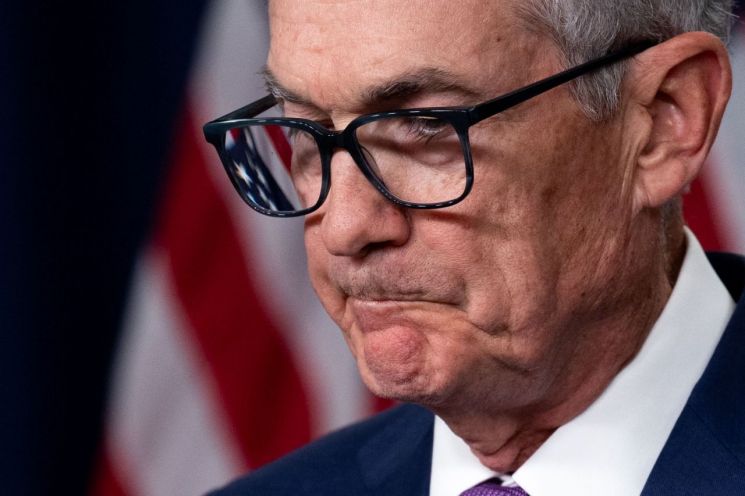
Following the US Consumer Price Index (CPI), the Producer Price Index (PPI), a wholesale price indicator, also showed a larger-than-expected increase last month. As it was reconfirmed that the 'last mile'?the final stretch before reaching the target?in the fight against inflation is not easy, expectations are growing that the US Federal Reserve (Fed) will reaffirm its cautious stance on interest rate cuts at the Federal Open Market Committee (FOMC) meeting next week. Persistent inflation and a sharp rise in government bond yields led to a broad decline in the stock market.
On the 13th (local time), the US Department of Labor announced that the February PPI rose 0.6% month-over-month and 1.6% year-over-year. This significantly exceeded market forecasts (0.3% and 1.1%, respectively) and also surpassed the January increases (0.3% and 1.0%). Notably, the annual increase of 1.6% was the highest in five months.
Commodity prices rose 1.2%, accounting for two-thirds of the PPI increase. Energy prices rose a total of 4.4%, including a 6.8% jump in gasoline prices. Service prices increased by 0.3%, with travel and lodging service costs rising 3.8%.
The core PPI, which excludes volatile energy and food prices to show the underlying inflation trend, rose 0.3% month-over-month and 2.0% year-over-year, also exceeding market expectations (0.2% and 1.9%). In the previous month, the increases were 0.5% and 2%, respectively.
Wholesale prices measured by the PPI affect retail prices measured by the CPI with a time lag. Following the CPI announcement on the 12th, the PPI also exceeded market expectations, strengthening the view that the Fed will emphasize its existing stance of not rushing rate cuts at the FOMC meeting scheduled for the 19th-20th. The February CPI rose 3.2% year-over-year, surpassing both expert forecasts (3.1%) and the January increase (3.1%).
According to the Chicago Mercantile Exchange (CME) FedWatch, federal funds futures on that day priced in a 62.8% chance that the Fed will cut rates by at least 0.25 percentage points at the June FOMC, slightly down from 65.2% the previous day.
Chris Larkin, Trading Managing Director at Morgan Stanley e-Trade, diagnosed, "So far, the market has underestimated concerns about stubborn inflation and a cautious Fed."
The February PPI increase has led to expectations that the Personal Consumption Expenditures (PCE) price index, to be released on the 29th, will also show strength. The market expects the core PCE price index to have risen 0.3?0.4% month-over-month last month.
With persistent inflation leading to expectations of a cautious Fed on rate cuts, government bond yields are strong. The US 10-year Treasury yield, a global bond yield benchmark, rose 10 basis points (bp) from the previous trading day to 4.29%, while the 2-year Treasury yield increased 7 bp to around 4.69%.
Thierry Wiseman, Global FX and Rates Strategist at Macquarie, said, "If you ask whether bond yields will continue to rise and whether there will be a bigger market decline, my answer is yes to both."
On the other hand, the February retail sales growth rate, also released that day, fell short of expectations, showing mixed economic indicators. According to the US Department of Commerce, February retail sales increased 0.6% month-over-month, below the market forecast of 0.8%. Retail sales excluding automobiles rose 0.3%. The January retail sales increase was revised down from a 0.8% rise to a 1.1% decline month-over-month. This is interpreted as meaning that household spending capacity was not as strong as initially expected.
Bloomberg reported in this regard, "It is too early to draw conclusions, but some are raising eyebrows over stagflation concerns (economic stagnation with inflation)."
With the February PPI exceeding market expectations and government bond yields rising, the stock market declined. On the New York Stock Exchange (NYSE) that day, the blue-chip Dow Jones Industrial Average closed at 38,905.66, down 137.66 points (0.35%) from the previous trading day. The large-cap S&P 500 index fell 14.83 points (0.29%) to 5,150.48, and the Nasdaq index dropped 49.24 points (0.3%) to close at 16,128.53.
© The Asia Business Daily(www.asiae.co.kr). All rights reserved.
![Clutching a Stolen Dior Bag, Saying "I Hate Being Poor but Real"... The Grotesque Con of a "Human Knockoff" [Slate]](https://cwcontent.asiae.co.kr/asiaresize/183/2026021902243444107_1771435474.jpg)
















