Excessive Data Collection Persists in Some Schools
School Officials Say "It's Just Essential Educational Material"
Choi (46), who lives in Hwaseong-si, Gyeonggi Province, was recently taken aback after receiving a home environment survey brought by his middle school child. Although he was aware that a survey about the home environment was conducted for student guidance, the questions changed this year were particularly tricky. The survey included potentially sensitive items such as 'economic situation,' 'whether parents live together,' and 'relationship between parents.'
Choi said, "I know there are many single-parent families these days, but asking about whether parents live together or their relationship could be hurtful to the child. I don't understand what significance these questions have for guiding students, and I question whether they are really necessary."
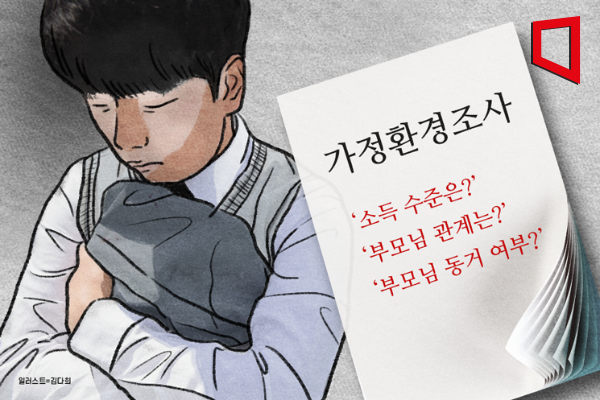
Although the Ministry of Education has recommended to each education office for several years to refrain from conducting home environment surveys that may infringe on student rights, it has been found that some schools still carry out similar surveys. Parents raise concerns about excessive invasion of privacy, but the schools and teachers involved maintain that home environment surveys are inevitable for understanding and guiding students.
Home environment surveys are typically conducted around March to April, when the new semester begins, by the teacher in charge to understand students' characteristics and home environments. This practice has continued as a long-standing tradition since the 1970s, but in the 2000s, some questions requiring parents' assets, occupations, and educational backgrounds were criticized for infringing on students' rights and fostering unnecessary prejudice, sparking controversy. In response, the Ministry of Education issued recommendations to education offices in 2013 and 2016 to refrain from collecting excessive information through home environment surveys.
Nevertheless, similar surveys are still conducted in some places. Currently, most schools use the term 'student counseling basic data' instead of 'home environment survey,' but questions about economic status or whether parents live together remain, raising concerns about potential infringement on student rights. Kim (44), who lives in Osan-si, Gyeonggi Province, said, "Recently, my child brought home student counseling materials that asked to specify any family member with whom the relationship is uncomfortable. They also asked to indicate the degree of closeness with parents, requesting detailed information, which surprised me."
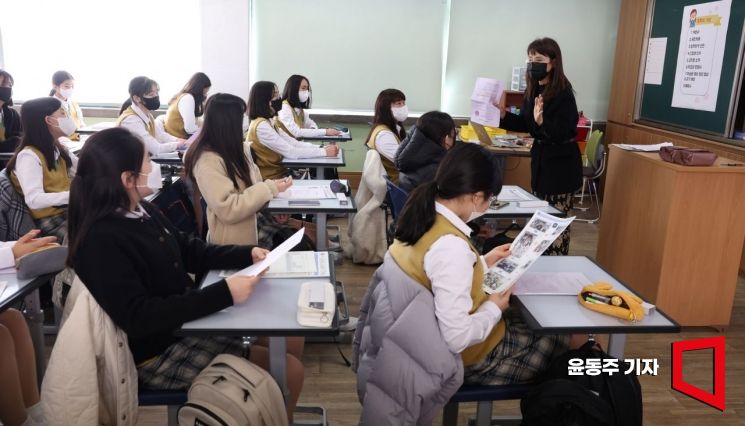
The school side insists that these home environment surveys are unrelated to other purposes and are used solely as educational materials for student guidance. A representative from a middle school in the Gyeonggi area explained, "The home environment survey is absolutely not to distinguish which students come from wealthy or poor families. It is conducted because understanding the relationship with parents and the home environment is necessary for proper guidance. Also, since prior consent for providing information is obtained, families who do not wish to fill it out can leave it blank without any problem."
There are also criticisms that home environment surveys violate the 'Student Rights Ordinance.' The student rights ordinances of Seoul and Gyeonggi Province specify the 'right to protection of personal information' in Articles 14 and 13, respectively. They state that all students have the right to protect their personal information regarding family, friendships, academic records, and disciplinary records. However, since there are no separate penalty provisions, the effectiveness is said to be limited.
Yang Jeong-ho, a professor of education at Sungkyunkwan University, said, "Even if the teacher in charge does not conduct a survey with sensitive questions, information about students who are basic livelihood security recipients or belong to the lower-income bracket is sent from the district office to the school. Detailed information about the home environment can be known not only to the teacher in charge but also to other class teachers, even if the student does not want it, which can constitute a violation of student rights."
The education office says it is difficult to manage and supervise home environment surveys conducted independently by individual schools. An education office official said, "There is no set form or format for home environment surveys, and since individual schools conduct them independently, it is difficult to know how many schools conduct them and what questions they ask. We review complaints from parents that come through the education office."
© The Asia Business Daily(www.asiae.co.kr). All rights reserved.
![Clutching a Stolen Dior Bag, Saying "I Hate Being Poor but Real"... The Grotesque Con of a "Human Knockoff" [Slate]](https://cwcontent.asiae.co.kr/asiaresize/183/2026021902243444107_1771435474.jpg)

















