Financial Supervisory Service "Final Judicial Position Confirmation Needed, Decision to Appeal"
Seoul High Court Cancels Severe Disciplinary Action on 29th Last Month
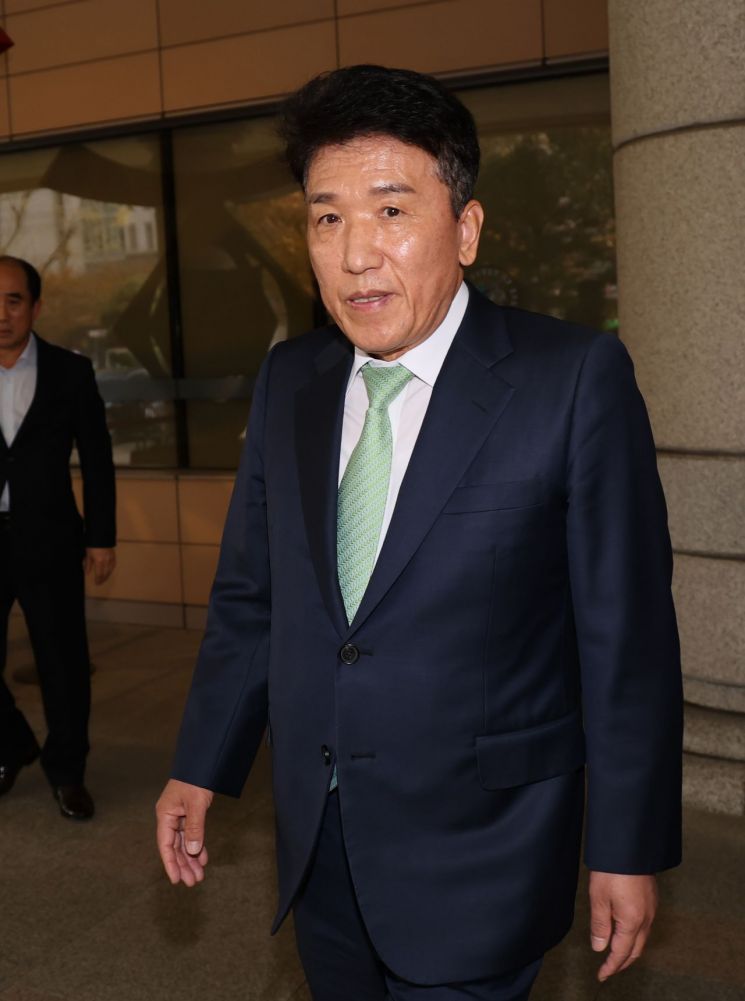
The financial authorities have decided to appeal the second-instance ruling in the administrative litigation filed by former Hana Bank CEO (and current Hana Financial Group Chairman) Ham Young-joo and others against the Financial Supervisory Service (FSS) Governor regarding the cancellation of sanctions related to the sale of derivative-linked funds (DLF).
On the 14th, the FSS announced that after consulting external legal advisors and coordinating with the Financial Services Commission, it decided to file an appeal to the Supreme Court. The FSS stated, "We respect the second-instance court's ruling concerning former CEO Ham and others," but added, "Considering that there are still unclear aspects regarding the legal issues related to the establishment of internal control standards, it was decided to appeal to confirm the judiciary's final position."
Previously, the Seoul High Court Administrative Division 9-3 (Presiding Judges Cho Chan-young, Kim Mu-shin, Kim Seung-joo) overturned the original ruling on the 29th of last month, which had dismissed the lawsuit filed by Chairman Ham against the Financial Services Commission and the FSS Governor seeking cancellation of business suspension and other sanctions, and ruled in favor of the plaintiff.
The Seoul High Court acknowledged that "he bears responsibility as the ultimate supervisor," but unlike the first instance, it recognized only some of the disciplinary reasons as valid and ruled that the defendant side must set a new disciplinary level. This means that since only part of the obligation to establish internal control standards related to incomplete sales was recognized, a sanction level lower than the existing one is appropriate.
The court recognized only 2 out of 10 reasons for sanctions related to the "violation of the obligation to establish internal control standards." The first instance had recognized 7. The disciplinary reasons acknowledged in the second instance were: ▲ failure to establish internal control standards that separately set the validity period for using existing investor information according to internal regulations, and ▲ failure to establish internal control standards for the procedure of obtaining customer confirmation of the investor profile rating results. The remaining reasons for sanctions were considered either difficult to view as violations of the obligation to establish internal control standards due to lack of clarity and foreseeability, or as violations of the obligation to comply with internal control standards.
Meanwhile, in March 2020, the financial authorities imposed a six-month suspension of new private fund sales operations and a fine of 16.78 billion KRW on Hana Bank for incomplete sales of DLF products. Additionally, Chairman Ham received a severe disciplinary warning for inadequate supervision. Receiving a disciplinary warning or higher restricts reappointment and employment in the financial sector for three years.
© The Asia Business Daily(www.asiae.co.kr). All rights reserved.

















