Gwanak-gu Accelerates Creation of Clean Living Spaces
Operates Unauthorized Dumping Guards (Temporary Workers) to Crack Down on Illegal Waste Disposal and Promote Proper Waste Disposal Methods
Year-Round Exchange Program at Community Centers: 2kg of Used Paper Packs for 1 Roll of New Toilet Paper to Promote Resource Recycling
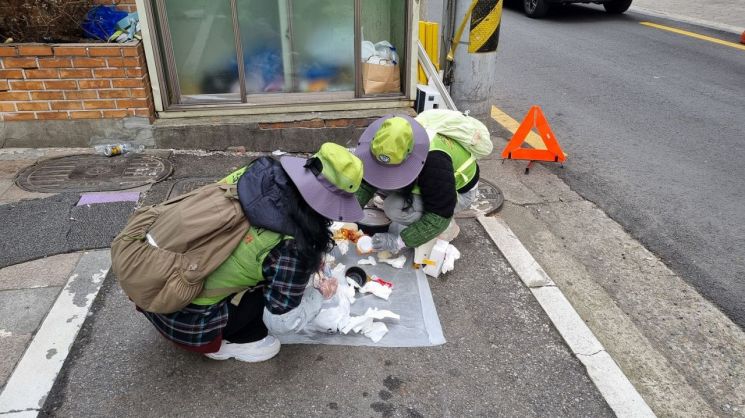
Gwanak-gu (District Mayor Park Jun-hee) is stepping up efforts this year to create a clean and livable environment in Gwanak through illegal dumping prevention activities and resource recycling projects.
The district has hired 15 illegal dumping security officers to prevent illegal dumping and maintain a pleasant environment through proper waste disposal. The newly hired officers began their activities with safety and health education and CPR training.
The illegal dumping security officers patrol in pairs to promote the use of standard garbage bags, adherence to designated waste disposal times, and correct waste disposal methods. They also plan to enforce strict penalties by imposing fines for violations such as mixing food waste and recyclables. Last year, 13,430 cases of illegal dumping were detected, resulting in actual fines totaling 416 million KRW.
Additionally, in areas with high foot traffic such as around Sillim Station and Seoul National University Station, the district will distribute promotional leaflets to prohibit illegal dumping and guide proper waste separation to help establish a culture of correct waste disposal.
Furthermore, since 2016, the district has been promoting the “Paper Pack to Toilet Paper Exchange Program” to encourage resource recycling in daily life. In 2023, it achieved a collection record of 13 tons, leading efforts in paper pack separation. This program allows residents to bring paper packs generated at home to nearby community service centers and exchange 2 kg of paper packs for one new roll of toilet paper.
Two kilograms of paper packs correspond to about 70 one-liter milk cartons typically consumed in households. Residents should empty the contents, rinse them clean with water, and flatten the packs before bringing them in. Paper packs are mainly made from natural pulp, which is 100% imported, and although they have high recycling value, only about 20% of used paper packs are actually collected. The import price of pulp is approximately 1,000 KRW/kg, and if paper packs were recycled 100%, an annual raw material cost saving of 32 billion KRW could be expected, equivalent to planting 1.3 million 20-year-old trees.
Gwanak-gu is also promoting various projects to encourage resource recycling in daily life, including distributing dedicated recycling bags, installing smart recycling bins, and operating resource circulation clubs to create a livable Gwanak together with residents.
Park Jun-hee, Mayor of Gwanak-gu, stated, “This year, starting with the activities of illegal dumping security officers, we will make every effort not only to enforce strict crackdowns but also to actively promote residents’ participation so they can take the lead in making Gwanak a better place to live.” He added, “To create a clean Gwanak, the active participation and cooperation of residents are urgently needed, so I ask everyone to take the lead in using designated garbage bags, properly separating waste, and reducing household waste.”
© The Asia Business Daily(www.asiae.co.kr). All rights reserved.

















