Pregnant Employees at Jung-gu Office, Community Centers, and Health Centers Work Remotely or with Flexible Hours
Street Cleaning Increased from Twice to Four Times Daily
KF94 Masks Provided to Vulnerable Groups Including Disabled, Elderly, and Respiratory Patients
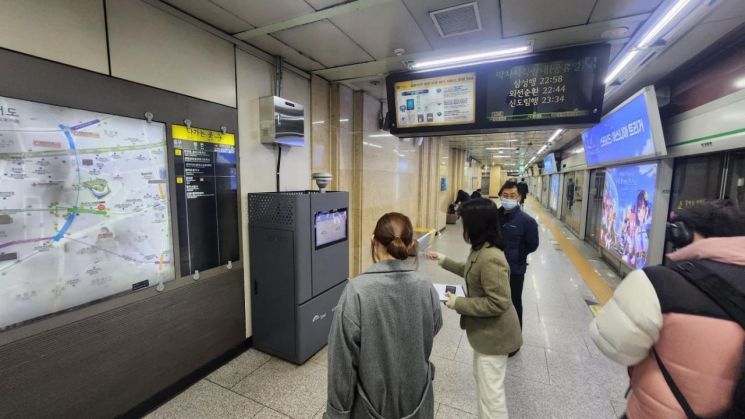
If fine dust levels are severe, pregnant employees working in Jung-gu can work from home or use flexible working hours.
Seoul Jung-gu (District Mayor Kim Gil-seong) has established fine dust reduction measures including this provision and will intensively implement them throughout March, when fine dust is most prevalent.
If the fine dust crisis alert remains at the 'Interest' level for more than two days or if the 'Caution' level or higher is issued, Jung-gu will act swiftly to protect employees and residents.
First, pregnant employees and those with respiratory diseases working at the Jung-gu Office will be allowed to work from home. They can also adjust their commuting hours autonomously or choose their working hours within five days a week. The same applies to employees at community service centers and public health centers.
Additionally, the district has requested cooperation from infant care facilities and welfare centers, recommending the implementation of flexible working hours for their staff.
KF94 masks will also be distributed through community service centers to the elderly, disabled, and those with respiratory illnesses.
The frequency of street cleaning by large water-spraying trucks, normally twice a day, will be increased to four times a day when emergency fine dust reduction measures are in effect.
Moreover, special inspections will be conducted on multi-use facilities, air pollutant-emitting workplaces, and construction sites in the Dasan-ro area, which is a fine dust intensive management zone.
In particular, ventilation systems and air purifiers at 49 multi-use facilities such as daycare centers and subway stations with high foot traffic will be checked first, along with fine dust concentration measuring devices.
Workplaces operating facilities that emit air pollutants, such as heating and cooling systems, will also be a focus of management. The district plans to carefully inspect these facilities for malfunctions or leaks in emission and air pollution prevention equipment.
Additionally, vehicle emissions will be frequently monitored in the Dasan-ro area, where there is heavy resident and vehicle traffic, and 135 facilities equipped with fine dust reduction devices such as air showers and dustproof windows will be inspected.
March has the highest annual concentration of fine dust. According to data from the Ministry of Environment, the average fine dust concentration in March from 2016 to 2023 was 27.7㎍/㎥, higher than December (24.2㎍/㎥), January (26.7㎍/㎥), and February (27.1㎍/㎥). The number of days with fine dust levels rated 'Bad' or higher averages nine days, more than the 5 to 7 days from December to February.
Accordingly, on February 27, the Ministry of Environment announced a comprehensive spring fine dust response plan to operate a full-scale fine dust reduction system in cooperation with related ministries.
Jung-gu is also aligning with the Ministry of Environment’s response by thoroughly operating the reduction measures included in the 5th Seasonal Management Plan implemented since December last year, as well as the fine dust forecasting and warning system, aiming to reduce the occurrence and exposure frequency of fine dust with strengthened measures.
Mayor Kim Gil-seong stated, “We will make every effort to protect residents’ health from fine dust by fully responding to spring fine dust,” and added, “We ask residents to show interest and actively participate in daily life to help reduce fine dust.”
© The Asia Business Daily(www.asiae.co.kr). All rights reserved.

















