Medical School Professors Resign
"Disadvantage for Students Is 'License,' but When Professors Leave, It's a 'Patient Life' Issue"
Tertiary and Public Hospitals Offer Up to 18 Million Won Support for Hiring New Doctors
Park Min-su, the 2nd Vice Minister of the Ministry of Health and Welfare, appealed to medical school professors on the 13th to protect the medical field, stating, "Resigning to prevent disadvantages to your students cannot be a reason for resignation."
At the regular briefing of the Central Disaster and Safety Countermeasures Headquarters (CDSCH) on doctors' collective actions held at the Government Complex Sejong on the same day, Vice Minister Park said, "Disadvantages to students concern their licenses, but if professors leave the medical field, it is a matter involving lives more precious than anything else to patients."
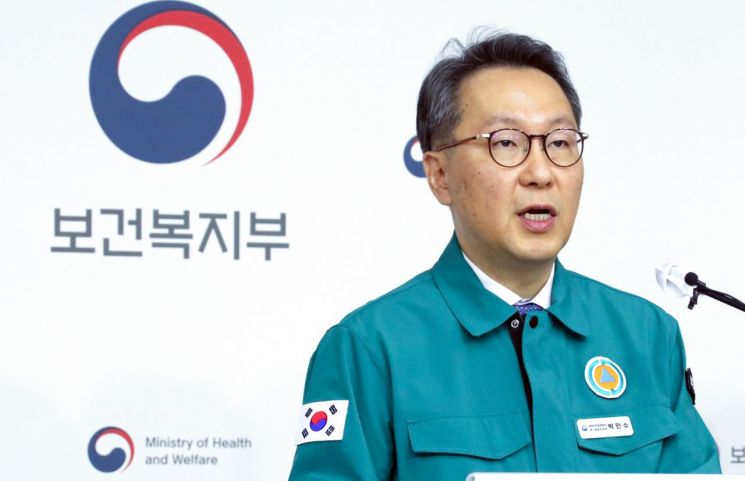
He continued, "If even professors resign, not only will there be no way for residents who have already left the field to return, but residents and medical students who are fulfilling their duties as doctors and medical students amid criticism from colleagues will have nowhere to go."
Vice Minister Park said, "If you turn your back on patients and leave, not only the remaining residents and medical students but also the public will be lost," adding, "The government will engage in more active dialogue and listen to the opinions of the professors."
On the evening of the previous day, representatives of emergency response committees from 19 medical schools, including Seoul National University, Yonsei University, Ulsan University, and Catholic University, held an online meeting to discuss joint response measures such as submitting collective resignation letters. They decided to form a 'National Medical School Professors Emergency Response Committee' and to ask professors and clinical teaching staff at training hospitals at each university by the 15th of this month whether to submit collective resignation letters.
The government has decided to support public medical institutions responsible for the 'medical gap' caused by the departure of residents with a total budget of 94.8 billion KRW this year. The budget will be executed for a total of 41 public hospitals in the first half of this year. To alleviate the medical gap, 39.3 billion KRW in contingency funds will be provided to the National Medical Center and local medical centers that extend treatment hours or provide weekend and holiday care.
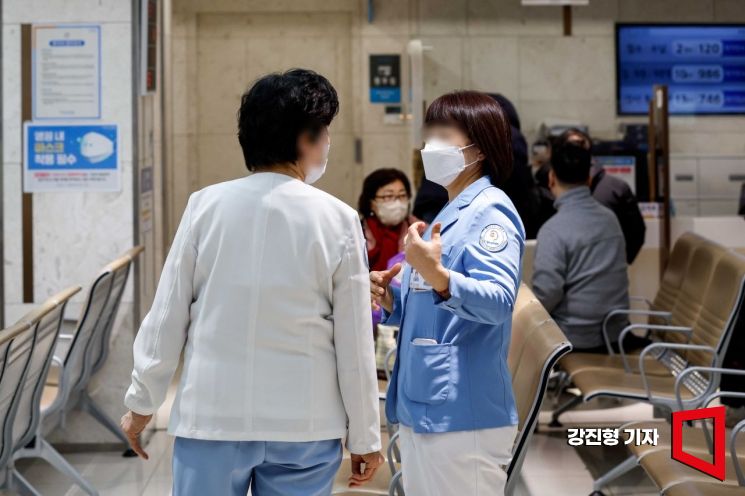 On the 11th, at a secondary general hospital in Seoul where collective action by doctors, centered on residents, is ongoing, nurses are moving busily. Photo by Jinhyung Kang aymsdream@
Additionally, this month, when medical personnel are newly hired at tertiary general hospitals and public medical institutions, doctors will receive up to 18 million KRW per month, and nurses up to 4 million KRW per month in support.
Along with this, starting today and for one month, when patients are transferred from tertiary general hospitals to primary and secondary hospitals through the medical cooperation centers, the government will fully cover ambulance fees, which were previously entirely borne by patients. From the 15th, incentives will also be provided to dedicated personnel who classify severity when regional emergency medical centers guide mild and non-emergency patients to other medical institutions. Vice Minister Park said, "We will continue to listen to opinions from the field, such as emergency medical care, and spare no necessary support."
The Ministry of Health and Welfare plans to reorganize the current medical delivery system, which connects tertiary general hospitals, general hospitals, hospitals, and clinics, based on this situation. Tertiary general hospitals will strengthen severe and emergency functions, general hospitals will enhance care functions for moderate patients, and essential medical functions such as prevention and health management for mild patients at local hospitals and clinics will be significantly reinforced.
First, to strengthen the capacity of tertiary general hospitals to treat severe patients, the ministry will develop treatment, research, and education functions in a balanced manner and foster key hospitals such as national university hospitals to become regional essential medical hubs. Some tertiary general hospitals will be promoted to function as advanced severe care hospitals.
The functions and capacities of secondary hospitals will also be greatly expanded. Considering the medical demand in each region, 3 to 4 medical institutions per medium medical service area will be fostered as secondary hospitals specialized in essential medical care. The specialized hospital system will be completely restructured, and capable specialized hospitals will receive enhanced compensation.
Vice Minister Park said, "Currently, even if designated as a specialized hospital, there is no support other than an average of 300 million KRW in medical quality evaluation support funds and about 40 million KRW in specialized hospital management fees," adding, "We will specialize special and high-difficulty specialized hospitals that can transfer and treat patients from tertiary general hospitals and review system improvements to enable them to receive compensation at the level of tertiary general hospitals as soon as possible."
Clinic-level medical institutions will strengthen prevention and health management functions. Multidisciplinary primary care cooperation will be enhanced to more accurately diagnose patients' initial symptoms, and the system will be rationalized regarding bed and equipment standards to align with the original functions of clinics.
Vice Minister Park said, "Based on this basic framework, we plan to hold a public forum on 'Medical Delivery System Reform' on the 15th," adding, "We will promptly implement it by collecting various opinions from the field."
© The Asia Business Daily(www.asiae.co.kr). All rights reserved.
![Clutching a Stolen Dior Bag, Saying "I Hate Being Poor but Real"... The Grotesque Con of a "Human Knockoff" [Slate]](https://cwcontent.asiae.co.kr/asiaresize/183/2026021902243444107_1771435474.jpg)

















