Jung In-kyo, Head of Trade Negotiations, "Will Announce at the End of March"
Need to Monitor the Scale of Samsung Electronics' Subsidy Payments
Discussion on Semiconductor Equipment Export Restrictions is a Pressure Factor
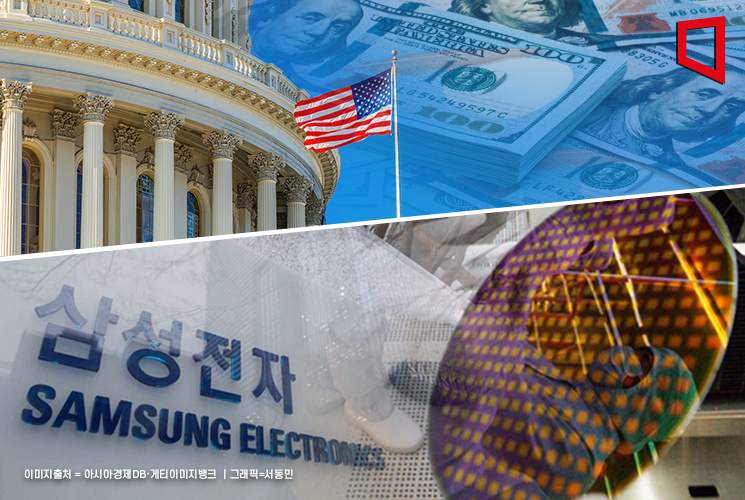
The U.S. government is expected to announce the scale of subsidies to be paid to Samsung Electronics by the end of this month. For Samsung Electronics, which is making a massive semiconductor investment of over $17 billion in Texas, U.S., this is likely to eliminate uncertainty for the time being. However, another source of concern has emerged as the U.S. recently intensified export control pressures on semiconductor equipment targeting China.
On the 12th (local time), Jung In-kyo, Director-General for Trade Negotiations at the Ministry of Trade, Industry and Energy, who visited the U.S. to attend the Korea-U.S. Free Trade Agreement (FTA) Joint Committee, told domestic reporters regarding the U.S. administration’s subsidy payment to Samsung Electronics, "I think it will be announced by the end of March," adding, "It is clear that Samsung will receive it for now, but the scale remains to be seen." He further noted that the payment scale will be finalized when the U.S. government makes the announcement.
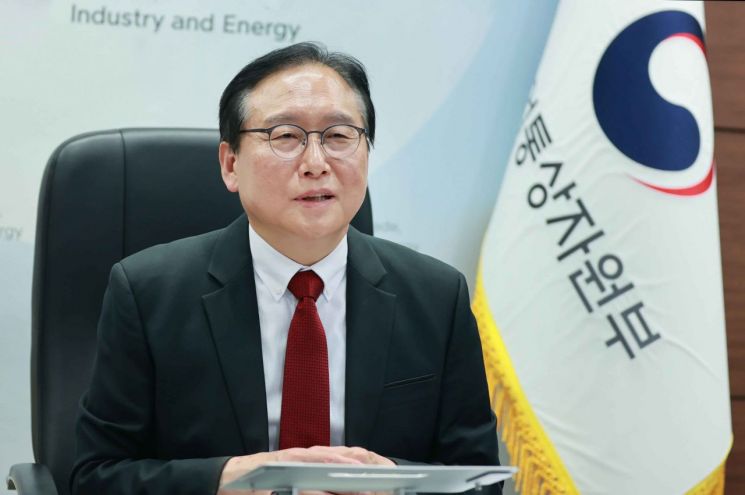 Jin In-gyo, Director General for Trade Negotiations, Ministry of Trade, Industry and Energy / [Photo by Ministry of Trade, Industry and Energy]
The U.S. Department of Commerce has so far confirmed subsidy payments only to domestic companies such as GlobalFoundries, Microchip Technology, and the British BAE Systems under the CHIPS and Science Act (CSA). With semiconductor companies including Samsung Electronics, Taiwan’s TSMC, U.S. Intel, and Micron awaiting the announcement, a specific schedule has now been mentioned.
Within and outside the semiconductor industry, there are expectations that Samsung Electronics may receive less subsidy than local companies when receiving U.S. subsidies. Regarding this, Director-General Jung said, "There is a guideline set by the U.S. side for the support scale, and payments are made accordingly, so it is difficult to predict whether there will be any disadvantage to Korean companies at this point." When asked if there would be no disadvantage, he replied, "Yes."
If the subsidy is announced within this month, Samsung Electronics will be able to ease some concerns. Previously, Samsung Electronics applied for subsidies when deciding to build a foundry (semiconductor contract manufacturing) facility in Taylor, Texas. Although they have not been informed of a specific payment deadline, concerns have arisen within the industry as the subsidy payment timing has been delayed beyond expectations. Samsung Electronics initially announced an investment of about $17 billion, but due to increased construction costs, the total investment scale is now expected to exceed $25 billion.
However, the subsidy scale needs to be examined. U.S. Secretary of Commerce Gina Raimondo revealed that while the subsidy amount intended for advanced semiconductor manufacturing companies is about $28 billion, the amount requested by companies exceeds $70 billion. This means companies may receive less support than expected when dividing the subsidy pie. For Samsung Electronics, foreign media have reported that it could receive tens of billions of dollars, and it is known that discussions with the Department of Commerce are underway to increase the subsidy.
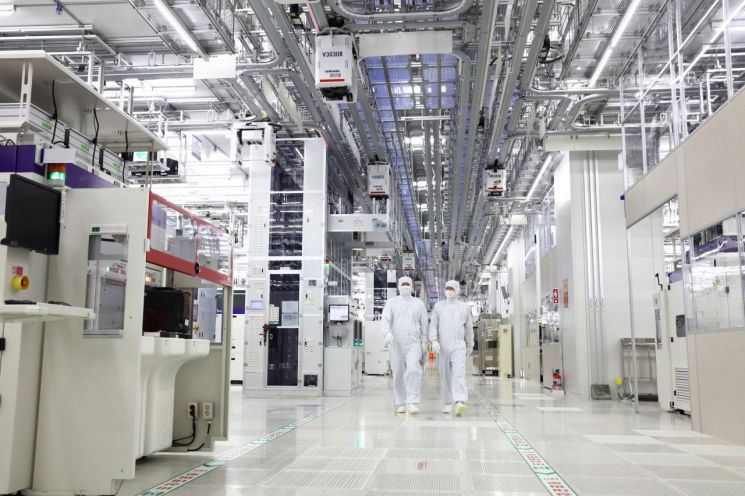
Recently, the U.S. has strengthened export controls on semiconductor equipment targeting China and has begun demanding cooperation, which is expected to become another pressure factor. According to foreign media, Samsung Electronics and SK Hynix have stopped selling outdated semiconductor equipment to China in recent years due to the deepening U.S.-China conflict. The U.S. believes that China, blocked from importing advanced new semiconductor equipment, is growing its domestic semiconductor market using older semiconductor equipment.
Regarding this, Director-General Jung explained, "This is a situation that has been agreed upon between Korea and the U.S. so far," adding, "There are regular consultations between Korea and the U.S. on export controls, and we need to closely consult and decide how and to what extent the control levels will change in the future."
A semiconductor industry official said, "There were no specific regulations prohibiting the sale of old semiconductor equipment, but domestic companies chose not to sell to reduce concerns amid the U.S.-China conflict," adding, "The very fact that such reports are coming out can be read as meaning that even detailed aspects need to be carefully considered, which inevitably places a heavy burden on the domestic industry."
© The Asia Business Daily(www.asiae.co.kr). All rights reserved.



















