Appointing Jeong Hyeong-jin as New CEO, Goldman Sachs Korea
Global Expansion and New Business Initiatives Underway
Hyundai Capital, the exclusive financial company of Hyundai Motor Group, has chosen change over stability by appointing a new leader. This move is interpreted as an intention to seek new growth opportunities such as pioneering global markets amid a domestic business environment worsened by high interest rates.
According to the financial sector on the 14th, Hyundai Capital recruited Jung Hyung-jin, president of Goldman Sachs Korea, as the next CEO to succeed Mok Jin-won, the previous CEO, the day before. This is a different move compared to major capital companies like Shinhan, Hana, and Lotte Capital, where existing CEOs have recently been reappointed consecutively.
President Jung graduated from Harvard University with a degree in economics and earned his master's and doctoral degrees in economics from Brown University. He began working at Goldman Sachs Seoul branch in 1999 and has held positions such as head of the corporate finance department at Goldman Sachs Hong Kong office and Seoul branch. Since 2014, he has served as the president of Goldman Sachs Korea. Starting in June, he plans to move to Hyundai Capital and begin his duties as CEO in earnest.
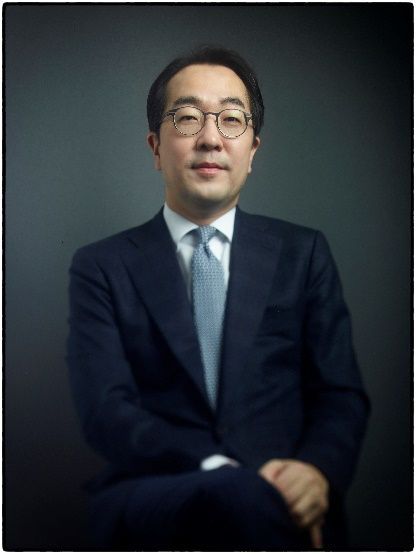 Jung Hyung-jin, newly appointed CEO of Hyundai Capital and former head of Goldman Sachs Korea.
 [Photo by Hyundai Capital]
Known as a global financial expert, President Jung is expected to lead the expansion of Hyundai Capital's global business. Recently, Hyundai Capital's global operations have seen declining performance in key overseas subsidiaries such as those in the United States, China, and the United Kingdom. The pre-tax profit of Hyundai Capital's China subsidiary (BHAF) decreased by 11%, from 691 million yuan (approximately 126.2 billion KRW) in 2021 to 615 million yuan (approximately 112.3 billion KRW) in 2022. During the same period, the UK subsidiary (HCUK) also saw a 13.7% drop in pre-tax profit, from 87 million pounds (approximately 146.1 billion KRW) to 75 million pounds (approximately 126 billion KRW). The US subsidiary (HCA), in which Hyundai Motor (80%) and Kia (20%) hold shares, declined by 37.5%, from 1.035 billion dollars (approximately 1.3584 trillion KRW) to 647 million dollars (approximately 849.2 billion KRW). A similar trend continued based on cumulative figures up to the third quarter of last year.
Growing the non-automotive business is also a challenge President Jung must address. Hyundai Capital shows strength in the automotive sector, based on new car installment volumes from Hyundai Motor and Kia. However, the non-automotive sector (credit, housing, real estate project financing, and others) accounts for a relatively small portion and is heavily influenced by the automotive market conditions. As of the third quarter of last year, Hyundai Capital's product assets in the automotive sector amounted to 27.7 trillion KRW, more than 4.5 times the 6.068 trillion KRW in the non-automotive sector.
This year, a favorable environment is being created for Hyundai Capital to launch new businesses domestically and internationally. Global credit rating agency Moody's upgraded Hyundai Capital's credit rating last month from 'Baa1' (positive) to 'A3' (stable), the first upgrade in 12 years. This month, Fitch raised the credit rating from 'BBB+' (positive) to 'A-' (stable). With the base interest rate expected to decrease from the second half of the year, funding costs are also anticipated to decline. Since the management separation from Hyundai Card and Commercial in 2021, Hyundai Capital has had no significant new businesses, but this year it is expected to actively pursue global business based on sound asset quality and credit ratings. A Hyundai Capital official said, "President Jung will contribute to securing liquidity, managing internal and external risks, and expanding new global businesses through strengthening strategic partnerships in local markets. He will also demonstrate his capabilities in existing automotive sectors such as leasing, subscriptions, and used cars."
© The Asia Business Daily(www.asiae.co.kr). All rights reserved.

















