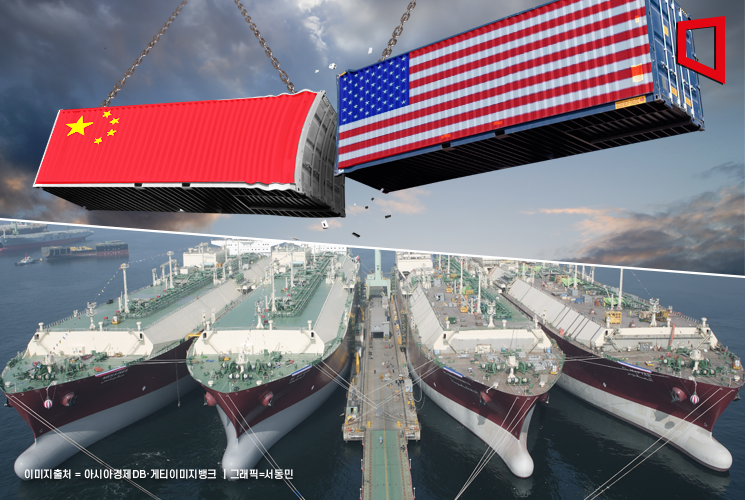
The shipbuilding and shipping industries have emerged as a new battleground in the US-China trade war. Five labor unions in the United States have petitioned the government to investigate China’s unfair trade practices under Section 301 of the Trade Act.
Catherine Tai, the US Trade Representative (USTR), confirmed the petition in a statement on the 12th (local time). Representative Tai said, "We have seen China create dependencies and vulnerabilities in various sectors such as steel, aluminum, solar power, batteries, and critical minerals, which harm American workers and businesses and jeopardize our supply chains," adding, "We will review this carefully."
In the petition released that day, the five unions, including the Steelworkers Union, stated, "In 1975, the US shipbuilding industry ranked first in the world in production capacity, but decades later, the number of commercial shipyards has declined by more than 70%, and the global market share is less than 1%," arguing that "the biggest obstacle to industrial recovery is the unfair trade practices of China, the world’s largest shipbuilding nation."
Specifically, the five unions pointed out that "China’s government efforts to dominate the global shipbuilding, shipping, and logistics industries are based on far more aggressive and interventionist non-market policies than any other country," and criticized that "China artificially lowers prices to dominate the market and builds a global network of ports and logistics infrastructure that discriminates against American ships and shipping companies." China has been investing heavily in budget and talent in shipbuilding as one of the top ten strategic industries under the ‘Made in China 2025’ initiative.
The five unions also raised supply chain concerns, noting that many Chinese companies, mostly state-owned, control everything from financing to construction and operation of port terminals worldwide. For example, the Chinese state-owned company ZPMC currently supplies 70% of the world’s cargo cranes. As a result, the current situation is seen not only as unfair trade practices by China but also as an economic threat that extends to national security concerns. The five unions stated, "China has built global logistics infrastructure that can disrupt supply chains and undermine national security interests," and argued that "the United States must take a leading role in addressing this issue."
This petition is based on Section 301 of the US Trade Act, which allows the imposition of tariffs if a country is judged to have caused harm through unfair trade practices. This law was also applied during the Trump administration when high tariffs were imposed on thousands of Chinese products. The USTR plans to review the petition and decide whether to initiate an investigation within 45 days. Currently, the unions are demanding the imposition of port fees on Chinese vessels docked at US ports and the establishment of funds to support the domestic shipbuilding industry.
If the investigation proceeds in earnest, US-China trade tensions are expected to escalate further. Industry experts assess that the Biden administration is unlikely to reject this request for an unfair trade investigation, as it presents an opportunity to demonstrate commitment to revitalizing domestic industries ahead of the November presidential election. Former President Donald Trump, the Republican presidential candidate, has also signaled a large-scale trade war, making it likely that a hardline stance will be taken. Some analysts suggest that this petition could heighten national security concerns within the US regarding global logistics supply chains such as China’s Rizhinck. Major foreign media outlets reported, "The shipbuilding industry has become a new battlefield in the US-China trade war," and "tensions between the two countries will increase."
© The Asia Business Daily(www.asiae.co.kr). All rights reserved.

















