Nanhang Gongsa-Samsung Electronics
MOU on Energy Supply Efficiency and Decarbonization
Pilot Project to Start Within the Year
Korea District Heating Corporation and Samsung Electronics signed the "Energy Utilization Efficiency and Decarbonization Agreement between the Semiconductor and District Energy Industries" on the 12th.
Previously, some of the hot water generated during Samsung Electronics' semiconductor production process was discarded without additional use. The Korea District Heating Corporation aims to utilize this to produce heat for district heating and industrial processes.
A pilot project applying new technology to use waste heat discharge water from Samsung Electronics' semiconductor factories as a heat source for district heating through heat pumps is scheduled to begin within this year. In the long term, they plan to promote diversification and decarbonization cooperation of heat sources to ensure stable heat supply for semiconductor industrial facilities and surrounding cities, such as the Pyeongtaek and Yongin semiconductor clusters.
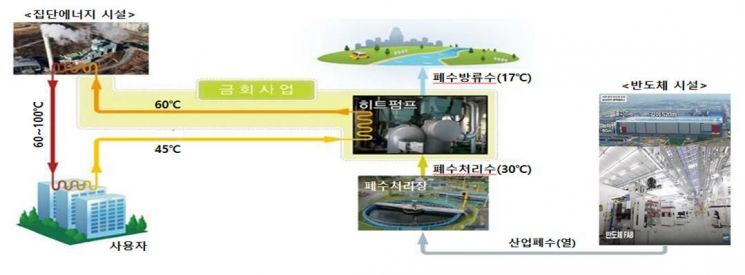
Through the utilization of waste heat from the semiconductor industry, both companies expect to reduce greenhouse gas emissions from the semiconductor industry and the district energy sector, as well as cut liquefied natural gas (LNG) costs required for heat production.
Choi Nam-ho, Vice Minister of the Ministry of Trade, Industry and Energy, said, "This cooperative project is meaningful in improving energy efficiency and reducing greenhouse gases," adding, "The government will also spare no policy support such as expanding data-based heat trading, supporting research and development and commercialization of heat recovery technologies."
Meanwhile, the Ministry of Trade, Industry and Energy supports investments in heat recovery and utilization facilities through projects such as energy-saving facility installation loans, greenhouse gas reduction equipment subsidy programs, and industrial complex energy self-sufficiency infrastructure construction projects. It also aims to enhance heat trading and utilization by awarding additional points for using by-product heat in hydrogen power generation bidding markets and operating energy management standards.
© The Asia Business Daily(www.asiae.co.kr). All rights reserved.

















