Central Disaster and Safety Countermeasures Headquarters... Emphasizes Law and Principles, Urges Return
Concerns Over Additional 'Collective Actions' Including Professors' Resignations Following Residents
"Public Healthcare, Last Stronghold... Emergency Medical Care to Be Carried Out Without Gaps"
The government urged doctors who have engaged in collective action to return, stating that "procedures according to law and principles are inevitable for residents who have not returned." It also issued a warning message regarding the actions of faculty members opposing the increase in medical school admissions, as well as the pressure being applied to returning residents. However, as administrative disciplinary procedures against the departing residents are being fully implemented, the level of opposition from medical school professors is also rising.
On the morning of the 11th, the government held a meeting of the Central Disaster and Safety Countermeasures Headquarters for doctors' collective action at the Government Complex Sejong, expressing concerns that "as the vacancies of residents lengthen, the fatigue of the remaining medical staff on site and the suffering that patients must endure are increasing."
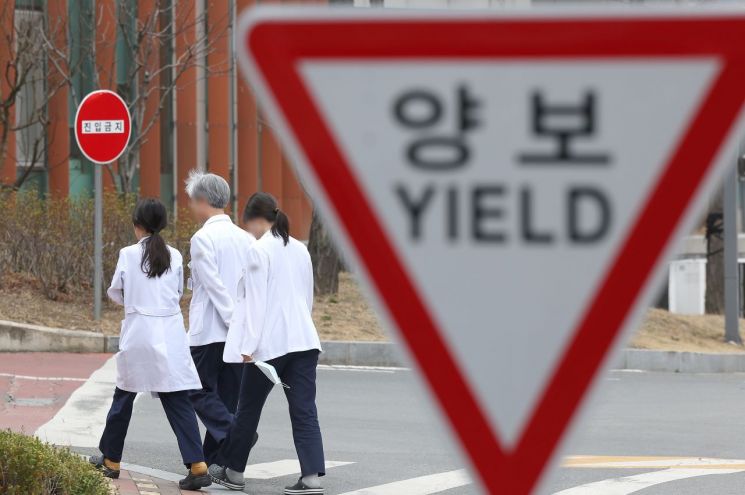
Lee Han-kyung, the 2nd General Coordinator of the Central Disaster and Safety Countermeasures Headquarters who presided over the meeting, said in his opening remarks, "More than 90% of residents are still ignoring this reality," adding, "Some universities and training hospitals are even showing signs of faculty members resigning in opposition to the increase in medical school admissions."
In response, Coordinator Lee warned, "Under no circumstances should a situation occur where doctors abandon patients, and any voice that does not stand with patients will not gain public sympathy." He continued, "There have been media reports that a considerable number of residents hesitate to return due to fear of stigma from their surroundings," and requested, "We ask that you prioritize your conviction as a doctor over external pressure and return to the hospital even now."
Regarding public anxiety caused by the medical vacuum, he emphasized, "We will push forward emergency medical support measures without gaps with the determination that public healthcare is the 'last bastion' of Korean medical care." He added, "We will mobilize all available resources to minimize harm to the public in local medical settings by preparing measures tailored to the medical environment and conditions of each local government."
Earlier, the government announced a plan to strengthen the emergency medical system by deploying military doctors and public health doctors to the field to minimize the medical vacuum caused by the collective departure of residents over the past weekend. Starting today and for four weeks, a total of 158 personnel, including 20 military doctors and 138 public health doctors, will be deployed to 20 hospitals to fill the vacancies left by those who left and reduce the burden on the field. The deployed personnel are expected to play a role in resolving difficulties such as delays in surgery and treatment for severe and emergency patients. Compensation for treatment of severe and emergency patients will also be strengthened. The Central Disaster and Safety Countermeasures Headquarters plans to rapidly execute the 128.5 billion KRW contingency fund decided last week and temporarily inject 188.2 billion KRW from health insurance for the month of March.
The notification of license suspension for residents who have left the medical field is also accelerating. Since the 5th, the Ministry of Health and Welfare has been sending preliminary notices to departing residents, and the dispatch process for about 10,000 residents who have left their workplaces is expected to be completed as early as the beginning of this week. According to a written inspection by the Ministry, the number of departing residents at 100 major training hospitals was 11,994 as of 11 a.m. on the 8th, with a departure rate of 92.9%.
However, the collective action of medical school professors nationwide appears to be a new variable. The Emergency Response Committee of the Seoul National University College of Medicine Professors' Association will hold an emergency general meeting with all faculty members attending this afternoon. There is a possibility that collective action by professors will be discussed at this meeting. In a survey conducted at Bundang Seoul National University Hospital at the end of last month, 85% responded that they "may engage in collective action to protect residents and students."
Some professors have already resolved to submit resignation letters. The Ulsan University College of Medicine Professors' Association, which includes medical staff from Seoul Asan Medical Center?the largest hospital in the country by bed count?agreed to voluntarily submit resignation letters at an emergency general meeting on the 7th. According to a survey among Jeonbuk National University College of Medicine professors, 82.4% expressed their intention to submit resignation letters.
Medical school professors may also engage in collective action in the form of "release from concurrent positions" rather than submitting resignation letters. Among medical school professors, there are "concurrent professors" who perform both hospital treatment and university lectures, and release from concurrent positions means they will only lecture without providing treatment. It is known that release from concurrent positions does not constitute illegal "refusal of treatment" under the Medical Service Act.
Medical school professors are also attacking the legal loopholes of the increase in medical school admissions. The Professors' Association of 33 medical schools nationwide submitted a second written statement to the Seoul Administrative Court Administrative Division 11 (Presiding Judge Kim Jun-young), which is hearing the case for a suspension of execution of the increase in medical school admissions. The association argues that the government's policy to increase medical school admissions violates the Higher Education Act, which requires the announcement of university entrance examination implementation plans at least 1 year and 10 months before the admission year.
© The Asia Business Daily(www.asiae.co.kr). All rights reserved.
![Clutching a Stolen Dior Bag, Saying "I Hate Being Poor but Real"... The Grotesque Con of a "Human Knockoff" [Slate]](https://cwcontent.asiae.co.kr/asiaresize/183/2026021902243444107_1771435474.jpg)
















