Jung-gu Ranks First Among Seoul Districts in Education Subsidies Per Student Again This Year
Rich Support Including After-School, Foreign Language Learning, Academic Improvement, Community Cooperation, and Environmental Enhancement
Expanded Customized Education Support Reflecting Opinions of Parents, Students, and Schools
Securing External Funds to Ensure Benefits Across All Grades Despite Budget Shortfalls
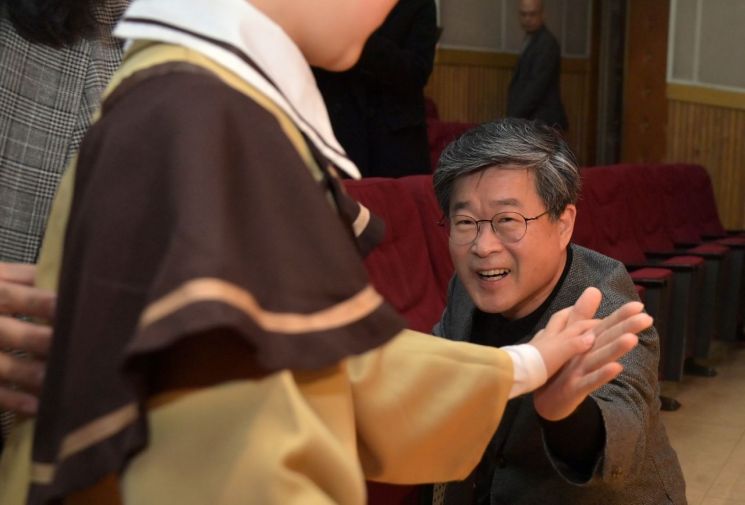
Jung-gu, Seoul (Mayor Kim Gil-seong) provides education institution subsidies amounting to 820,000 KRW per student within the district this year.
According to the Seoul Metropolitan Office of Education, this is the highest level among the 25 autonomous districts in Seoul. It is 396,000 KRW more than the district average of 424,000 KRW and 548,000 KRW more than the district ranked 25th.
Despite unprecedented tax revenue declines and difficult financial conditions, it clearly shows that Jung-gu is investing generously in students' learning and growth.
Education institution subsidies are grants provided by autonomous districts to educational institutions such as kindergartens and schools.
This year, Jung-gu allocated a total of 10,347,480,000 KRW as education institution subsidies, including ▲59.6 billion KRW for education expense subsidies ▲710 million KRW for foreign language learning support ▲3,048,130,000 KRW for eco-friendly school meal support ▲629,350,000 KRW for education benefits, entrance preparation funds, and free high school education support.
To revitalize public education, the district provides 5.96 billion KRW of this amount as education expense subsidies to 14 kindergartens and 25 elementary, middle, and high schools. In addition to the basic annual support for ▲educational environment improvement and ▲school specialized program operation costs, new support is provided reflecting the opinions of students, parents, and teachers, including ▲high school academic achievement enhancement ▲kindergarten and elementary school field trip buses ▲regional cooperation projects.
Among these, the regional cooperation project refers to the district covering costs when schools open facilities such as libraries, gyms, and parking lots to residents. It is expected that when schools open their doors widely to the community, residents will be able to enjoy cultural activities and conveniences nearby.
In March, after review, the district will allocate 1,967,210,000 KRW for the new semester curriculum, 1,384,050,000 KRW for the first semester operation costs of elementary after-school programs, and 30 million KRW urgently needed for repairing the fence of Jangwon Middle School for safety.
Additionally, the district supplements the insufficient budget by securing external funding. The elementary care program operated by Jung-gu requires about 3.8 billion KRW annually. Since a considerable portion of education project funds is concentrated on elementary care, upper elementary and middle and high school students are relatively neglected. Since last year, Jung-gu has actively communicated the need for budget support to Seoul City and the Office of Education and has received about 950 million KRW annually as cooperation project funds.
Mayor Kim Gil-seong of Jung-gu emphasized, “Jung-gu spares no investment in education, which is the foundation of future society,” and added, “We will continue to provide support at the highest level in terms of scale and content so that children and youth of all school ages can equally benefit, communicating with students, parents, and teachers.”
© The Asia Business Daily(www.asiae.co.kr). All rights reserved.

















