Medical Sector Issues Surface
Presidential Office: "Institutionalizing Medical Support Nurses"
Turning Point in Expanding Telemedicine
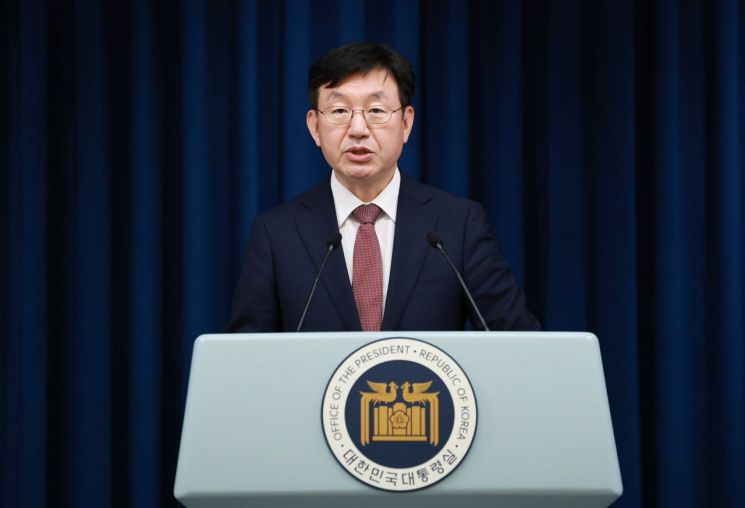
On the 20th day of the collective resignation crisis of residents on the 10th, a strong confrontation between the government and the medical community continues. Although patients' inconveniences persist due to the 'medical crisis,' paradoxically, long-standing issues within the medical community are gradually surfacing as the government responds to the crisis.
The government is rolling up its sleeves to 'normalize' the domestic medical system by reforming the large hospital treatment system that overly depends on residents or by actively utilizing skilled Physician Assistant (PA) nurses to fundamentally restructure the medical delivery system. As the government reaffirmed its plan to increase medical school admissions by 2,000 students, attention is focused on whether the chronic problems in the medical community can find solutions during the process of pushing forward medical reform.
Expansion of Physician Assistant (PA) Nurses' Roles... Preparing for Prolonged Medical Service Gaps
Seong Tae-yoon, the Policy Chief of the Presidential Office, appeared on a comprehensive news channel the day before and stated, "We are promoting the PA nurse pilot project based on the Framework Act on Health and Medical Services, and if necessary, we are considering further institutionalization." This means that institutional measures will be prepared to enable PA nurses to play their roles. This is also a measure to prepare for a prolonged medical service gap due to the departure of residents.
Earlier, President Yoon Seok-yeol said in his opening remarks at the 'Central Disaster and Safety Countermeasures Headquarters Meeting on Doctors' Collective Action' on the 6th, "While restructuring the workforce around specialists, we will also actively utilize skilled PA nurses and promote a fundamental reform of the medical delivery system."
Nursing organizations immediately welcomed the announcement. The Korean Nurses Association said, "The President's support for medical reform will be a great help in reforming the current medical system, which cannot function without doctors," and added, "Although residents face many difficulties due to poor working conditions after leaving the medical field, we expect the medical system to develop more progressively by using this as a stepping stone."
Correcting the Medical Delivery System and Improving Large Hospital Dependence on Residents
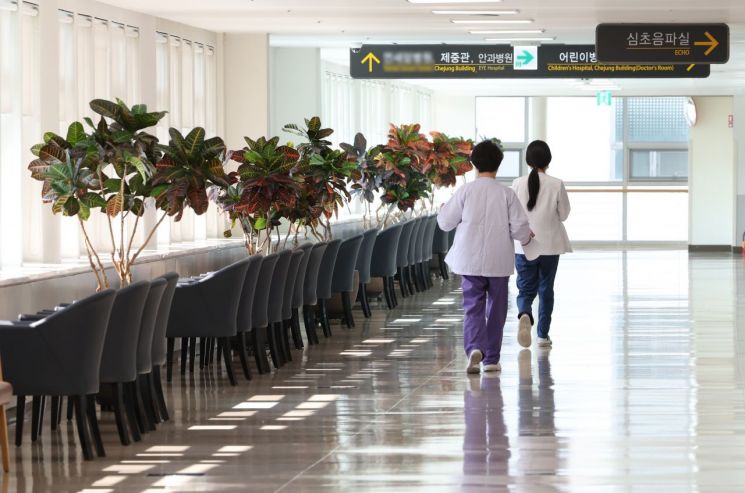
The Presidential Office strongly hinted that changes in the system of large hospitals that excessively depend on residents are inevitable. Chief Seong emphasized again, "The system not functioning just because trainees have left the hospital is already a problem in itself," and "It is very necessary to normalize the resident-dependent system in large hospitals."
According to the medical community, the so-called 'Big 5'?five top-tier general hospitals in Seoul (Seoul National University, Severance, Samsung Seoul, Seoul Asan, and Seoul St. Mary's Hospital)?have residents accounting for 34-46% of their total physician workforce. Although specialists who have completed all training stages such as interns and residents should be the core of hospitals, each hospital has massively employed residents, whose labor costs are lower than specialists, to reduce expenses, resulting in an abnormal situation where the medical system collapses when residents leave.
According to statistics from the Health Insurance Review and Assessment Service, the 'Big 5 hospitals' have 2,745 residents, accounting for 40% of the total 7,042 doctors. Accordingly, the government plans to secure physician manpower by increasing medical school admissions and restructure medical institutions, which overly depended on residents, into a specialist-centered system.
Voices are emerging that the long-collapsed medical delivery system is finally regaining its role, especially in some tertiary general hospitals. A representative from a tertiary general hospital said, "It is normal for local clinics and hospitals to handle mild patients, while tertiary general hospitals should operate focusing on severe and emergency patients," adding, "This medical crisis could be an opportunity to reestablish the medical delivery system, but policy support should also be considered so that tertiary hospitals can manage financially even if they only treat severe patients."
Non-face-to-face medical care has also accelerated due to the departure of residents. After the COVID-19 pandemic ended, regulations tightened, reducing the number of users of telemedicine, but the collective resignation of residents brought a turning point again. Previously, first-time patients could only receive telemedicine under limited conditions such as nighttime, holidays, or medically underserved areas, but the Ministry of Health and Welfare significantly expanded the scope of telemedicine from the 23rd of last month. A hospital official evaluated, "The expansion of telemedicine focused on mild patients has reduced congestion in medical institutions and eased the workload on the front lines, which is a positive aspect."
© The Asia Business Daily(www.asiae.co.kr). All rights reserved.
![Clutching a Stolen Dior Bag, Saying "I Hate Being Poor but Real"... The Grotesque Con of a "Human Knockoff" [Slate]](https://cwcontent.asiae.co.kr/asiaresize/183/2026021902243444107_1771435474.jpg)

















